
ABOUT US
Yantai Yunde Intelligent Technology Co., Ltd. has only 30 years of production experience, has served more than 300 domestic and foreign customers, and has produced more than 2,000 machines.
GET A FREE QUOTE
-
Home

-
Blog
-
Industry Blogs
- What Factors Actually Affect Bar Straightening Efficiency in High-Volume Manufacturing?

What Factors Actually Affect Bar Straightening Efficiency in High-Volume Manufacturing?
-
author
- 21,May
 author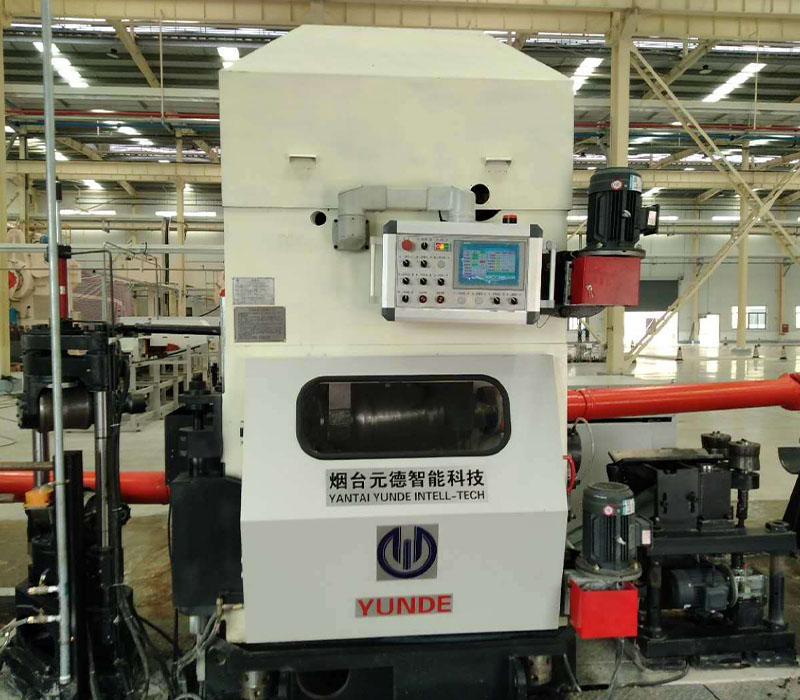
Understanding the Efficiency Gap in Modern Steel Finishing
In busy manufacturing settings, numerous plants face uneven output even after buying top-quality tools. This output shortfall usually comes from not matching machine power with steady material movement and exact process management. Reaching real bar straightening efficiency goes beyond simple quickness. Instead, it involves a careful mix of top feed rate, excellent finish quality, and firm size accuracy. At YUNDE, we guide the shift from old, hands-on approaches to modern advanced options. These options deliver a 50% boost in output over standard gear. By ending the outside hold on advanced finishing tech, such setups set a fresh standard for returns in the steel straightening field.
What is the Role of Machine Structure in Straightening Performance?
The base of fast handling rests on the solid build of the gear. Industrial bar straightening needs a strong body to handle the large pressures required to change the inner makeup of tough metal mixes.
The body build gives the whole machine solid strength. professional bar processing strength leads straight to right roll space setup and little shaking during quick operations.
A setup with two rollers using hyperbolic rollers creates even touch points. As a result, it supports exact, full-run handling that older many-roll units often find hard to equal.
Steady force handling combined with a bendable body setup lets the machine deal with strong materials. At the same time, it avoids cutting the feed pace.
Speed changers fitted with stop units and stop resistors boost the lasting power of the power parts. Thus, they handle repeated start and stop actions without harming the steel bar straightening machine.
Technical Specifications of High-Efficiency Straightening Series
| Model | Diameter Range(mm) | Length (m) | Speed(m/min) | Diameter Tolerance | Surface Roughness (μm) | Straightness(mm/m) | Main Motor Power | Structure |
| BS20 | Φ6–20 | ≥2 | 10~40 | ≤IT8 | Ra≤0.8 | 0.10 | 7.5*2 | Frame |
| BS40 | Φ10–40 | ≥2 | 10~35 | ≤IT8 | Ra≤0.8 | 0.15 | 22*2 | Frame |
| BS60 | Φ15–60 | ≥2 | 10~30 | ≤IT8 | Ra≤0.8 | 0.20 | 30*2 | Frame |
| BS80 | Φ20-80 | ≥2 | 10~24 | ≤IT8 | Ra≤0.8 | 0.25 | 37*2 | Frame |
| BS100 | Φ25-100 | ≥3 | 10~24 | ≤IT8 | Ra≤0.8 | 0.30 | 45*2 | Frame |
| BS130 | Φ35-130 | ≥3 | 10~20 | ≤IT8 | Ra≤0.8 | 0.35 | 75*2 | Frame |
| BS160 | Φ40-160 | ≥3 | 10~20 | ≤IT8 | Ra≤0.8 | 0.40 | 90*2 | Frame |
Why is Material Pre-Processing Crucial for Efficiency?
A metal bar straightener works as part of a larger setup. To get the most from a steel bar straightening machine, see it within a full finishing chain. Our work with clients in places like the Shaanxi area shows that early handling is key to avoiding later hold-ups.
Linking “Basic straightening + peeling+ Fine straightening” makes it possible to turn rough bars into exact polished items in one smooth run.
Clearing rust coats, splits, and edge losses with a Peeling machine (without center turning) before the last straightening step keeps the rollers in best touch with the metal face.
For rolled stock, a line of “Unroll + peeling+ Cut + Straighten” cuts out hand work that usually drags down big-batch making.
This full method swaps out older, drawn-out steps like cold drawing and Pickling. In their place, it offers a neater and quicker way to make bright shiny stock.

How Does Automation Technology Drive Throughput?
The growth of the automatic bar straightener has swapped hand-based estimates for fact-based exactness. Current computer controls and program-based multi-spot handling prove vital for keeping strong output over long work periods.
Smart handling allows for online power tool tweaks and instant size checks. Because of this, the straightening machine setup avoids halting for small changes in stock.
Such setups reach feed rates up to 40 m/min for thin sizes. This beats out older hand-run systems by a wide margin.
Auto pull-out units with cart builds and hydraulic cylinders guarantee matched motion. Consequently, they yield even bar release without face dents.
Fine-tuned supports and smoothed gear passes in the main shaft offer better steadiness. Plus, they give a much longer run time than usual strap-driven builds.
What is the Secret to Mastering Straightening Precision Adjustment?
Hitting the right straightness counts as a skill backed by strict design work. Straightening precision adjustment stands as the main element that decides if a item hits world standards like IT8.
Getting the curved roller tilts right matters for various stock sizes. Even a small error here in the bar straightening machine can lead to weak straightness or face marks.
Tweaking the roller space finely proves key for reaching goal straightness. For instance, our BS20 line hits 0.10 mm/m exactness.
Right tweaks with steady force handling cut down on size loss at bar tips. This loss often wastes stock in large-run making.
A frame built for the guide board speeds up setup and tweaks. It also makes switching between stock groups quick with little wait time.
Why is Straightening Machine Maintenance a Non-Negotiable Efficiency Factor?
Regular straightening machine maintenance marks what divides strong-running sites from those hit by stoppages. From our years leading big search and tech efforts for factory brands, we know that ahead-of-time care costs less than fix-up work after issues arise.
Using a standalone fluid setup gives quick pressure hold and release. It stays safe and simple to keep up without touching the core mechanical part.
Standard checks of the fine-smoothed gears and exact supports keep the machine at output levels two to three times above older types. This holds over many years of work.
We offer a no-cost cover time of 12 months. On top of that, we give ongoing no-cost tech aid to make sure our gear stays a trusted tool for clients around the world.
Plant-based skill building for workers holds importance. A well-trained worker spots small wear in the industrial bar straightening parts early. This stops big breakdowns later.
Achieving a New Benchmark in Bright Steel Processing
The push for peak output in metal ending tasks forms a many-sided task. It calls for blending strong machine builds, auto controls, and forward-looking upkeep. With tech that matches world measures, makers can join global contests while cutting run expenses. No matter if you handle rust-free steel, strong metal blends, or plain steel, moving to exact, auto lines stands as the sole path to steady advance in the current factory era.

Conclusion:
In high-volume manufacturing, achieving peak bar straightening efficiency is the cornerstone of profitability. By integrating a robust mechanical frame with advanced automatic bar straightener technology and precise straightening precision adjustment, YUNDE empowers global factories to exceed international standards. Our high-end industrial bar straightening solutions—backed by rigorous straightening machine maintenance—offer a 50% efficiency boost over traditional methods. Investing in a YUNDE steel bar straightening machine ensures a future-proof production line that delivers uncompromising quality and a superior ROI.
FAQ
How can I get a quotation for a YUNDE metal bar straightener?
Reach out to our sales team right away via our main site for a tailored price based on your stock details and purchase volume. We supply expert fixes and tech talks to help pick the right unit—from Φ6mm to Φ160mm—that matches your output aims.
Does the steel bar straightening machine support overseas installation?
Yes, our firm gives full follow-up aid. This covers out-of-country setup guides, gear start-up, and skill teaching by our skilled staff. We have set up gear well in spots like Russia, India, and Vietnam, plus others.
What is the lead time for an automatic bar straightener order?
Wait times change with the details of the auto make line and plant load now. Still, we work hard to fit varied client wants with on-time sends. To date, we have made more than 1,000 units of gear.
Can YUNDE provide custom maintenance plans for industrial bar straightening equipment?
We give a free 12-month cover and lasting free tech aid as usual. Further, our group can share tips on setting up an ahead-of-time straightening machine maintenance plan. We tailor it to your big-run needs and stock kinds.
How does the straightening precision adjustment affect the processing of titanium alloys?
For touchy stocks like titanium blends (TC4, TB9), straightening precision adjustment plays a key role. It helps skip face flaws and keeps the exact level needed for air or health uses. Our units use even touch and steady force handling to hold straightness up to 0.10 mm/m. All this comes without hurting the stock build.
Recent Post

Related Products
Best-selling Products
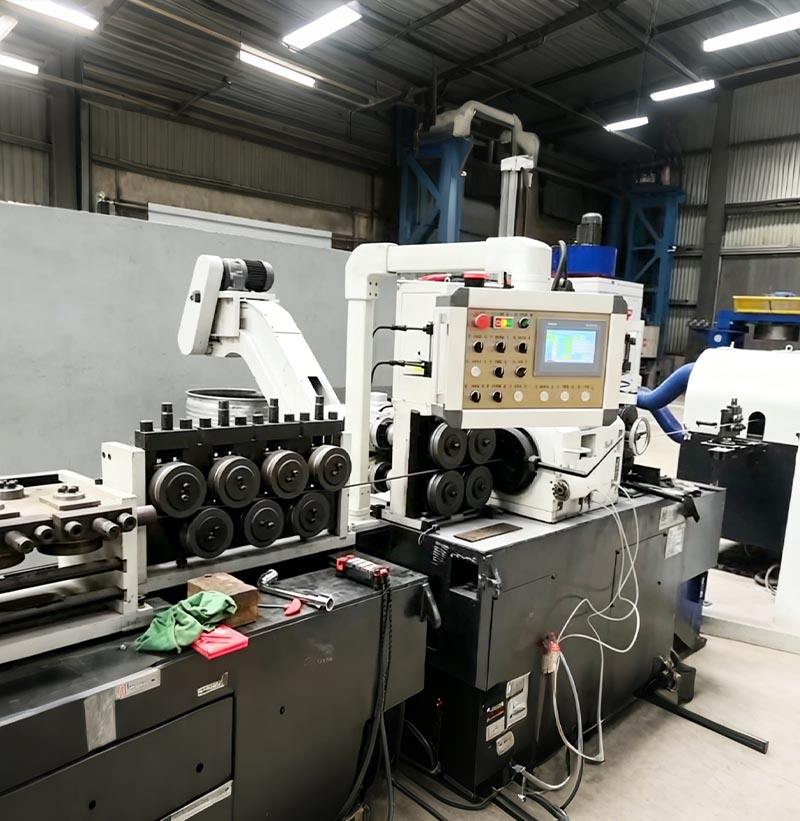
Coil To Bar Peeling&Straightening Line
Stainless steel wire rod is decoiled and pre-straightened, then peeled using a centerless lathe and cut to a precise length. Following a final precision straightening pass through a two-roll straightener, the resulting product is a high-precision stainless steel straight bar.
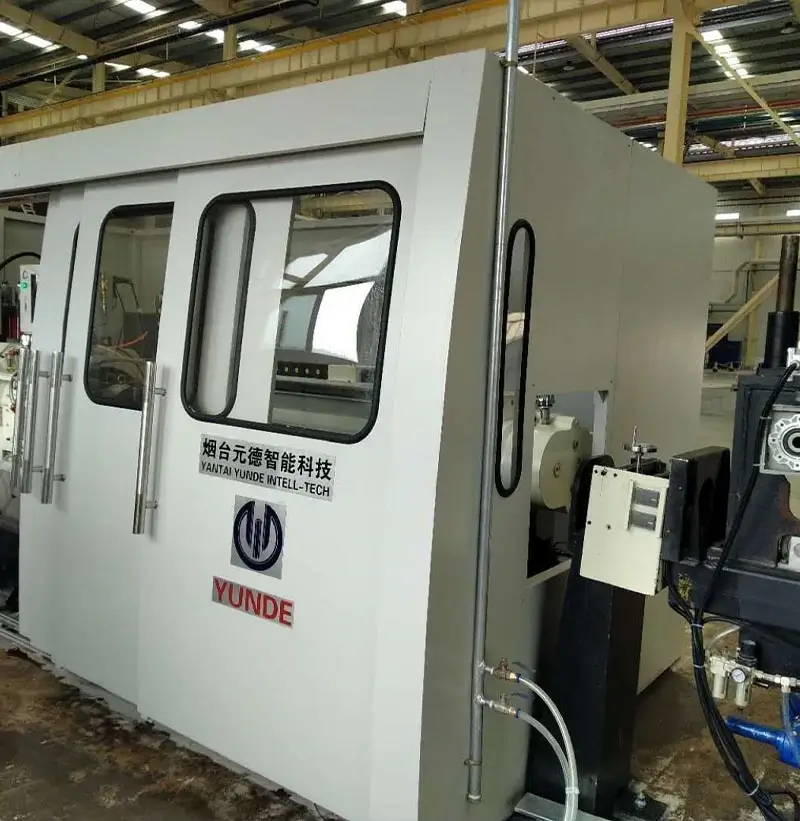
Peeling machine(centerless lathe)
The peeling machine (centerless lathe) unit is a product independently developed after comparing and contrasting the advantages of similar foreign products and combining them with the production characteristics of domestic enterprises, resulting in a simplified and optimized design.
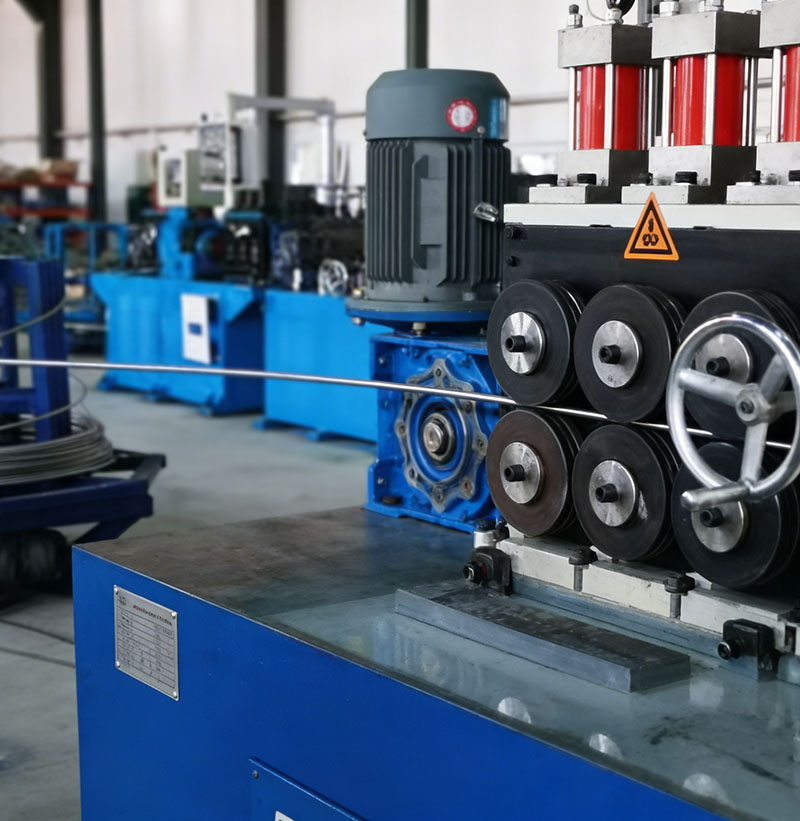
Coil to coil production line
Coil to coil production line is a serial of the machines includes payoff & straightening machine, peeling machine, clamping mechanism, pre-bending device, recoiler machine etc. through above machines, the black coil rod will be processed to bright coil rod with good surface quality
Straightening machine BS Series
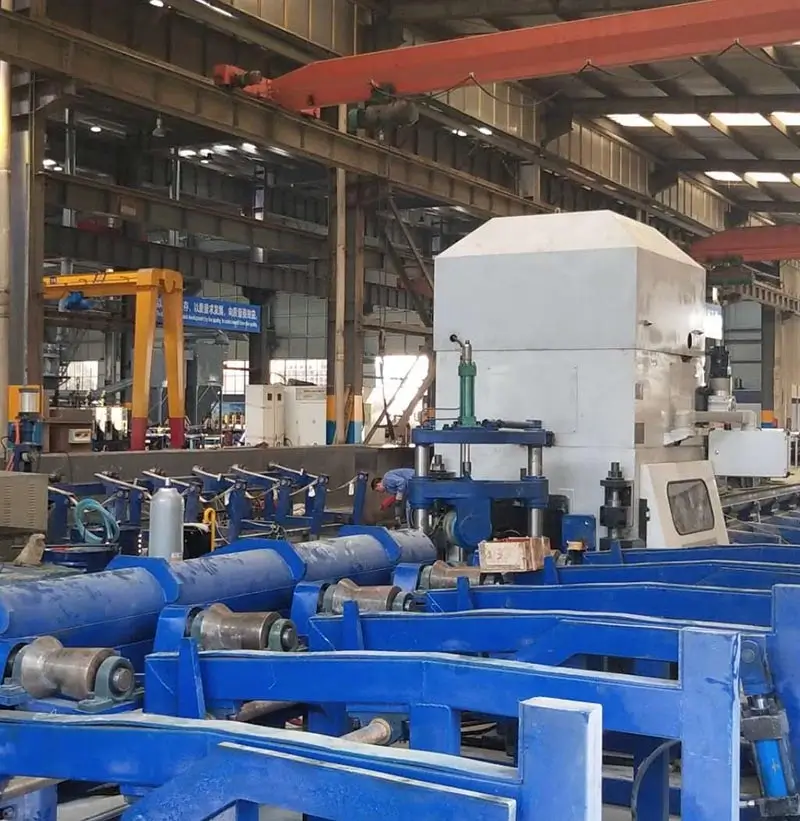
A straightening machine is a device used to straighten metal profiles, bars, tubes, and wires. The straightening machine uses straightening rollers to compress the material, altering its straightness. Generally, there are two rows of straightening rollers, with varying numbers of rollers. There are also two-roller straightening machines, which rely on the angle change of two rollers (with a concave, hyperbolic shape) to straighten materials of different diameters.
Multi-Roll Steel Pipe Straightening Machine
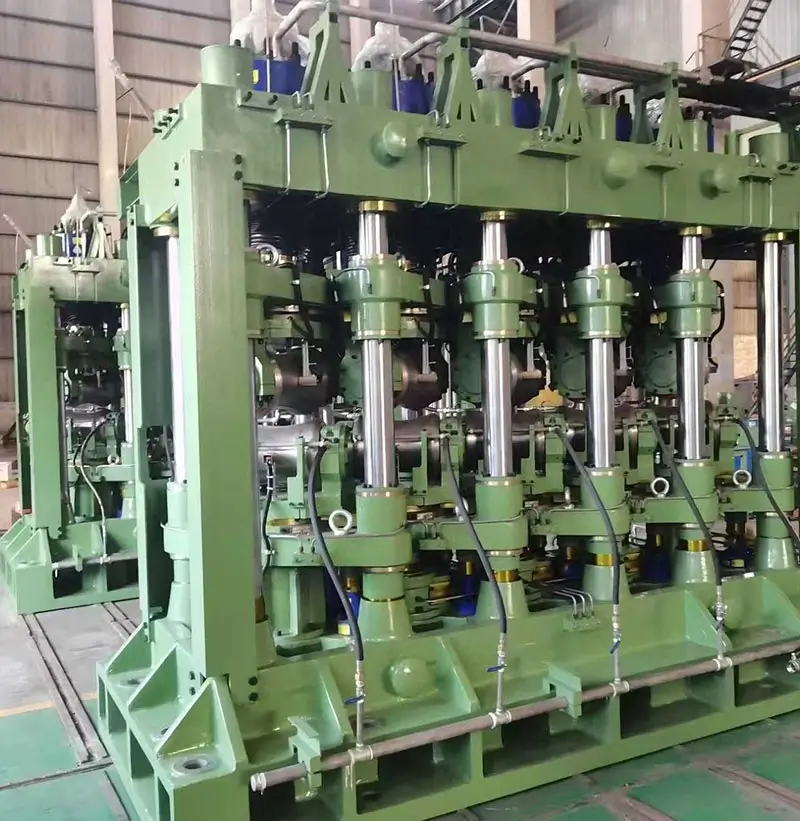
It is a mechanical device used to straighten the curvature and ovality of steel pipes. It is used to straighten pipes made of high alloy, corrosion-resistant, heat-resistant, heat-resistant steel and alloy, iron-nickel, nickel and titanium alloys , so as to reduce longitudinal non-straightness and cross-sectional non-roundness.
Horizontal and vertical straightening machine
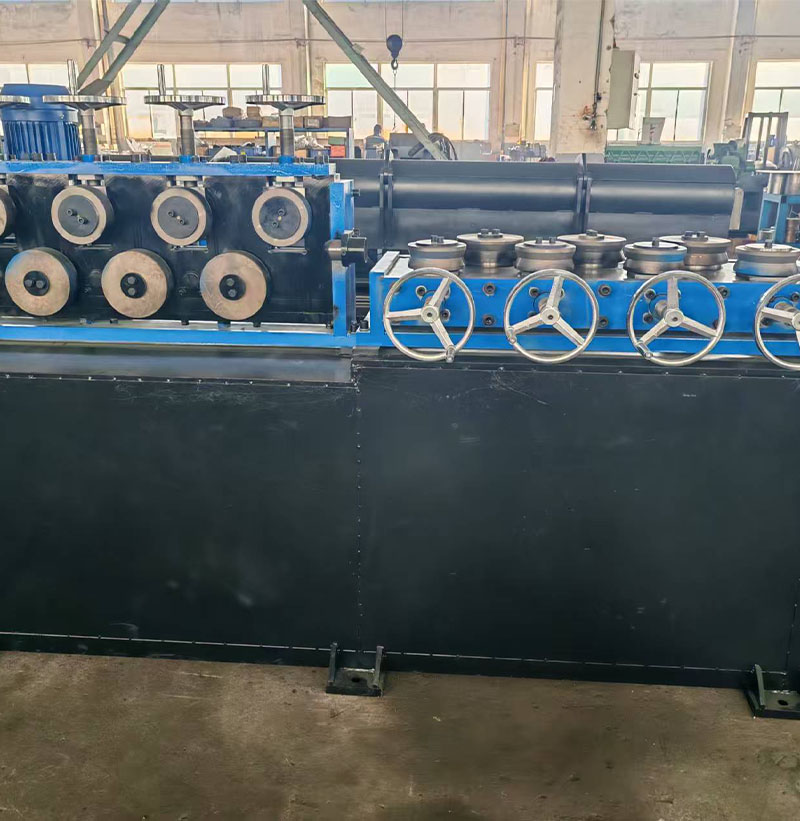
Release the handwheel of the multi-roll horizontal and vertical straightening machine to allow the wire coil to pass through the straightening rollers. Tighten the handwheel to the empirically determined position, start the feeding device, and perform repeated straightening trials. Then feed the wire coil to the vertical straightening rollers, following the same procedure as for horizontal straightening. Finally, feed the wire coil to the peeling machine's feeding device.