
ABOUT US
Yantai Yunde Intelligent Technology Co., Ltd. has only 30 years of production experience, has served more than 300 domestic and foreign customers, and has produced more than 2,000 machines.
GET A FREE QUOTE
-
Home

-
Blog
-
Industry Blogs
- What Is Driving the Bar Peeling Machine Market Growth

What Is Driving the Bar Peeling Machine Market Growth
-
author
- 30,July
 author
Introduction
The rising need for highly accurate steel parts is speeding up shifts within the bar peeling machine market. Sectors like car manufacturing, fluid power tools, machinery building, and specialty metal working need round bars. These bars must have exact sizes and dependable outer finishes. Older ways usually need many working steps to remove outer flaws. However, newer peeling methods offer a much better answer. They remove defective surface layers from metal materials through controlled cutting.
A steel peeling machine is designed to process round steel, bars, tubes, and shafts. It does not improve the surface through simple grinding. Instead, it removes defective surface layers through controlled cutting, including oxide layers, cracks, and decarburized layers. This creates high-quality bright steel products. YUNDE builds peeling machines and matching finishing machines for precision metal processing.
How Does a Steel Peeling Machine Improve Metal Processing?
A steel peeling machine operates based on a centerless lathe structure. While working, the metal rod moves through the cutting area. This lets the tool clear away outer flaws smoothly across the whole length.
The machine turned and peeled process refers to the peeling operation used in bright bar production. It boosts size exactness and keeps the outer finish steady. A normal making cycle starts with hot-rolled round steel. It might include basic straightening. Then comes peeling, careful straightening, and the final slicing step.
This peeling action can clear away flaws like rust crusts, splits, and carbon-poor layers. Based on technical details from YUNDE, the peeling machine can clear outer flaws with a one-sided cutting depth from 0.25 mm up to 5.0 mm. This changes based on the unit. Meanwhile, the finished exact round bars can hit a surface roughness of Ra≤1.6 μm.

What Makes a Precision Bar Peeling Machine Important?
A precision bar peeling machine targets exactness, automation features, and steady output power. Current CNC systems enable automatic tool adjustment and online diameter control during processing. This helps manufacturers maintain consistent product quality during long production runs.
Picking the right tool relies on material diameter, cutting requirements, production speed, and the end use. Various units are built for distinct working scopes.
| Model | Diameter Range | Length | Feeding Speed | Single-Sided Cutting Depth | Diameter Tolerance | Surface Roughness | Main Motor Power |
| PM40 | Φ6–40 mm | ≥1.4 m | 1–18 m/min | 0.25–1.5 mm | ≤IT8 | Ra≤1.6 μm | 45 kw |
| PM60 | Φ12–65 mm | ≥2.2 m | 1–15 m/min | 0.3–2.5 mm | ≤IT8 | Ra≤1.6 μm | 55 kw |
| PM80 | Φ15–80 mm | ≥2.2 m | 1–15 m/min | 0.5–2.5 mm | ≤IT8 | Ra≤1.6 μm | 75 kw |
| PM100 | Φ20–100 mm | ≥2.5 m | 1–12 m/min | 1.0–4.0 mm | ≤IT8 | Ra≤1.6 μm | 90 kw |
| PM130 | Φ35–130 mm | ≥2.8 m | 1–8 m/min | 1.0–5.0 mm | ≤IT8 | Ra≤1.6 μm | 110 kw |
| PM160 | Φ40–160 mm | ≥4 m | 1–6 m/min | 1.0–5.0 mm | ≤IT8 | Ra≤1.6 μm | 132 kw |
| PM200 | Φ80–200 mm | ≥4 m | 1–5 m/min | 1.0–5.0 mm | ≤IT8 | Ra≤1.6 μm | 160 kw |
| PM250 | Φ85–250 mm | ≥4 m | 1–4 m/min | 1.0–5.0 mm | ≤IT8 | Ra≤1.6 μm | 200 kw |
| PM350 | Φ150–350 mm | ≥4.5 m | 0.2–2 m/min | 1.0–10 mm | ≤IT8 | Ra≤1.6 μm | 200 kw |
These details let makers pick the right machine based on material diameter and output needs. Smaller units fit well for exact bar making. On the other hand, bigger units handle thick round steel tasks.
What Are the Latest Bar Peeling Machine Market Trends?
Current bar peeling machine market trends point toward automated production systems, integrated production lines, and faster working rates. More makers are swapping out single working steps. They use integrated production lines that combine peeling and straightening processes.
Another key shift is swapping out old cold pulling, acid washing, and rough rubbing steps. A roughing metal machine may be used for initial material preparation, while a peeling machine provides higher precision for final processing where surface quality and dimensional accuracy are critical. In these tasks, outer finish and size exactness matter a lot.
The call for steel bar peeling machine setups is also growing. This growth is driven by increasing demand for advanced metal materials across different industries. Newer peeling machines can work on stainless steel, bearing steel, spring steel, alloy steel, tool steel, carbon steel, titanium alloys, and other metal materials.
YUNDE has taken part in designing, production, and commissioning over 2,000 bright steel peeling and straightening units. This experience supports the development of automated metal finishing solutions for global customers.
How Should Buyers Choose a Bar Peeling Machine?
Picking a bar peeling machine means looking at several tech details. These include material diameter, hardness, surface defects, needed cutting depth, production speed, and automation requirements.
Shoppers should also look at what the seller can do besides just giving the machine. Technical support, installation guidance, equipment commissioning, and operator training are key points for long-term output stability.
A trusted steel bar peeling machine seller must grasp the whole output cycle. They should suggest the right machine based on the buyer’s material requirements and production needs. YUNDE provides technical support, equipment commissioning, operator training, and overseas service.

Conclusion
The rise of the bar peeling machine market shows the growing need for fast and exact metalworking methods. Makers want better bright steel and safer output paths. So, peeling methods bring clear perks in clearing outer flaws, size exactness, and output speed.
A current precision bar peeling machine is not just a working tool. It is a key piece of modern steel making setups. By picking the right machine, makers can boost item steadiness. They can cut out unneeded working steps and build up their market edge.
FAQ
What is a bar peeling machine used for?
A bar peeling machine removes surface defects from round steel, rods, and pipes using controlled cutting. It boosts size exactness and yields top-tier bright metal items.
How much does a precision bar peeling machine cost?
The price of a precision bar peeling machine rests on unit size, processing diameter, automation level, and production requirements. A tech review is mostly needed before picking the right unit.
What materials can a steel bar peeling machine process?
A steel bar peeling machine can work on items like stainless steel, bearing steel, spring steel, alloy steel, carbon steel, titanium alloys, and other exact metal goods.
What services should a bar peeling machine supplier provide?
A skilled seller must give installation support, equipment commissioning, operator training, maintenance guidance, and technical support. YUNDE provides these services for global customers.
Recent Post

Related Products
Best-selling Products
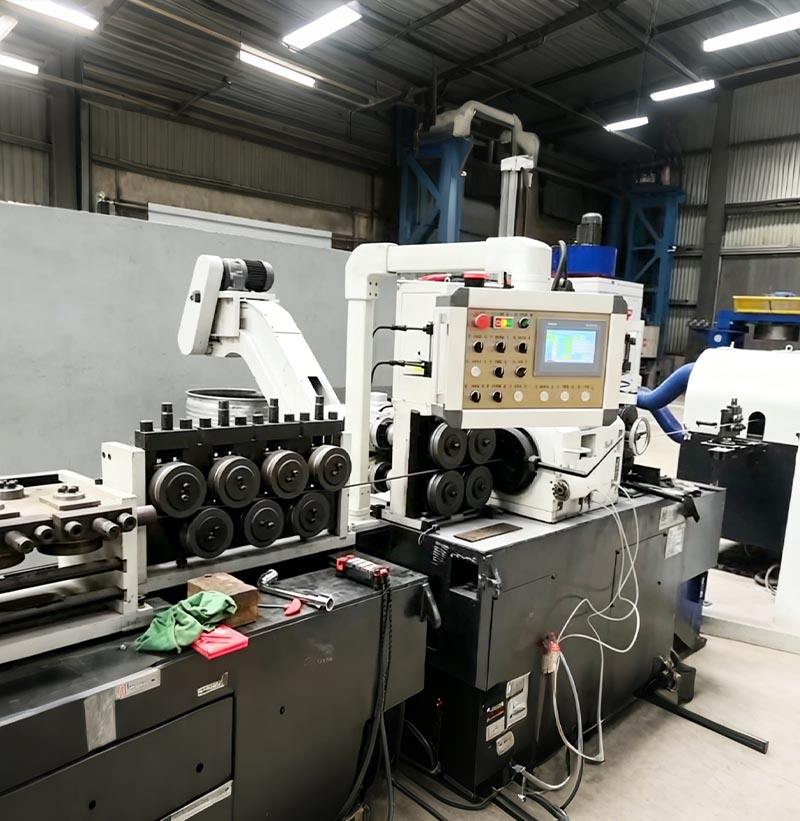
Coil To Bar Peeling&Straightening Line
Stainless steel wire rod is decoiled and pre-straightened, then peeled using a centerless lathe and cut to a precise length. Following a final precision straightening pass through a two-roll straightener, the resulting product is a high-precision stainless steel straight bar.
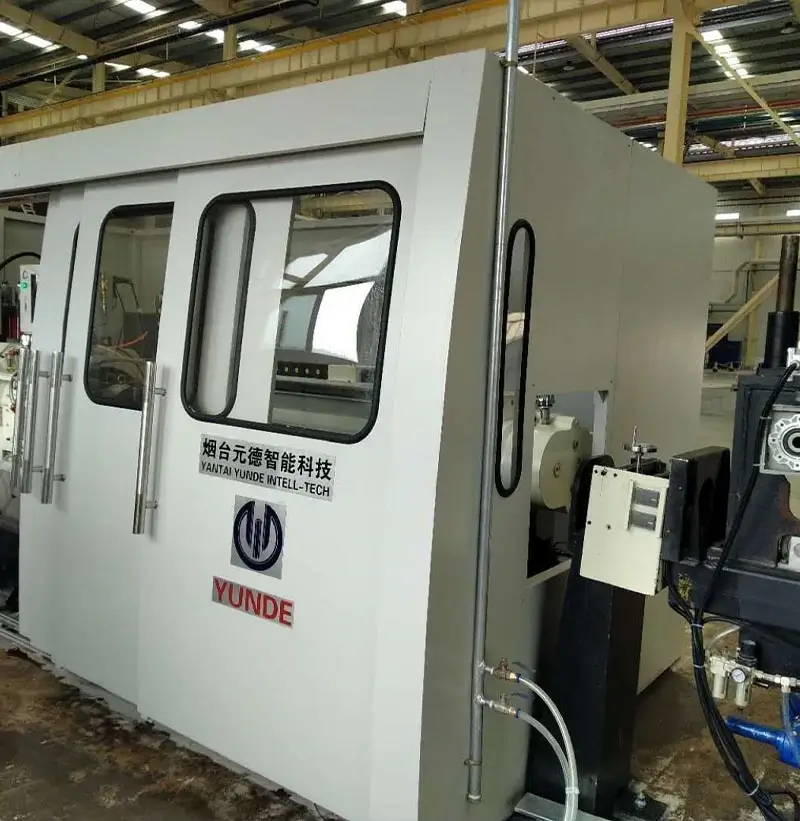
Peeling machine(centerless lathe)
The peeling machine (centerless lathe) unit is a product independently developed after comparing and contrasting the advantages of similar foreign products and combining them with the production characteristics of domestic enterprises, resulting in a simplified and optimized design.
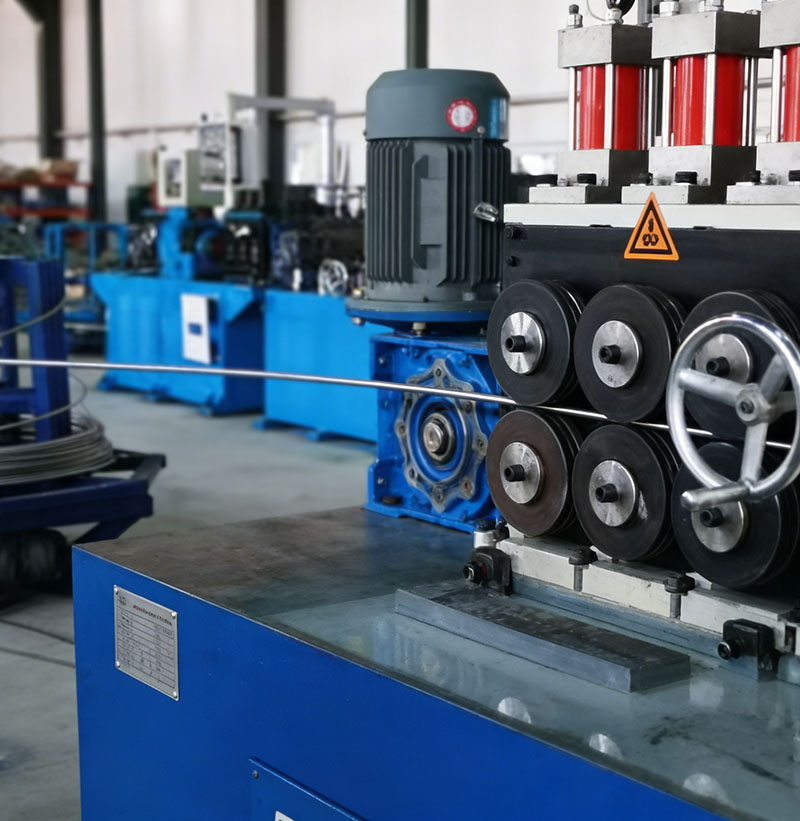
Coil to coil production line
Coil to coil production line is a serial of the machines includes payoff & straightening machine, peeling machine, clamping mechanism, pre-bending device, recoiler machine etc. through above machines, the black coil rod will be processed to bright coil rod with good surface quality
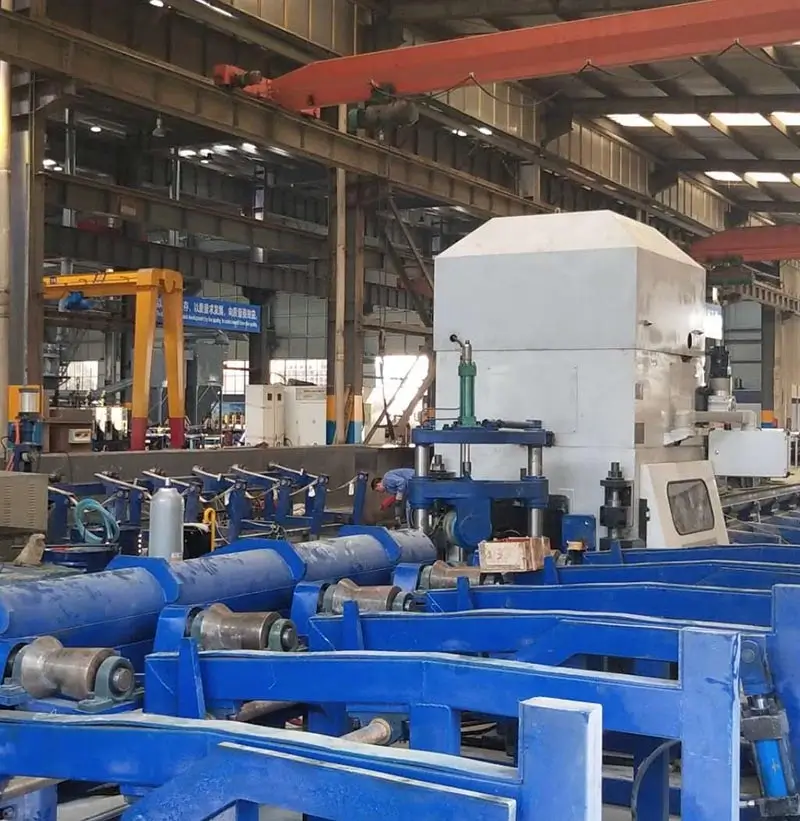
Straightening machine BS Series
A straightening machine is a device used to straighten metal profiles, bars, tubes, and wires. The straightening machine uses straightening rollers to compress the material, altering its straightness. Generally, there are two rows of straightening rollers, with varying numbers of rollers. There are also two-roller straightening machines, which rely on the angle change of two rollers (with a concave, hyperbolic shape) to straighten materials of different diameters.
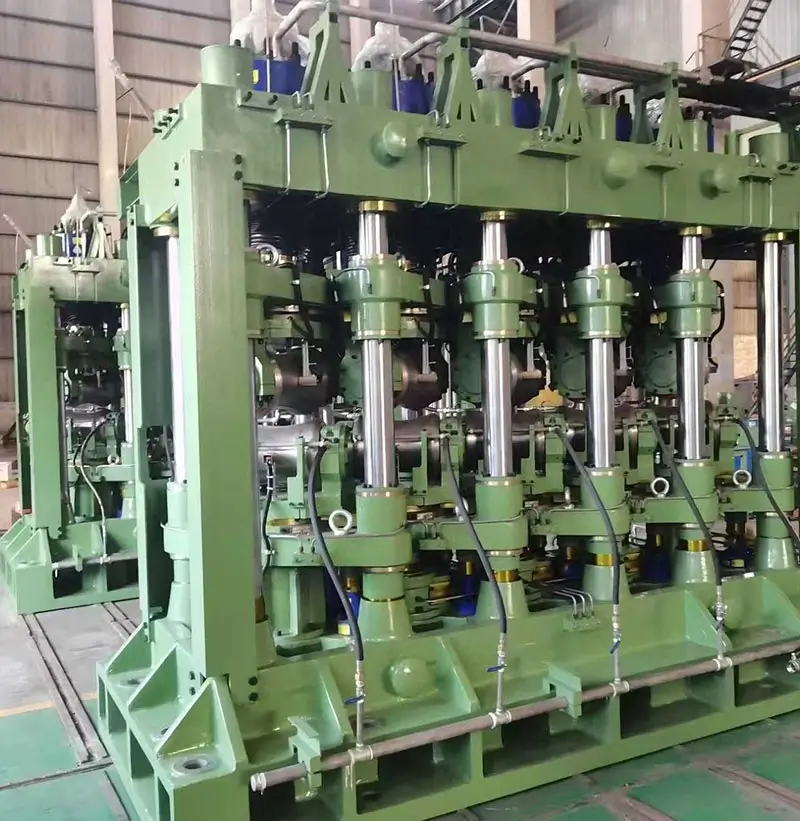
Multi-Roll Steel Pipe Straightening Machine
It is a mechanical device used to straighten the curvature and ovality of steel pipes. It is used to straighten pipes made of high alloy, corrosion-resistant, heat-resistant, heat-resistant steel and alloy, iron-nickel, nickel and titanium alloys , so as to reduce longitudinal non-straightness and cross-sectional non-roundness.
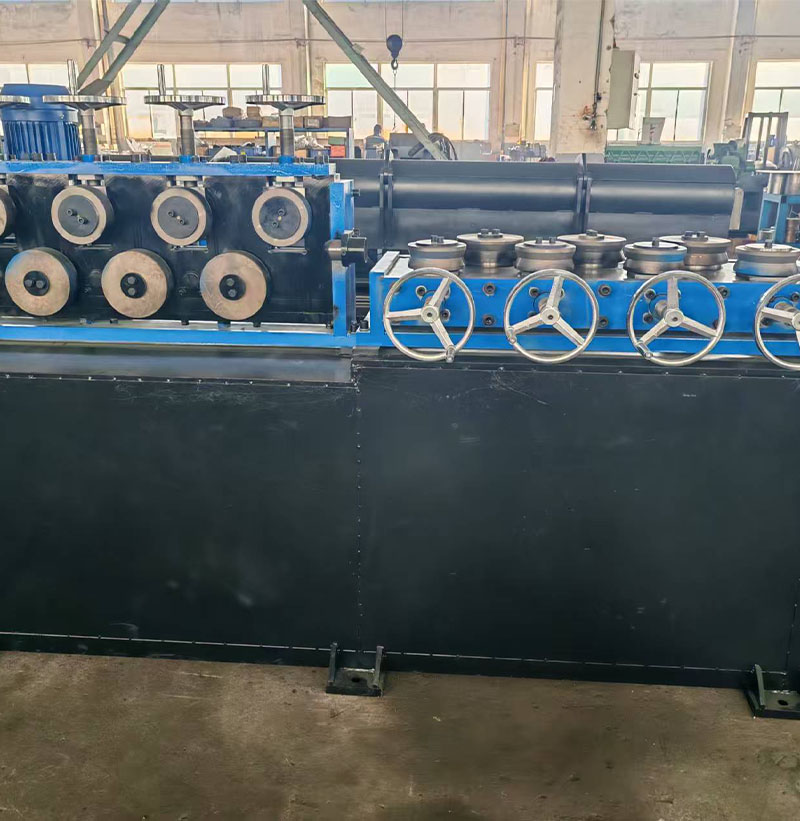
Horizontal and vertical straightening machine
Release the handwheel of the multi-roll horizontal and vertical straightening machine to allow the wire coil to pass through the straightening rollers. Tighten the handwheel to the empirically determined position, start the feeding device, and perform repeated straightening trials. Then feed the wire coil to the vertical straightening rollers, following the same procedure as for horizontal straightening. Finally, feed the wire coil to the peeling machine's feeding device.