
SOBRE NÓS
A Yantai Yunde Intelligent Technology Co., Ltd. possui apenas 30 anos de experiência em produção, atendeu mais de 300 clientes nacionais e estrangeiros e produziu mais de 2.000 máquinas.
SOLICITE UM ORÇAMENTO GRÁTIS
-
Lar

-
Blog
-
Blogs do setor
- How Are Machine-Turned and Peeled Bars Produced

How Are Machine-Turned and Peeled Bars Produced
-
autor
- 13,Agosto
 autor
autor 
Introdução
Buyers specify máquina girou e descascou bars when they need controlled diameter, low surface roughness, and removal of defects left by hot rolling. A peeling machine achieves this result by removing a controlled outer layer while the bar moves through a controlled feed system. The buying decision therefore depends on incoming stock condition, removal allowance, finished size, throughput, and inspection—not on appearance alone.
What Does the Peeling Process Remove?
The process converts hot rolled round bars into bright bars by removing the defective surface layer through cutting rather than grinding. Yunde peeling machines are designed to remove scale, decarburized layers, cracks, and related surface defects from long round metal stock. The finished peeled steel bar can then move to downstream sizing or component machining with a cleaner, more consistent surface.
From Incoming Bar to Bright Stock
A stable sequence starts with inspection and trial cutting before normal production. Operators confirm material grade, diameter variation, straightness, hardness, and end preparation; set the finished diameter and single-side cutting depth; run a trial bar; then verify diameter and surface roughness. This sequence makes bar peeling a controlled machining step instead of a cosmetic finish.
Why Incoming Condition Still Matters
Incoming condition determines whether the planned allowance can fully remove defects without wasting sound metal. Bent stock, excessive ovality, inconsistent hardness, poor chamfering, or wide diameter variation can affect feeding stability and cutting load. Buyers should therefore provide representative samples and define both the worst incoming condition and the required finished bar, not only a nominal diameter.

How Does the Machine Control Size and Finish?
UM máquina de descascar barras controls the cutting process through coordinated tool positioning, spindle rotation, clamping, and material travel. CNC configurations use PLC multipoint control, online electric tool adjustment, and closed-loop diameter control to respond to small incoming changes. The objective is repeatable metal removal, not a promise that one setting fits every material or bar condition.
Quality Targets Must Be Read Together
Yunde’s current PM range specifies diameter tolerance up to IT8 and surface roughness of Ra 1.6 μm or better across the listed models. ISO 286-1 defines tolerance classes for linear sizes, including cylinders, so IT8 is a class rather than one fixed micron value. Buyers must confirm the actual permitted deviation for each nominal finished diameter.
| Process checkpoint | What to control | Acceptance evidence |
| Incoming stock | Grade, hardness, diameter spread, straightness, surface defects | Sample inspection and agreed worst-case stock |
| Cutting setup | Finished diameter, removal allowance, single-side depth, feed rate | Approved first-bar measurements |
| Machine control | Tool position, clamping, spindle condition, stable travel | Consistent cut without feed or clamp marks |
| Final inspection | Diameter at several positions, Ra value, remaining visible defects | Inspection record tied to the production lot |
Which PM Range Fits the Production Plan?
Model selection should begin with the complete operating range, not only the maximum diameter listed in a brochure. The máquina de descascar barras redondas range runs from PM25 for Φ6–25 mm stock to PM350 for Φ150–350 mm stock. Listed minimum lengths rise from 1.2 m to 4.5 m, while model speeds and cutting depths change substantially as capacity increases.
The PM25 is listed at 1–30 m/min with 0.25–1 mm single-side cutting depth and a 22 kW main motor. The PM350 is listed at 0.2–2 m/min with 1–10 mm depth and a 200 kW main motor. Both automatic CNC and semi-automatic versions are listed, so automation level should match changeover frequency, staffing, and line integration.
Quotation Inputs That Prevent Rework
A useful inquiry defines the process window and the commercial boundary. Include these items before a steel peeling machine is sized:
*Material grades, length range, surface hardness range, surface roughness, diameter tolerance, incoming diameter range, ovality, straightness, and defect depth.
*Finished diameter and tolerance, target surface roughnessand removal allowance.
*Required output per shift, preferred automatic or semi-automatic control, and changeover pattern.
*Upstream feeding, downstream handling, inspection method, utilities, layout, and export destination.
These inputs also clarify whether a peeled steel bar will leave the machine as the final saleable product or continue into another operation. A round bar peeling machine inquiry that ignores stock variability may result in a technically correct quotation that does not match the actual production condition.

How Should Buyers Verify the Result?
Approve the Process, Not One Good Sample
Acceptance should cover repeatability across representative stock. Buyers can record incoming size, programmed cutting depth, feed rate, final diameter at multiple positions, Ra result, visible defect removal, and tool condition. A peeled bar sample is useful only when its settings and incoming material condition can be reproduced during production.
Plan Service and Packaging Before Shipment
Yunde lists a 12-month free warranty, long-term technical support, free operator training at the factory, response within 24 hours, and overseas installation, commissioning, and training support. Export packing uses moisture- and shock-resistant wrapping with plywood or wood cases, trays, and reinforcement. Buyers should confirm the exact service scope and packing plan in the order.
Plan Your Peeling Project
Send Yunde your material specification, material bar diameters range, length range, tensile strength, surface hardness, straightness, and the roundness, surface roughness, diameter tolerance grade of the raw material and request of the peeled bar; cutting depth, throughput, and production layout. We can use those inputs to match the PM operating range, define a trial plan, and prepare a quotation without mixing requirements from unrelated machines.
Perguntas frequentes
What defects can peeling remove from a round bar?
Peeling can remove the planned outer layer containing scale, decarburized material, cracks, and similar surface defects. Removal depth must exceed the defect depth while preserving enough stock to meet the finished diameter.
Is a peeled steel bar the same as a ground bar?
No. A peeled steel bar is produced by cutting away the surface layer. Grinding uses abrasive contact and is a different process. The correct choice depends on defect depth, stock allowance, required tolerance, and the downstream route.
How much material should a peeling pass remove?
The allowance should be based on the deepest defect, incoming diameter spread, and finished size. Yunde PM models list different single-side depth ranges, so the trial must stay within the selected machine and tool setup.
What does a steel peeling machine quotation require?
A steel peeling machine quotation requires material grade hardness, straightness, tensile strength, incoming and finished diameters, diameter tolerance requirement, surface roughness Ra target, length, output, automation preference, layout, utilities, inspection method, and destination. Samples help verify difficult stock.
What support follows round bar peeling machine delivery?
Round bar peeling machine support can include installation guidance, commissioning, operator training, warranty service, and long-term technical support. Confirm who supplies travel, utilities, foundations, test material, and acceptance instruments before shipment.
Postagem recente

Produtos relacionados
Produtos mais vendidos
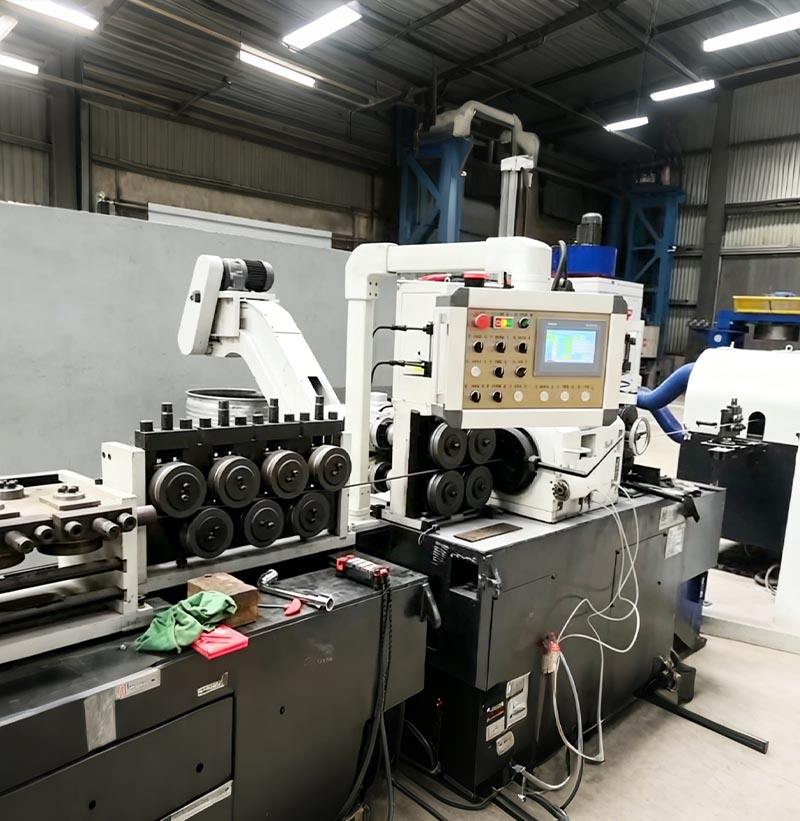
Linha de alinhamento de descascamento da bobina à barra
O fio-máquina de aço inoxidável é desenrolado e pré-endireitado, depois desbastado em um torno sem centros e cortado em um comprimento preciso. Após uma passagem final de endireitamento de precisão em uma endireitadeira de dois rolos, o produto resultante é uma barra reta de aço inoxidável de alta precisão.
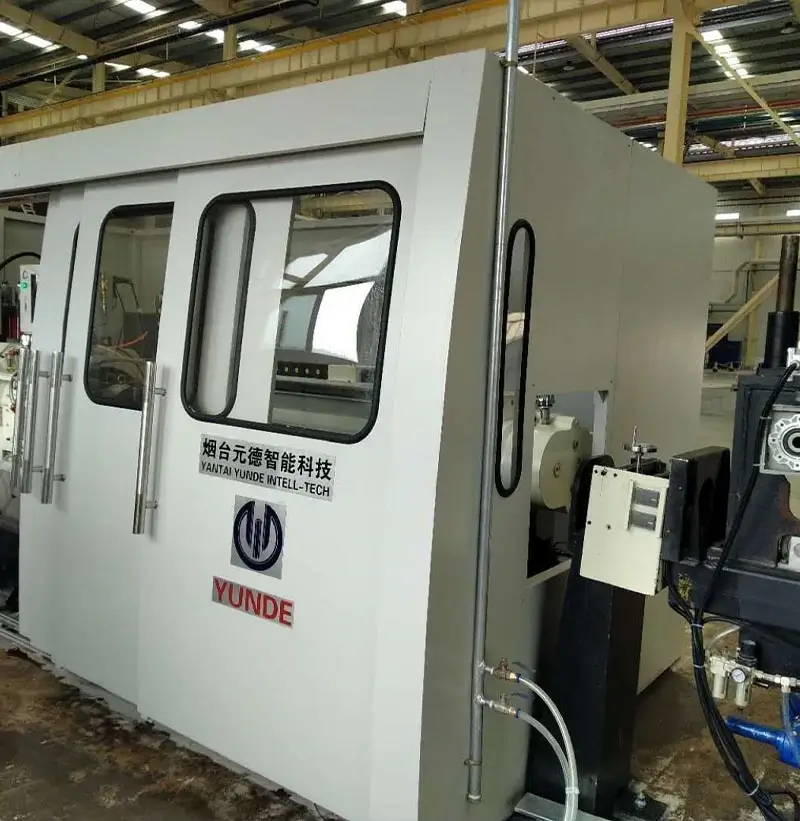
Máquina de descascar (torno sem centros)
A unidade de descascamento (torno sem centros) é um produto desenvolvido de forma independente após a comparação e o contraste das vantagens de produtos estrangeiros similares, combinando-as com as características de produção das empresas nacionais, resultando em um projeto simplificado e otimizado.
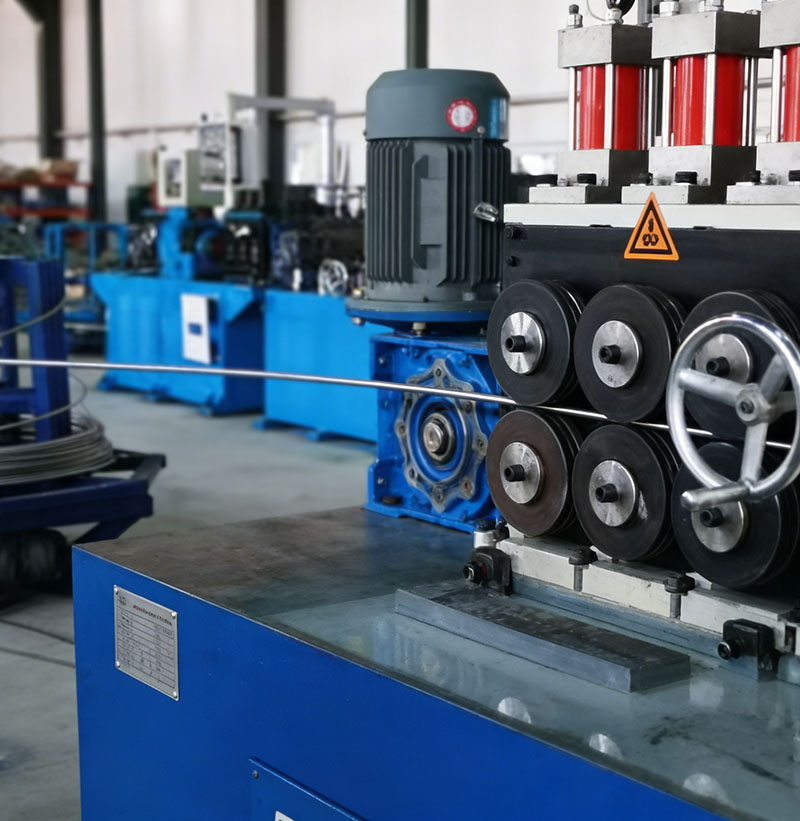
Linha de produção bobina a bobina
A linha de produção bobina a bobina é composta por uma série de máquinas, incluindo desenrolador e endireitador, descascador, mecanismo de fixação, dispositivo de pré-dobra, rebobinador, etc. Através dessas máquinas, a bobina preta é processada em bobina brilhante com boa qualidade de superfície.
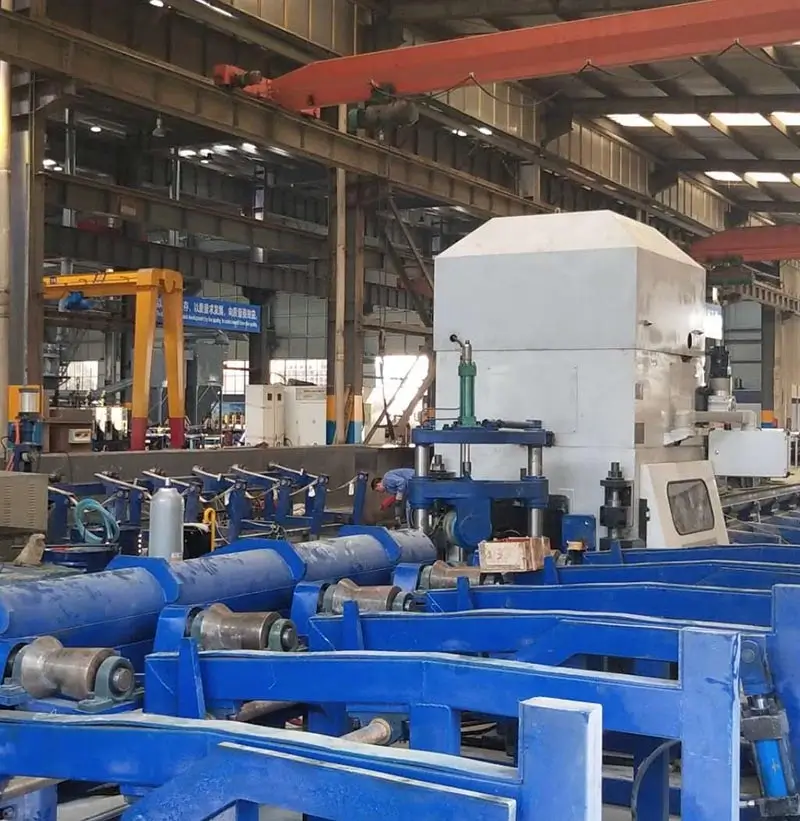
Máquina de endireitar série BS
Uma máquina de endireitar é um dispositivo usado para endireitar perfis metálicos, barras, tubos e fios. A máquina de endireitar utiliza rolos de endireitamento para comprimir o material, alterando sua retidão. Geralmente, existem duas fileiras de rolos de endireitamento, com números variáveis de rolos. Existem também máquinas de endireitar com dois rolos, que dependem da mudança de ângulo de dois rolos (com formato côncavo hiperbólico) para endireitar materiais de diferentes diâmetros.
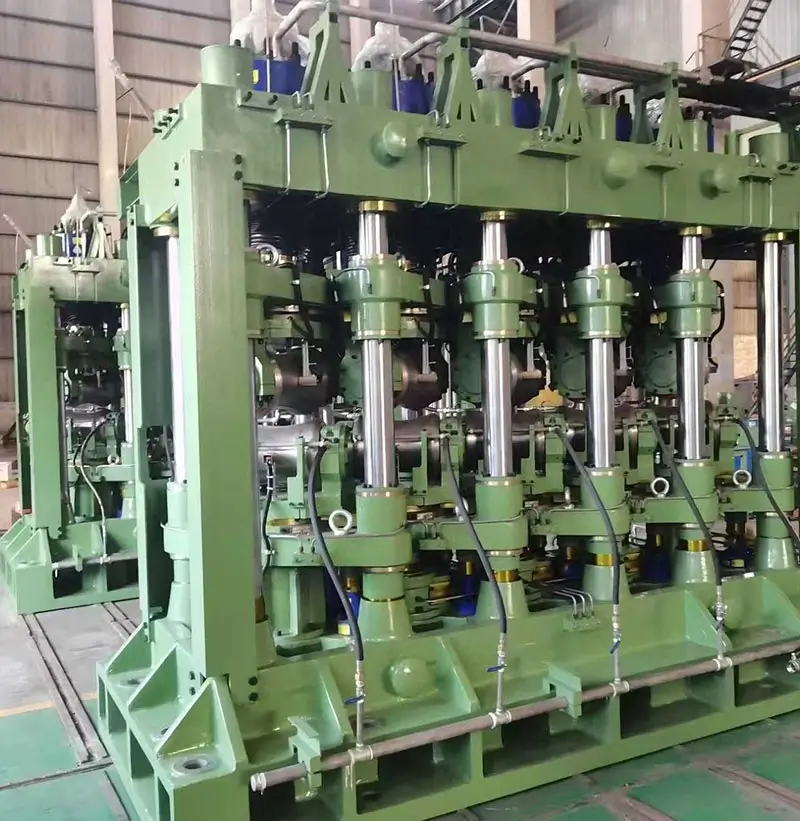
Máquina de endireitamento de tubos de aço com múltiplos rolos
É um dispositivo mecânico usado para corrigir a curvatura e a ovalização de tubos de aço. É utilizado para endireitar tubos feitos de aço e ligas de alta resistência, resistentes à corrosão e ao calor, bem como ligas de ferro-níquel, níquel e titânio, de modo a reduzir a não retilineidade longitudinal e a não circularidade da seção transversal.
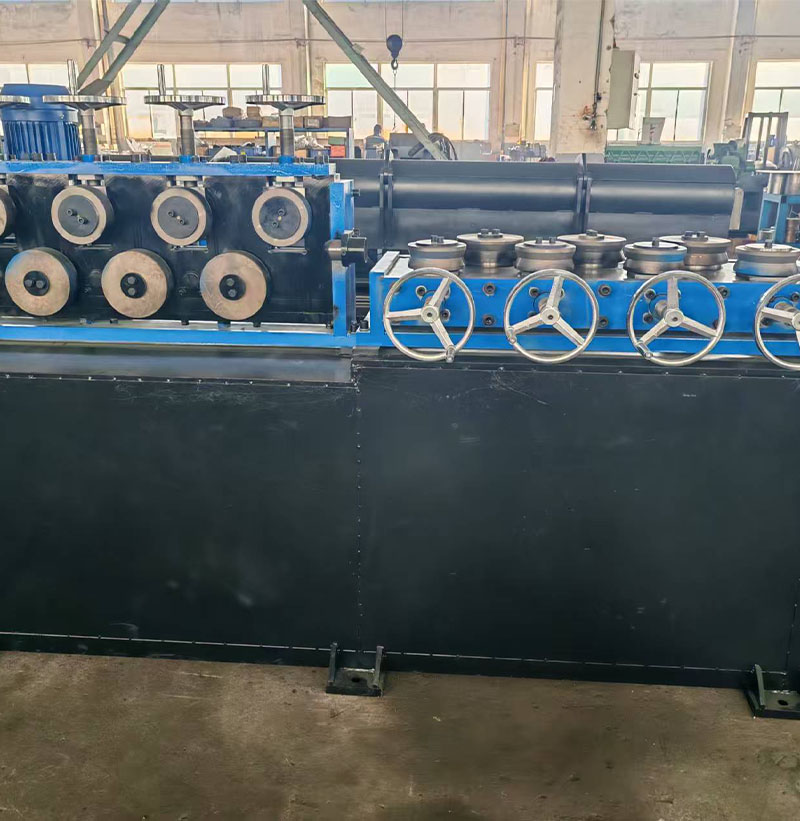
Máquina de endireitamento horizontal e vertical
Solte o volante da máquina de endireitar horizontal e vertical de múltiplos rolos para permitir que a bobina de arame passe pelos rolos de endireitamento. Aperte o volante até a posição determinada empiricamente, ligue o dispositivo de alimentação e realize testes de endireitamento repetidos. Em seguida, alimente a bobina de arame nos rolos de endireitamento vertical, seguindo o mesmo procedimento do endireitamento horizontal. Finalmente, alimente a bobina de arame no dispositivo de alimentação da máquina de descascar.