
معلومات عنا
شركة يانتاي يوندي للتكنولوجيا الذكية المحدودة لديها 30 عامًا فقط من الخبرة في الإنتاج، وقد خدمت أكثر من 300 عميل محلي وأجنبي، وأنتجت أكثر من 2000 آلة.
احصل على عرض سعر مجاني
-
بيت

-
مدونة
-
مدونات الصناعة
- Bar Straightening for Precision Component Manufacturing
Bar Straightening for Precision Component Manufacturing
-
 مؤلف
مؤلف - 17,سبتمبر
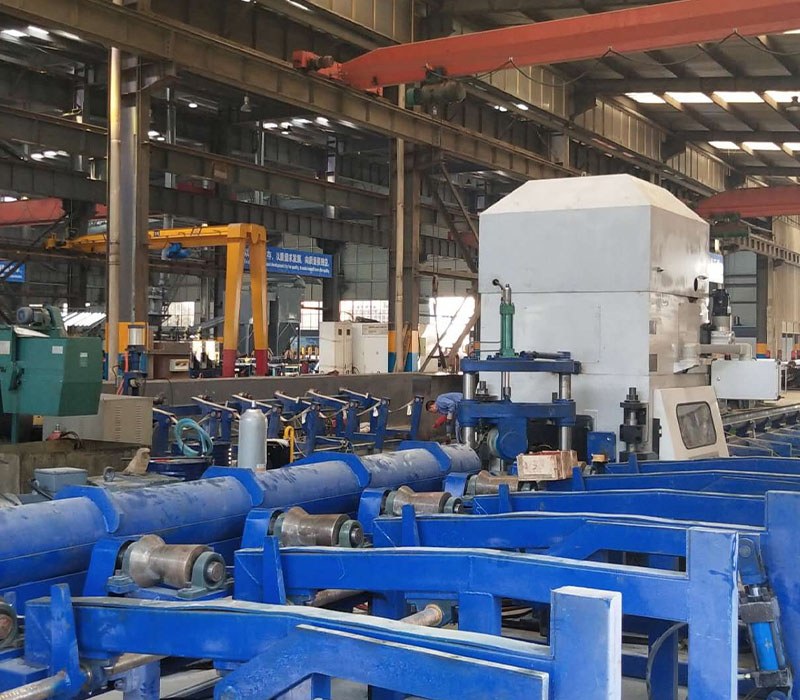
A bright round bar can have the right diameter and still cause trouble during machining. Bow changes how the stock sits, feeds and rotates. For processors supplying precision component manufacturers, straightening improves the geometry of the machining blank. Its value depends on how straightness, surface condition and material response relate to the next operation.
Why straightness matters before the first cut
Straightness describes the departure of a bar from a straight reference over a defined length. Diameter describes its cross-sectional size. A satisfactory diameter measurement therefore cannot establish whether a long bar is straight enough for its intended operation.
A bowed bar also leaves uneven material around the intended machining axis. Correcting that bow can make the available machining allowance more consistent. It does not create extra stock, repair internal defects or establish the final component’s dimensional tolerance.
Precision shafts make the distinction practical. A processor needs to supply stock that the component manufacturer can support and locate consistently. The customer’s drawing and process determine the required condition; a general description such as “precision bar” leaves too much unresolved.
This is the role of a round bar straightening machine in professional bar production: improving the geometry of the incoming blank before downstream operations have to accommodate it. Understanding how the correction happens explains why material and machine settings matter together.
How two rolls correct a curved bar
أ two roll straightening machine works through controlled alternating bending and reverse bending as the bar moves through the roll contact region. Part of the deformation must remain after the load is removed. Purely elastic deflection would allow the bar to spring back toward its previous shape.
Roll contour, roll angle, roll gap and straightening speed influence that bending action. The relevant setting depends on the bar diameter and material response. Copying a setup from a different grade can produce a different result even when the nominal diameter is unchanged.
For processors evaluating this method, YUNDE’s BS series provides a frame-type, two-roll configuration for straight bars. Its concave and convex rollers use line contact, while the rigid overall frame helps maintain the roll-gap position. The BS series is the machine family discussed here.
An independent hydraulic system provides pressure holding and load release. These functions support controlled operation, but their presence alone does not establish the result for a particular batch. The useful evidence is the condition of representative bars after processing with the proposed setup.

What BS accuracy figures mean for machining stock
The BS80 provides a concrete example of how several specifications interact. Its processing diameter range is 20–80 mm, with a minimum bar length of 2 m and a listed speed range of 10–24 m/min. A short component blank below that minimum length falls outside this stated processing envelope.
Its listed straightness is 0.25 mm/m. To work together with the Yunde Peeling Machine and straightening machine, we can achieve bright bars with diameter tolerance ≤IT8 and surface roughness Ra≤0.8 μm.
| BS80 quality characteristic | Listed value | Meaning for the processor |
| استقامة | 0.25 مم/م | Relates curvature to a stated length basis. |
| تفاوت القطر | ≤IT8 | A tolerance grade, not a fixed millimetre allowance. |
| خشونة السطح | Ra≤0.8 ميكرومتر | Describes surface texture, not the bar’s longitudinal bow. |
The straightness entry requires a defined inspection method. Agree on the support arrangement, measured length, end treatment and acceptance criterion. Multiplying a per-metre figure by the total bar length does not, by itself, establish an allowable full-length bow or rotational runout.
أ آلة تقويم القضيب should therefore be assessed against the drawing’s actual requirements. The BS80 example explains one processing envelope; it does not make that model the right choice for every combination of bar diameter, material strength and finished-component requirements.
Why a straight bar can still distort during machining
Straightening changes the material’s stress distribution as well as its shape. Research on two-roll straightening of 42CrMo bars has identified residual stress after the operation. A straight external profile should therefore never be presented as proof that a bar is free of internal stress.
Removing material during subsequent machining can disturb an existing stress balance. For a slender precision part, the practical question is whether the supplied stock stays sufficiently stable through the customer’s planned process. Straightness at dispatch answers only part of that question.
Representative trials should connect the straightened bar to its next operation. A useful trial records the material grade and condition, incoming curvature, machine setup, outgoing straightness and the result after the intended machining sequence. This ties the evaluation to an identifiable batch rather than a general capability claim.
Handling belongs in that evaluation too. Check bars after they have passed through the intended transfer and storage stages. The آلة فرد الشعر establishes a processing step; the useful supply condition is the one that reaches the component manufacturer.
A clearer basis for precision bar supply
Bar straightening supports precision manufacturing by correcting the stock geometry that machining begins with. The strongest specification combines a defined straightness requirement with diameter, surface roughness and a material-specific trial. For the BS series, keep the selected model’s processing envelope and the customer’s downstream acceptance criteria in the same discussion.

التعليمات
How does a two-roll machine straighten round bars?
The rolls impose bending and reverse bending through their contact with the moving bar. Controlled permanent deformation reduces the remaining curvature after unloading. Roll geometry and settings influence the result.
Is straightness the same as diameter tolerance?
No. Straightness concerns longitudinal form; diameter tolerance concerns cross-sectional size. A bar can satisfy one requirement while missing the other, so both need separate evaluation.
What straightness is listed for the BS80?
The BS80 has a listed straightness of 0.25 mm/m. Confirm the inspection method, material condition and agreed acceptance criteria before treating that entry as a production commitment.
Does straightening remove all residual stress?
No such conclusion follows from a straightness measurement. Two-roll straightening can leave residual stresses, so demanding precision applications may need trials through the subsequent machining process.
Can the BS80 process short component blanks?
Its stated minimum bar length is 2 m. A shorter blank is outside that listed envelope. Evaluate the appropriate stock-processing stage and model configuration before assuming it can be handled.
منشور حديث





المنتجات ذات الصلة
المنتجات الأكثر مبيعاً

تقشير اللفائف إلى القضبان - خط التمليس
يتم فك لفائف سلك الفولاذ المقاوم للصدأ وتقويمه مبدئيًا، ثم يُقشر باستخدام مخرطة بدون مركز ويُقطع إلى طول دقيق. بعد عملية تقويم نهائية دقيقة باستخدام جهاز تقويم ثنائي الأسطوانات، يكون المنتج النهائي عبارة عن قضيب مستقيم عالي الدقة من الفولاذ المقاوم للصدأ.

آلة تقشير (مخرطة بدون مركز)
وحدة آلة التقشير (المخرطة بدون مركز) هي منتج تم تطويره بشكل مستقل بعد مقارنة مزايا المنتجات الأجنبية المماثلة ودمجها مع خصائص الإنتاج للمؤسسات المحلية، مما أدى إلى تصميم مبسط ومحسن.

خط إنتاج اللفائف
خط إنتاج اللفائف عبارة عن سلسلة من الآلات تشمل آلة فك وتقويم، وآلة تقشير، وآلية تثبيت، وجهاز ثني مسبق، وآلة إعادة لف، وغيرها. من خلال هذه الآلات، تتم معالجة قضيب اللفائف الأسود ليصبح قضيب لفائف لامعًا ذو جودة سطحية عالية.

ماكينة فرد الشعر من سلسلة BS
آلة تقويم المعادن هي جهاز يُستخدم لتقويم القطاعات المعدنية، والقضبان، والأنابيب، والأسلاك. تستخدم هذه الآلة بكرات تقويم لضغط المادة، مما يُغير استقامتها. عادةً، تتكون آلة التقويم من صفين من بكرات التقويم، بأعداد متفاوتة. كما توجد آلات تقويم ثنائية البكرات، تعتمد على تغيير زاوية بكرتين (ذات شكل مقعر زائدي) لتقويم مواد ذات أقطار مختلفة.

ماكينة تقويم الأنابيب الفولاذية متعددة البكرات
هو جهاز ميكانيكي يُستخدم لتقويم انحناءات الأنابيب الفولاذية وتصحيح شكلها البيضاوي. يُستخدم لتقويم الأنابيب المصنوعة من الفولاذ عالي السبائك، والفولاذ المقاوم للتآكل، والفولاذ المقاوم للحرارة، والسبائك الحديدية والنيكل، وسبائك النيكل والتيتانيوم، وذلك لتقليل عدم استقامة الأنابيب في طولها وعدم استدارتها في مقطعها العرضي.

آلة تقويم أفقية ورأسية
حرر عجلة اليد الخاصة بآلة فرد الأسلاك متعددة البكرات الأفقية والرأسية للسماح بمرور لفة السلك عبر بكرات الفرد. أحكم ربط عجلة اليد في الوضع المحدد تجريبياً، وشغّل جهاز التغذية، وكرر عملية الفرد عدة مرات. ثم أدخل لفة السلك إلى بكرات الفرد الرأسية، باتباع نفس الإجراء المتبع في الفرد الأفقي. وأخيراً، أدخل لفة السلك إلى جهاز التغذية الخاص بآلة التقشير.


