
À PROPOS DE NOUS
La société Yantai Yunde Intelligent Technology Co., Ltd., forte de seulement 30 ans d'expérience en production, a servi plus de 300 clients nationaux et étrangers et a produit plus de 2 000 machines.
DEMANDEZ UN DEVIS GRATUIT
-
Maison

-
Blog
-
Blogs de l'industrie
- Pourquoi les barres haute résistance ont-elles besoin d'une machine à redresser les barres ?

Pourquoi les barres haute résistance ont-elles besoin d'une machine à redresser les barres ?
-
auteur
- 9,juillet
 auteur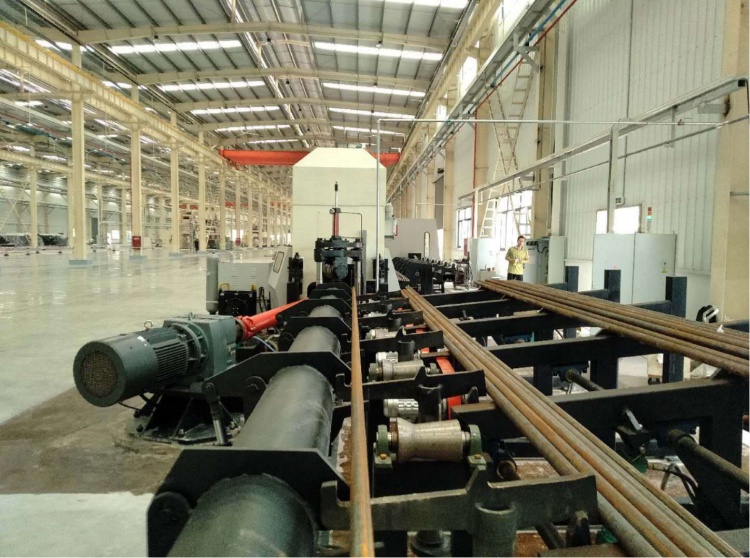
Introduction
Les barres à haute résistance sont largement utilisées dans la fabrication de pièces automobiles, de composants hydrauliques, d'arbres mécaniques, de ressorts et dans l'usinage de précision. Face aux exigences croissantes des usines en matière de rectitude, de finition de surface et de stabilité des processus en aval, la redresseuse de barres est devenue un élément clé des lignes de production modernes de redressage des métaux.
À YUNDENous nous spécialisons dans les équipements de finition pour l'acier rond, notamment le déroulage, le redressage de précision et le polissage des barres. En production, la redresseuse de la série BS est principalement utilisée pour le traitement des barres droites plutôt que des bobines. Elle intervient généralement après le dégrossissage ou le déroulage pour finaliser le redressage et garantir une barre brillante.
Pourquoi les barres à haute résistance sont-elles plus difficiles à redresser ?
Les barres à haute résistance résistent mieux à la déformation que les barres rondes ordinaires. Lors du redressage, la machine doit appliquer une force de correction suffisante tout en protégeant la surface de la barre et en limitant le retrait de diamètre aux extrémités. Si le bâti n'est pas suffisamment stable, l'écartement des rouleaux peut varier sous la charge, entraînant un redressage irrégulier.
C’est pourquoi une redresseuse de barres à cadre est importante. Selon la base de connaissances, cette machine applique un contrôle de la pression constant, un compactage par rouleaux et une structure de cadre flexible, ce qui la rend plus adaptée aux matériaux à haute résistance, aux forces de redressage plus importantes et à une sécurité accrue. Elle contribue également à réduire le retrait de diamètre aux extrémités des barres.
Qu'est-ce qui différencie une machine à redresser les barres de type cadre ?
Une redresseuse de barres à cadre utilise des rouleaux de redressage pour comprimer et redresser les barres métalliques. Pour les barres à haute résistance, sa valeur réside dans sa rigidité structurelle, la stabilité de sa pression et le positionnement précis de l'écartement des rouleaux. Ces caractéristiques permettent à la machine de garantir un redressement constant lors d'une production en continu.
Le système hydraulique indépendant assure le maintien de la pression et la décompression, pour des réglages plus rapides et plus sûrs. La plaque de guidage facilite, accélère et fiabilise l'installation, tandis que la structure à châssis renforcé améliore la robustesse globale de la machine. Pour les acheteurs comparant marques de machines à lisserCes détails sont plus importants que l'apparence car ils affectent directement la rectitude, la protection de la surface et le fonctionnement à long terme.

Comment fonctionne le processus de redressement des barres dans la production de barres brillantes ?
Dans la production de barres brillantes, le redressage ne constitue généralement pas une étape isolée. Les barres noires laminées à chaud, c'est-à-dire les barres non décapées présentant de la calamine et des défauts de surface, peuvent d'abord subir un dégrossissage avant le décapage. La machine de décapage élimine ensuite les couches d'oxyde, les fissures, les couches décarburées et autres défauts de surface. Après décapage, la surface de la barre est plus propre, mais la rectitude finale dépend toujours d'un redressage de précision.
Le procédé pratique de redressage de barres comprend les étapes suivantes : préparation des barres noires, dégrossissage, déroulage, redressage de précision, découpe, chanfreinage et mise en paquets. Ce procédé consiste en un pré-redressage, un déroulage et un redressage de précision. Les barres noires sont d'abord dégrossies, puis déroulées pour obtenir des barres brillantes, et enfin redressées avec précision pour une rectitude et un état de surface optimaux.
Quels paramètres les acheteurs doivent-ils vérifier avant de choisir une marque de lisseur ?
Lors du choix d'une machine à redresser, il est essentiel de ne pas se focaliser uniquement sur le prix. Le modèle idéal doit correspondre au diamètre de la barre, à la longueur minimale requise, à la vitesse d'avance, à la rectitude souhaitée, à la rugosité de surface, à la puissance nécessaire et à la structure du châssis. Ces paramètres sont déterminants pour le bon fonctionnement de la machine sur une ligne de production de redressage de métaux.
| Modèle | Plage de diamètres | Longueur | Vitesse d'alimentation | Tolérance de diamètre | Rugosité de surface | Rectitude | Principal Puissance du moteur | Structure |
| BS20 | Φ6–20 mm | ≥2 m | 10–40 m/min | ≤IT8 | Ra ≤ 0,8 μm | 0,10 mm/m | 7,5 × 2 kW | Cadre |
| BS40 | Φ10–40 mm | ≥2 m | 10–35 m/min | ≤IT8 | Ra ≤ 0,8 μm | 0,15 mm/m | 22×2 kW | Cadre |
| BS60 | Φ15–60 mm | ≥2 m | 10–30 m/min | ≤IT8 | Ra ≤ 0,8 μm | 0,20 mm/m | 30×2 kW | Cadre |
| BS80 | Φ20–80 mm | ≥2 m | 10–24 m/min | ≤IT8 | Ra ≤ 0,8 μm | 0,25 mm/m | 37×2 kW | Cadre |
| BS100 | Φ25–100 mm | ≥3 m | 10–24 m/min | ≤IT8 | Ra ≤ 0,8 μm | 0,30 mm/m | 45×2 kW | Cadre |
| BS130 | Φ35–130 mm | ≥3 m | 10–20 m/min | ≤IT8 | Ra ≤ 0,8 μm | 0,35 mm/m | 75×2 kW | Cadre |
| BS160 | Φ40–160 mm | ≥3 m | 10–20 m/min | ≤IT8 | Ra ≤ 0,8 μm | 0,40 mm/m | 90×2 kW | Cadre |
Comment la norme BS100 prend-elle en charge le redressage des barres de taille moyenne et grande ?
La machine BS100 est adaptée au traitement de barres de moyenne et grande taille. Elle couvre les barres de Φ25 à 100 mm, nécessite une longueur minimale de 3 m, atteint une vitesse d'alimentation de 10 à 24 m/min et garantit une rectitude de 0,30 mm/m. Ces caractéristiques la rendent particulièrement utile pour le redressage de barres brillantes après déroulage, notamment pour les usines traitant des barres rondes d'acier de grandes dimensions.
Un cas concret démontre qu'une machine de redressage à cadre BS100 destinée à un client d'une aciérie chinoise a passé avec succès ses essais et est entrée en service. Cela prouve que le modèle est adapté à un environnement sidérurgique.
Comment une ligne de production de redressage de métaux peut-elle améliorer le rendement ?
Une ligne de production de redressage de métaux améliore le rendement en reliant le dégrossissage, le pelage, le redressage de précision, le polissage, la découpe, le chanfreinage, l'empilage et le conditionnement. La machine de pelage améliore la qualité de surface, tandis que… machine à redresser les barres corrige la courbure et stabilise la géométrie finale de la barre.
Les tours sans centre, les machines à redresser et les machines à polir peuvent former une ligne de production automatique pour le décapage et le redressage de précision de longues pièces métalliques rondes, produisant des matériaux métalliques brillants de haute précision.

Conclusion
Les barres à haute résistance nécessitent une machine de redressage à cadre stable, car leur force de correction, leurs exigences de surface et leurs normes d'usinage sont plus élevées. Pour le redressage de barres brillantes, la machine ne constitue pas une simple étape de finition. Elle représente le dernier point de contrôle qualité avant la découpe, le chanfreinage, le conditionnement et la livraison. Pour le choix technique ou la configuration de la série BS, contacter YUNDE pour une solution axée sur un projet.
FAQ
Combien coûte une machine à redresser les barres ?
Le coût dépend de la plage de diamètres, de la force de redressage, de la vitesse d'alimentation, du niveau d'automatisation, de la configuration hydraulique et de son fonctionnement, qu'il s'agisse d'une machine seule ou intégrée à une ligne de production de redressage de métaux.
Quels services après-vente inclut la machine à lisser les barres YUNDE ?
Le document de service indique que les acheteurs peuvent bénéficier d'une garantie gratuite de 12 mois, d'une assistance technique à long terme, d'une formation gratuite en usine, d'une réponse sous 24 heures et de services à l'étranger pour l'assistance à l'installation, la mise en service et la formation à l'utilisation.
Comment une machine à redresser les barres améliore-t-elle le redressement des barres brillantes ?ess?
Il corrige la courbure après le pelage ou le redressage grossier, permettant à la barre finie d'atteindre une meilleure rectitude, une surface plus lisse et des performances d'usinage plus stables.
Quelles marques de machines à lisser conviennent aux barres à haute résistance ?
Les acheteurs doivent comparer les marques de machines à redresser en fonction de la rigidité du châssis, du contrôle de la pression, de la précision de l'écartement des rouleaux, de la sécurité hydraulique, de la plage de diamètres, de la vitesse d'alimentation et des exemples de production éprouvés.
Une machine à redresser les barres peut-elle fonctionner dans une ligne de production de redressage de métaux ?
Oui. Il permet de réaliser le redressage grossier, le pelage, le polissage, la découpe, le chanfreinage, l'empilage et le regroupement pour achever le processus de redressage des barres et obtenir des barres brillantes finies.
Article récent

Produits associés
Produits les plus vendus
Ligne de lissage Coil To Bar
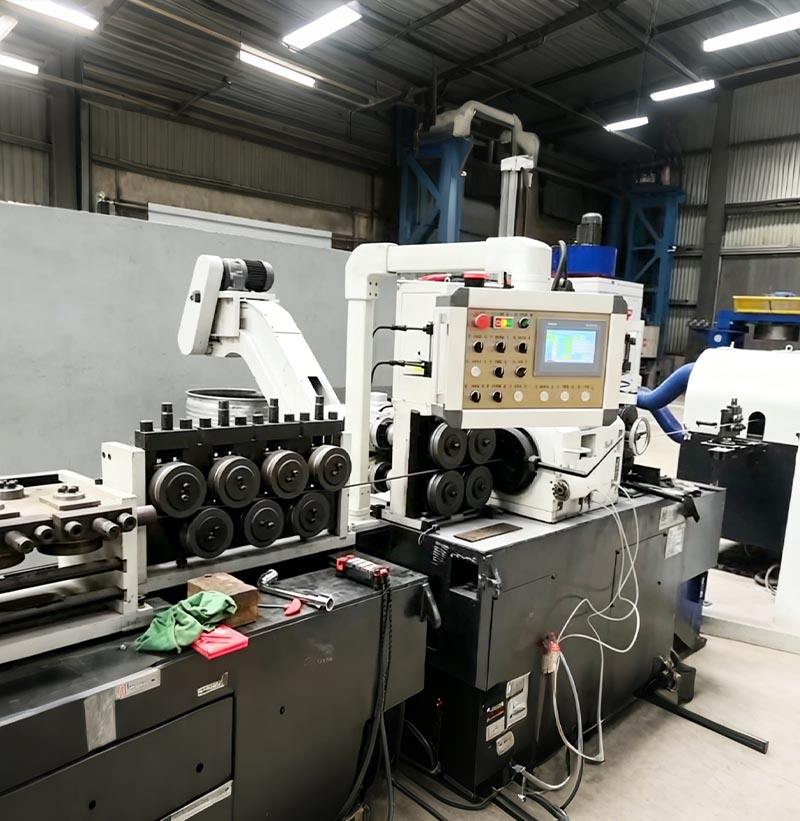
Le fil machine en acier inoxydable est déroulé et pré-redressé, puis élagué à l'aide d'un tour sans centre et coupé à une longueur précise. Après un dernier passage de redressage de précision dans une redresseuse à deux rouleaux, on obtient une barre droite en acier inoxydable de haute précision.
Machine à peler (tour sans centre)
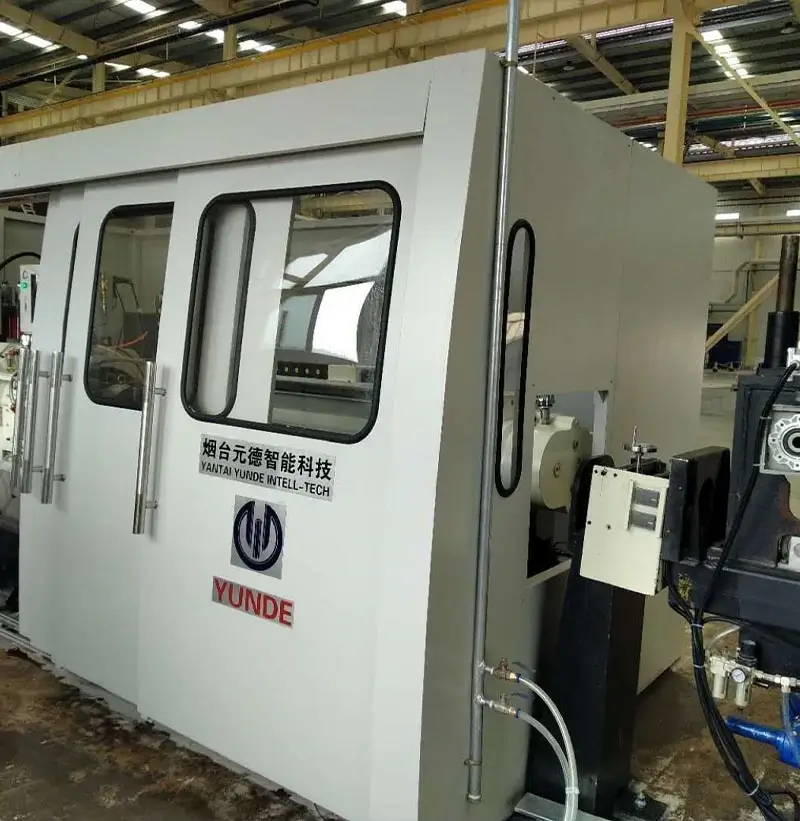
L'unité de machine à peler (tour sans centre) est un produit développé indépendamment après avoir comparé et contrasté les avantages de produits étrangers similaires et les avoir combinés avec les caractéristiques de production des entreprises nationales, ce qui a abouti à une conception simplifiée et optimisée.
Ligne de production bobine à bobine
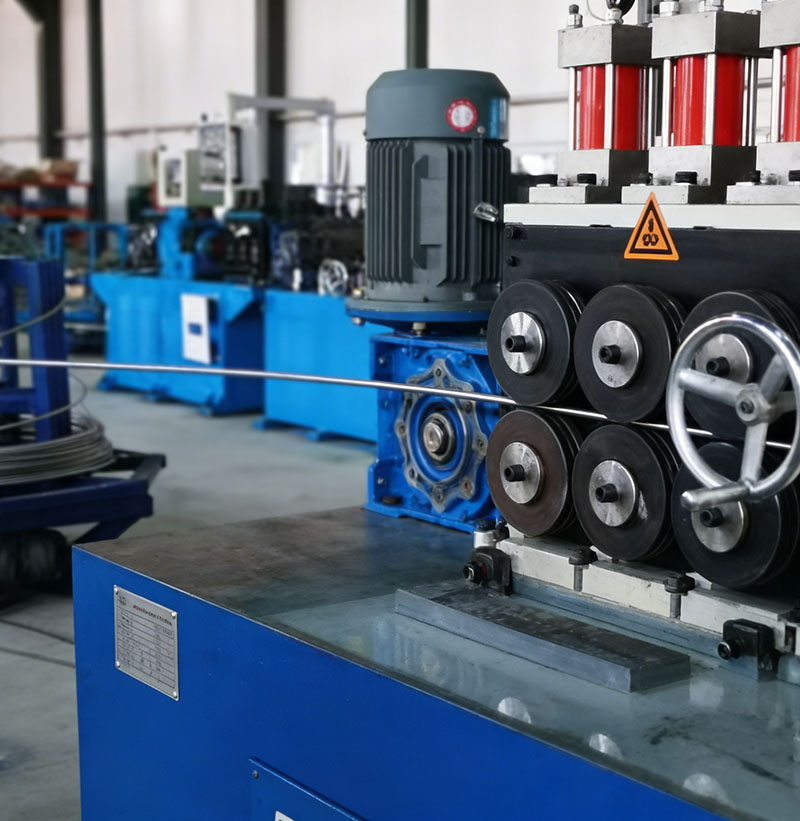
La ligne de production de bobine à bobine est composée d'une série de machines comprenant une dérouleuse et redresseuse, une éplucheuse, un mécanisme de serrage, un dispositif de pré-cintrage, une enrouleuse, etc. Grâce à ces machines, la barre de bobine noire est transformée en barre de bobine brillante de haute qualité.
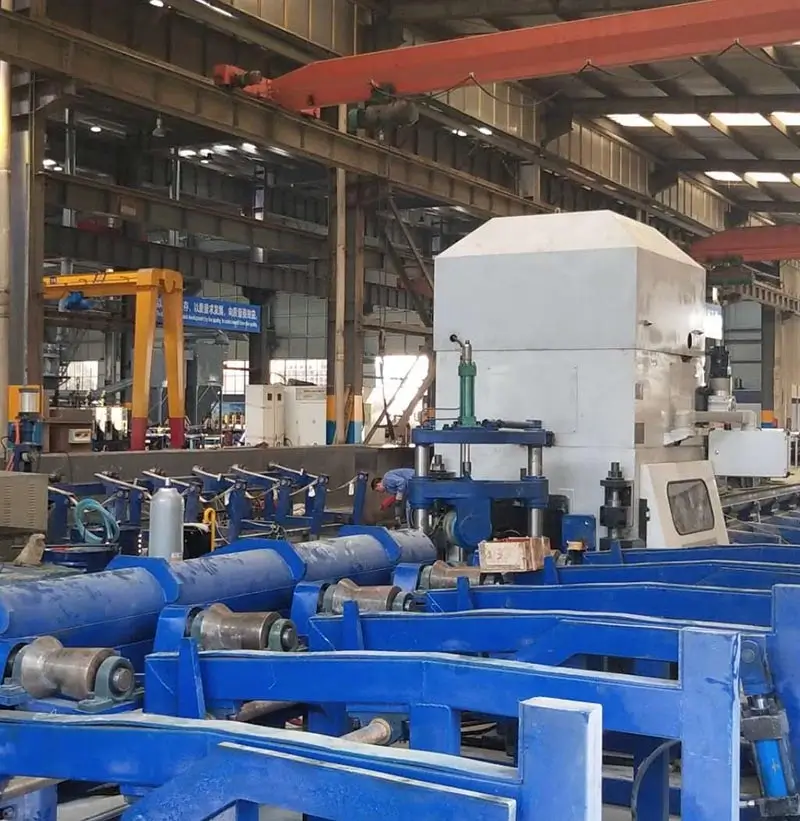
Machine à lisser série BS
Une redresseuse est un appareil servant à redresser les profilés, barres, tubes et fils métalliques. Elle utilise des rouleaux redresseurs pour comprimer le matériau et ainsi le redresser. Généralement, elle comporte deux rangées de rouleaux, dont le nombre peut varier. Il existe également des redresseuses à deux rouleaux, qui exploitent la variation d'angle de deux rouleaux (de forme concave ou hyperbolique) pour redresser des matériaux de diamètres différents.
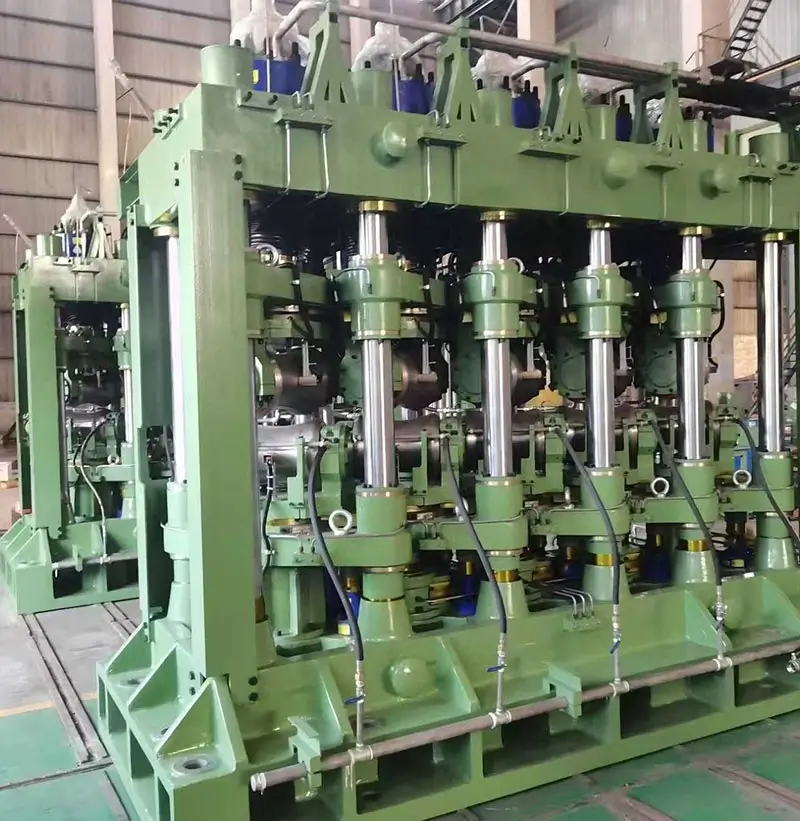
Machine à redresser les tubes en acier à rouleaux multiples
Il s'agit d'un dispositif mécanique servant à redresser la courbure et l'ovalisation des tubes en acier. Il est utilisé pour redresser les tubes en acier fortement allié, résistant à la corrosion, réfractaire, en acier et alliages réfractaires, en fer-nickel, en nickel et en alliages de titane, afin de réduire les défauts de rectitude longitudinale et de circularité transversale.
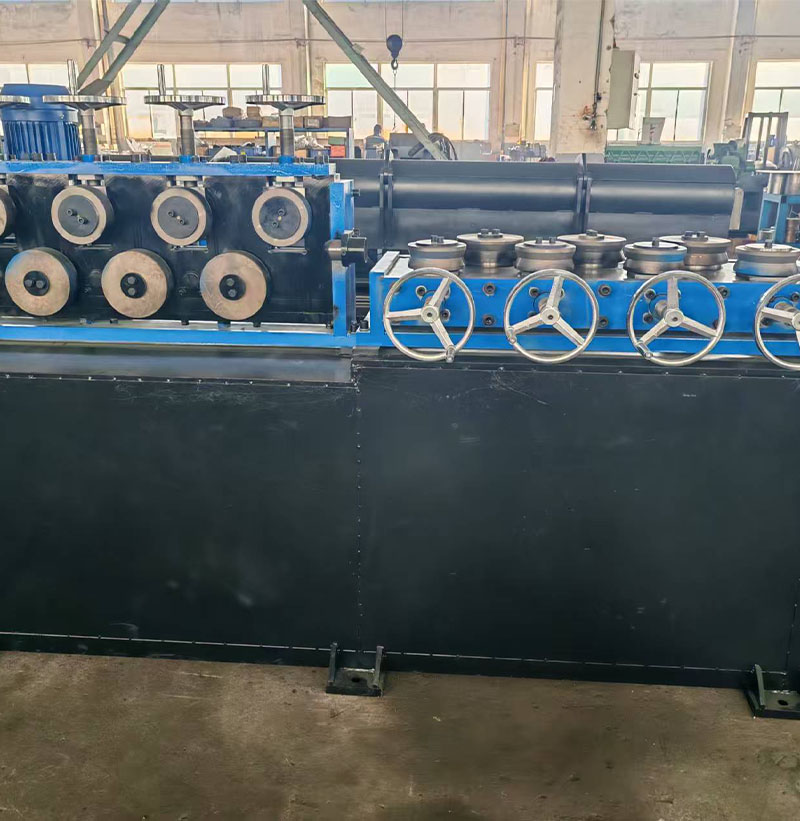
machine à redresser horizontale et verticale
Relâchez le volant de la redresseuse horizontale et verticale à plusieurs rouleaux pour permettre à la bobine de fil de passer entre les rouleaux de redressage. Serrez le volant jusqu'à la position déterminée empiriquement, mettez en marche le dispositif d'alimentation et effectuez plusieurs essais de redressage. Alimentez ensuite la bobine de fil avec les rouleaux de redressage verticaux, en suivant la même procédure que pour le redressage horizontal. Enfin, alimentez la machine à dénuder avec la bobine de fil.