
회사 소개
옌타이 윈더 지능형 기술 유한회사는 30년의 생산 경력으로 300곳이 넘는 국내외 고객에게 서비스를 제공했으며 2,000대 이상의 기계를 생산했습니다.
무료 견적 받아보세요

How Do You Choose a Straightening Machine?
-
 작가
작가 - 20,8월
 작가
작가 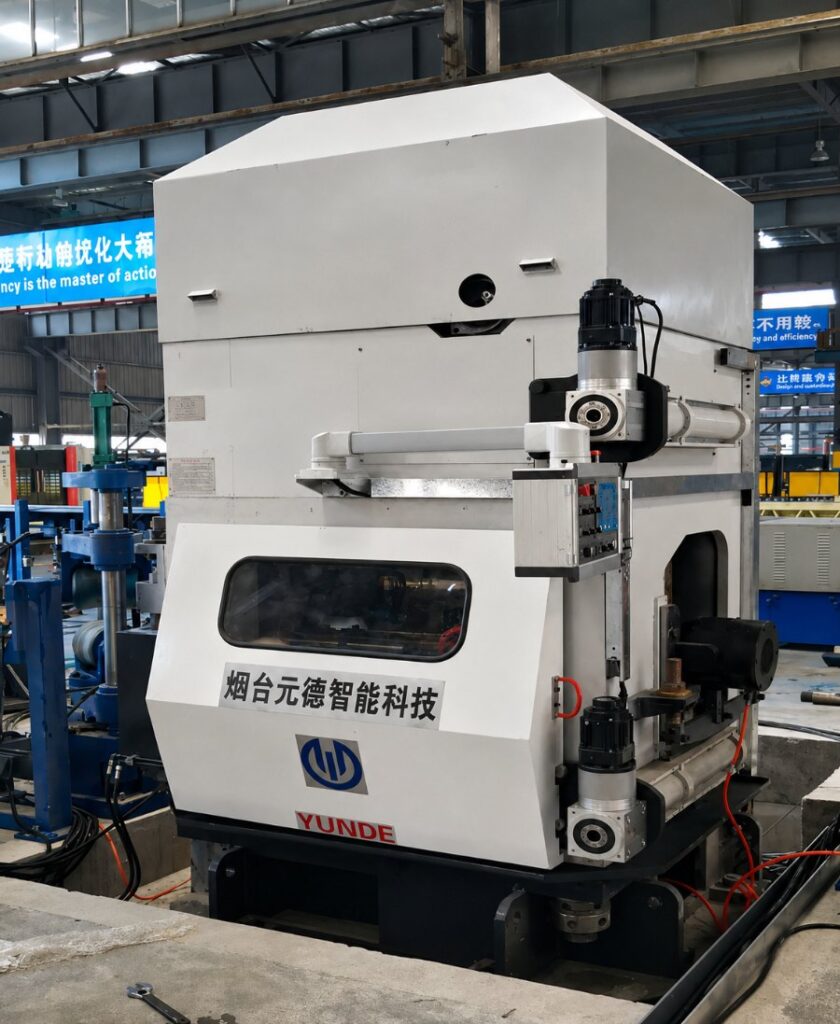
Choosing a straightening unit is not simply a matter of picking the widest diameter range. A machine can meet the specified size range yet miss the target because the incoming bar, required straightness, feed rate, line setup, or maintenance plan was not clearly defined. The goal is a testable specification.
Define the bar before comparing machines
A defensible purchase begins with the workpiece, not a preferred model number. Record the diameter range, occasional extremes, minimum usable length, material grade and surface hardness range, incoming curvature, surface condition, and required straightness. These values determine the working envelope and make proposals comparable.
Once that production picture is clear, we can configure a straightening unit around the bar rather than asking the bar to suit the machine. At Yunde, we use the incoming condition and finished-bar requirements to determine straightening pressure, guide position, feed speed, and the appropriate BS model. This prevents capacity that adds cost without improving the finished bar.
Diameter and usable length
Diameter is a production distribution, not a single maximum. A plant that mostly runs 18-25 mm stock with rare 38 mm orders has a different duty profile from one processing 35-40 mm bars. Length matters because our BS20-BS80 models handle material at least 2 m long, while BS100-BS160 models start at 3 m. Supports must prevent sag or whip.
Material strength and incoming condition
Material behavior changes straightening force and setup. High-strength steels, spring steels, bearing steels, stainless steels, and alloy steels may require higher straightening forces than lower-strength carbon steels. Before requesting a quotation, document:
*the material grades and surface hardness range that represent normal production;
*the maximum incoming bow, end condition, and diameter variation;
*the allowable straightness, diameter tolerance, and surface-mark limit after processing.

Match capacity to the required result
A suitable round bar straightening machine must cover the required bar range while delivering the specified result at a sustainable speed. Our BS series uses a frame structure and covers 6-160 mm across seven models. The complete parameters are shown below for comparison.
| 모델 | 직경 범위(mm) | 길이(m) | Speed (m/min) | 직경 공차 | 표면 거칠기(μm) | 직진도 (mm/m) | Main Motor Power(kW) | 구조 |
| BS20 | Φ6–20 | ≥2 | 10–40 | ≤IT8 | Ra≤0.8 | 0.10 | 7.5×2 | 액자 |
| BS40 | Φ10–40 | ≥2 | 10–35 | ≤IT8 | Ra≤0.8 | 0.15 | 22×2 | 액자 |
| BS60 | Φ15–60 | ≥2 | 10–30 | ≤IT8 | Ra≤0.8 | 0.20 | 30×2 | 액자 |
| BS80 | Φ20–80 | ≥2 | 10–24 | ≤IT8 | Ra≤0.8 | 0.25 | 37×2 | 액자 |
| BS100 | Φ25–100 | ≥3 | 10–24 | ≤IT8 | Ra≤0.8 | 0.30 | 45×2 | 액자 |
| BS130 | Φ35–130 | ≥3 | 10–20 | ≤IT8 | Ra≤0.8 | 0.35 | 75×2 | 액자 |
| BS160 | Φ40–160 | ≥3 | 10–20 | ≤IT8 | Ra≤0.8 | 0.40 | 90×2 | 액자 |
The highest listed speed is not an automatic promise for every material. Verify straightness, surface protection, strength, initial bow, and handling stability together. Assess the straightening machine under actual production conditions, especially when operating near the upper end of its diameter range.
Prove the process with sample bars
A sample trial turns a broad specification into evidence. Supply bars representing normal production and the difficult edge case, agree on inspection, and use production-relevant speed rather than a slow demonstration setting.
Use an acceptance test that mirrors production
*Record bar grade, diameter, length, surface hardness, and incoming bow for every sample group.
*Measure straightness with an agreed span, instrument, and sampling frequency.
*Inspect roller marks, end shrinkage, diameter tolerance, and surface roughness.
*Run enough consecutive pieces to expose heat, setup drift, or feeding instability.
*Confirm the changeover time between representative diameters and material grades.
The acceptance record should separate machine capability from incoming variation. If results change within one batch, investigate stock condition, support, and setup. This keeps bar straightening decisions tied to evidence.
Check how the unit fits the line
Line integration can limit output even when the straightener is correctly sized. Compare inlet and outlet height, support spacing, transfer method, control signals, interlocks, and buffer capacity. The bar straightening process needs consistent upstream delivery and downstream acceptance of the discharge rate.
Upstream and downstream interfaces
에이 metal straightening production line may include pre-straightening, peeling, precision straightening, cutting, stacking, and bundling, but the sequence depends on the raw material and finished product. When we plan a line, we define transfer logic and control handshakes around the selected process. Buyers should reserve access for roll changes, guide adjustment, inspection, and safe removal of a stopped bar.
Make maintenance part of the purchase decision
Maintenance quality directly affects repeatable straightness and surface condition. Roll wear, contaminated contact surfaces, loose guides, hydraulic leakage, and inconsistent roll gaps can move a stable process out of control. Ask how operators record setup positions, manage pressure holding and release, and inspect wear components.
Our BS design uses a separate hydraulic system for pressure holding and release, a gantry-style guide plate, an overall frame structure for roll-gap accuracy, and a brake unit and braking resistor for the frequency converter. These features are designed to support reliable operation and convenient adjustment, but routine maintenance is still required. Define manuals, training, spare parts, commissioning support, and a clear response path.

A practical decision summary
The right straightening unit handles the real bar mix, reaches the required straightness without surface damage, sustains the needed speed, fits the material flow, and can be maintained by the plant team. Define the conditions, compare model data, and use sample trials to close bar straightening risk before purchase.
For a model review or sample-test plan based on your bar grades, dimensions, line speed, and acceptance criteria, contact our team for a technical consultation.
자주 묻는 질문
What information should a straightening-unit RFQ include?
Include material grades, surface hardness, tensile strength, diameter distribution, bar length, incoming bow, required straightness, surface limit, target speed, shift pattern, line layout, utilities, and the planned inspection method. Representative samples and a clear acceptance standard make quotations much more useful.
Is the widest diameter range always the safest choice?
No. A wider range can increase power, footprint, tooling, and investment without improving normal production. Select a model around the dominant bar mix, then decide whether occasional extremes justify a larger machine or through a separate process route.
Should acceptance focus on speed or straightness?
Acceptance should verify both at the same production-relevant setting. A straightness result achieved only at a very low demonstration speed does not prove the required output, while high speed without acceptable straightness and surface condition is equally unsuitable.
최근 게시물

관련 상품
베스트셀러 제품
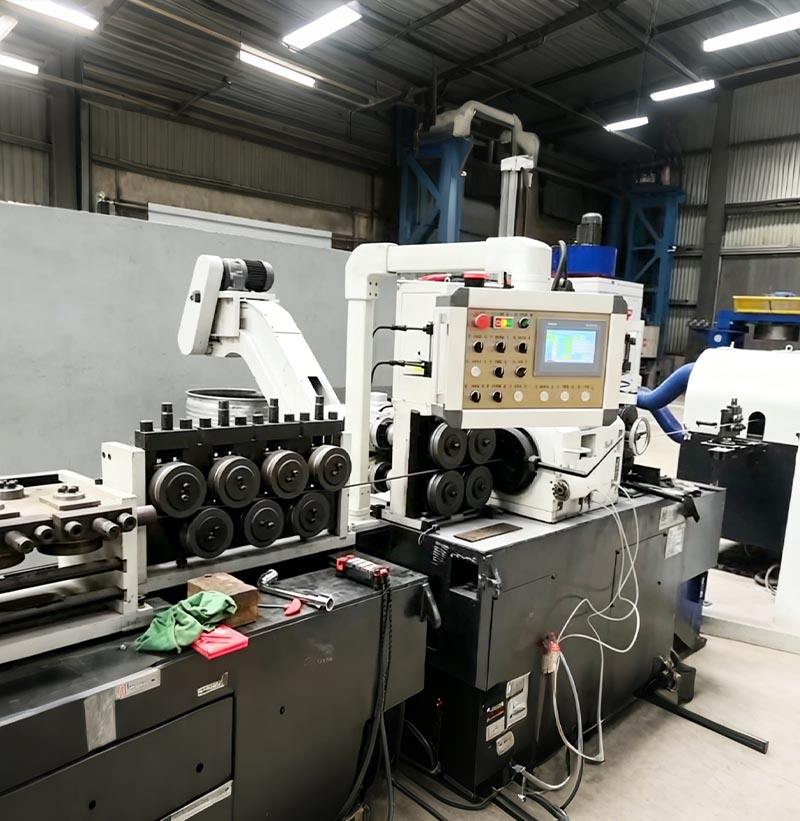
코일에서 바 형태로 가공하는 박피 및 직선화 라인
스테인리스강 와이어 로드는 코일을 풀고 예비 교정 작업을 거친 후, 센터리스 선반을 사용하여 껍질을 벗기고 정확한 길이로 절단합니다. 마지막으로 2롤 교정기를 통해 정밀 교정 작업을 거치면 고정밀 스테인리스강 직선봉이 완성됩니다.
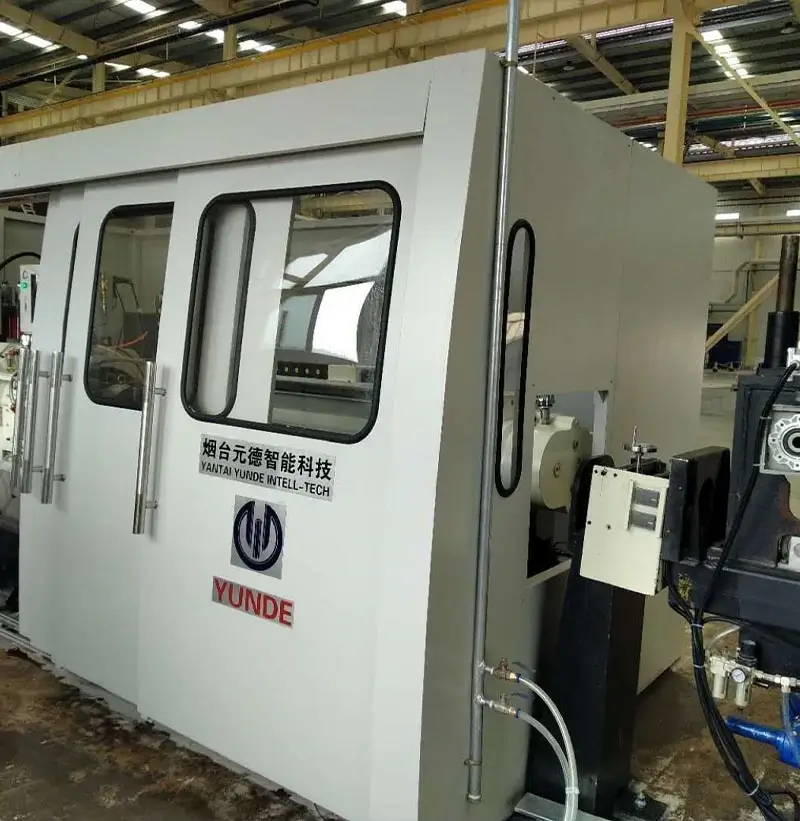
박피기(센터리스 선반)
박피기(무심 선반) 장치는 유사한 해외 제품의 장점을 비교 분석하고 국내 기업의 생산 특성을 고려하여 자체 개발한 제품으로, 간소화되고 최적화된 설계를 특징으로 합니다.
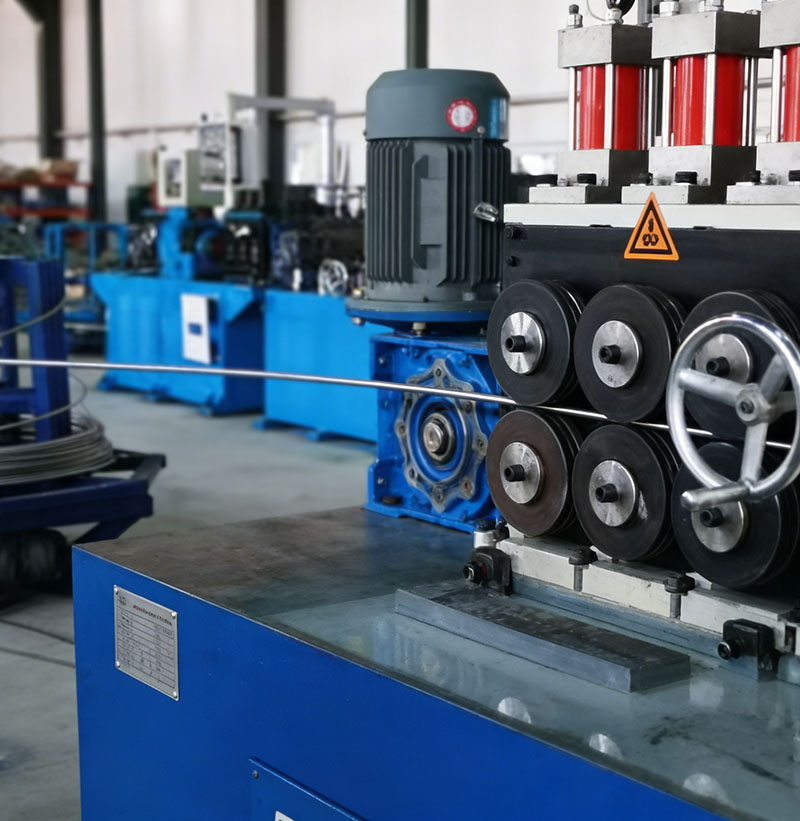
코일 투 코일 생산 라인
코일 생산 라인은 권취 및 교정기, 박피기, 클램핑 장치, 예비 벤딩 장치, 되감기 기계 등 일련의 기계로 구성됩니다. 이러한 기계들을 통해 검은색 코일 봉이 표면 품질이 우수한 밝은 색 코일 봉으로 가공됩니다.
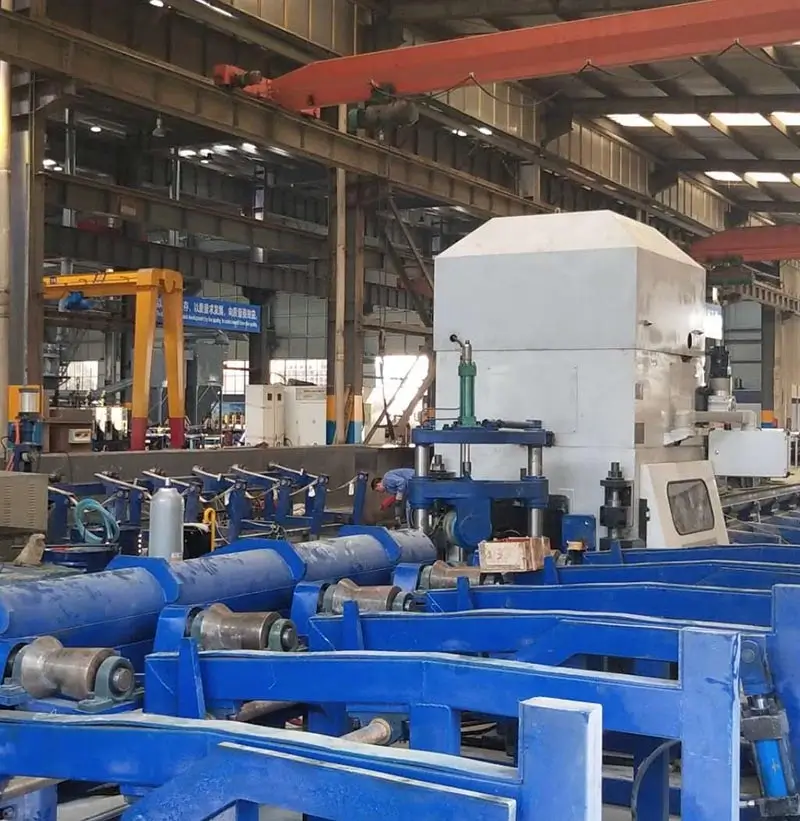
교정기 BS 시리즈
교정기는 금속 프로파일, 봉, 튜브 및 전선을 곧게 펴는 데 사용되는 장치입니다. 교정기는 교정 롤러를 사용하여 재료를 압축함으로써 직선도를 변경합니다. 일반적으로 교정 롤러는 두 줄로 배열되며 롤러의 개수는 다양합니다. 또한 두 개의 롤러(오목한 쌍곡선 모양)의 각도 변화를 이용하여 직경이 다른 재료를 곧게 펴는 2롤러 교정기도 있습니다.
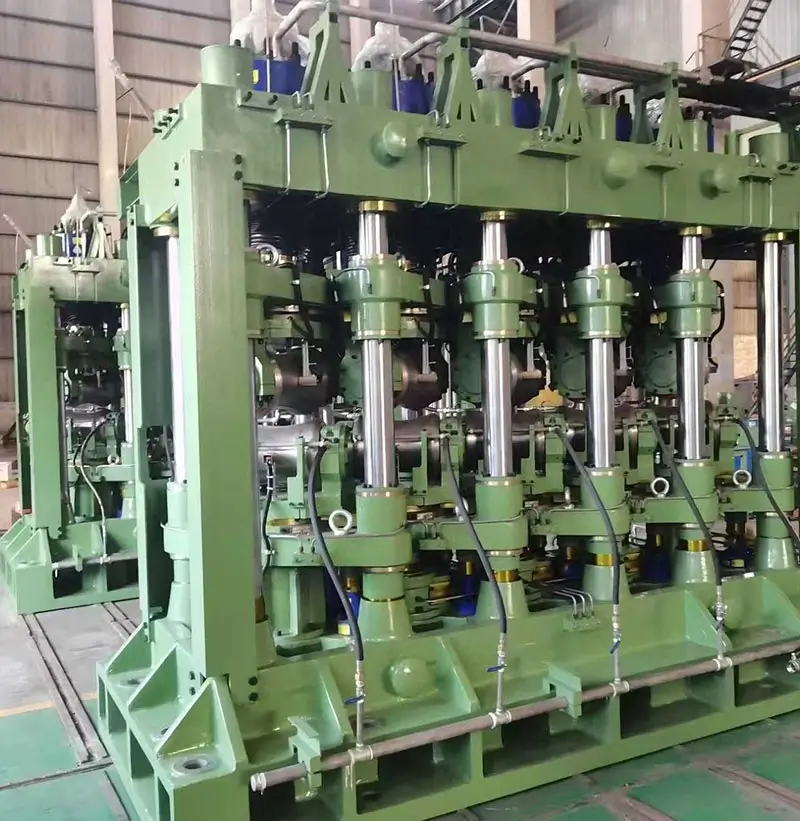
다롤 강관 교정기
강관의 곡률과 타원형 변형을 교정하는 데 사용되는 기계 장치입니다. 고합금강, 내식강, 내열강, 내열강 및 합금강, 철-니켈 합금, 니켈 및 티타늄 합금으로 만들어진 파이프의 종방향 비직선도와 단면 비원형도를 줄이는 데 사용됩니다.
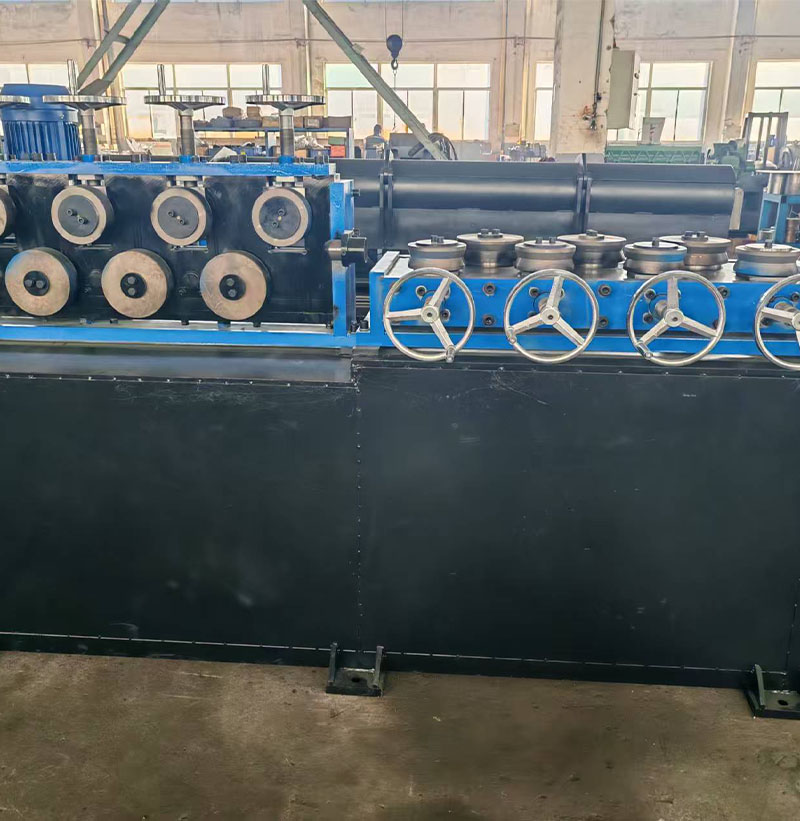
수평 및 수직 교정기
다롤 수평 및 수직 교정기의 핸드휠을 풀어 와이어 코일이 교정 롤러를 통과하도록 합니다. 핸드휠을 실험적으로 결정한 위치로 조이고 공급 장치를 작동시킨 후, 교정 작업을 반복합니다. 그런 다음 수평 교정과 동일한 절차에 따라 와이어 코일을 수직 교정 롤러에 공급합니다. 마지막으로 와이어 코일을 박피기의 공급 장치에 공급합니다.