
О НАС
Компания Yantai Yunde Intelligent Technology Co., Ltd., обладающая 30-летним опытом производства, обслужила более 300 отечественных и зарубежных клиентов и выпустила более 2000 единиц оборудования.
ПОЛУЧИТЕ БЕСПЛАТНУЮ ЦЕНУ
-
Дом

-
Блог
-
Отраслевые блоги
- How to Reduce Material Waste in Steel Bar Peeling

How to Reduce Material Waste in Steel Bar Peeling
-
автор
- 10,Сентябрь
 автор
автор 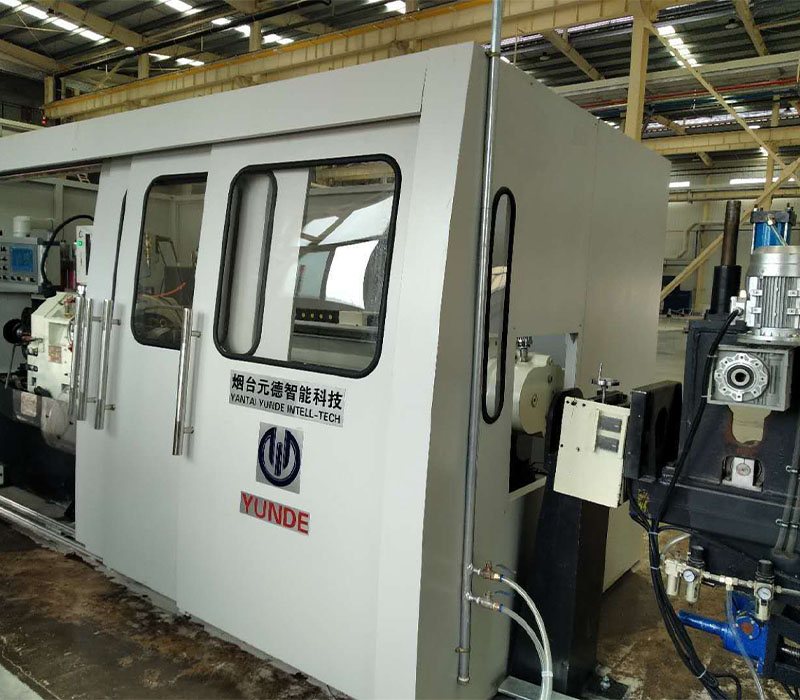
Material loss in bar peeling is often blamed on the cutting head, yet the costly waste usually begins earlier: an uncertain incoming diameter, an allowance set without sample checks, or a tool left in service after the cut has drifted. For a production manager, the useful goal is not the smallest possible cut. It is the smallest controlled removal that still delivers a clean, usable bar.
Where avoidable metal loss begins
Peeling removes a continuous outer layer, so every unnecessary fraction of a millimetre is carried through the entire bar length. That makes allowance discipline more valuable than a late attempt to recover chips. The process should remove scale, decarburized material, and surface defects without turning sound metal into a hidden cost.
Necessary removal versus a safety margin
A bar described as machine turned and peeled is expected to have a consistent finished surface, but consistency does not require a generous allowance on every batch. The planned cut should cover the worst verified condition in the lot, not an assumed defect depth. When raw stock varies widely, separating it into practical condition bands is safer than applying one heavy setting to all bars.
Incoming condition sets the real allowance
A stable waste-reduction plan starts with the bar before it enters the machine. Diameter spread, ovality, straightness, surface scale, defect depth, hardness, and end condition all affect whether the selected cut can remain both safe and economical. A nominal diameter alone cannot describe the material that the cutting tool will actually meet.
*Measure several bars from the lot, including the largest and most visibly affected pieces.
*Record the target finished diameter before setting single-side cutting depth.
*Separate bars with exceptional scale, bends, or local damage for a different setup.
*Check chamfering and end faces so entry and withdrawal stay stable.
*Keep the trial-bar record with the batch instead of relying on a previous setting.
Trial cuts reveal the useful process window
A short trial creates a defensible starting point for a машина для очистки стальных прутков. Measure the trial diameter and surface roughness, then inspect whether the original defects are gone. If a result is acceptable at a lower removal setting, retain that setting and monitor it rather than automatically adding a buffer for the full run.

Machine range defines the practical waste floor
The selected model must cover the actual bar size, length, and required removal range. A machine operating within its intended window gives the operator room to tune the process rather than forcing an aggressive compromise. YUNDE’s PM series below offers fully automatic CNC or semi-automatic configurations, with the same stated diameter tolerance and surface roughness target across the range.
| Модель | Diameter mm | Length m | Speed m/min | Cut depth mm/side | Tolerance | Surface roughness μm | Motor kW | Configuration |
| PM25 | Φ6–25 | ≥1,2 | 1–30 | 0.25–1 | ≤IT8 | Ra≤1,6 | 22 | Полностью автоматизированный станок с ЧПУ / Полуавтоматический |
| PM40 | Φ6–40 | ≥1,4 | 1–18 | 0.25–1.5 | ≤IT8 | Ra≤1,6 | 45 | Полностью автоматизированный станок с ЧПУ / Полуавтоматический |
| PM60 | Φ12–65 | ≥2,2 | 1–15 | 0.3–2.5 | ≤IT8 | Ra≤1,6 | 55 | Полностью автоматизированный станок с ЧПУ / Полуавтоматический |
| ПМ80 | Φ15–80 | ≥2,2 | 1–15 | 0.5–2.5 | ≤IT8 | Ra≤1,6 | 75 | Полностью автоматизированный станок с ЧПУ / Полуавтоматический |
| PM100 | Φ20–100 | ≥2,5 | 1–12 | 1–4 | ≤IT8 | Ra≤1,6 | 90 | Полностью автоматизированный станок с ЧПУ / Полуавтоматический |
| PM130 | Φ35–130 | ≥2,8 | 1–8 | 1–5 | ≤IT8 | Ra≤1,6 | 110 | Полностью автоматизированный станок с ЧПУ / Полуавтоматический |
| PM160 | Φ40–160 | ≥4 | 1–6 | 1–5 | ≤IT8 | Ra≤1,6 | 132 | Полностью автоматизированный станок с ЧПУ / Полуавтоматический |
| PM200 | Φ80–200 | ≥4 | 1–5 | 1–5 | ≤IT8 | Ra≤1,6 | 160 | Полностью автоматизированный станок с ЧПУ / Полуавтоматический |
| PM250 | Φ85–250 | ≥4 | 1–4 | 1–5 | ≤IT8 | Ra≤1,6 | 200 | Полностью автоматизированный станок с ЧПУ / Полуавтоматический |
| ПМ350 | Φ150–350 | ≥4,5 | 0,2–2 | 1–10 | ≤IT8 | Ra≤1,6 | 200 | Полностью автоматизированный станок с ЧПУ / Полуавтоматический |
A repeatable control loop protects yield
Once a lot is running, a машина для очистки круглых прутков should be managed as a measured loop, not a set-and-forget operation. Confirm the first pieces, recheck at planned intervals, and compare diameter, surface roughness, tool condition, and chip form with the trial record. A small correction made early prevents a long run of over-cut bars.
Tool condition appears first in the output
Tool wear can quietly increase cutting load, disturb the finish, and tempt an operator to compensate with deeper removal. That is why checks should follow output signals, not only elapsed time. A машина для очистки брусков with online electric tool adjustment can make controlled corrections during production, while scheduled inspection keeps adjustment from becoming a substitute for timely tool service.
Tool life and handling complete the waste picture
Tool choice, support, and chip handling influence yield because an unstable cut can damage an otherwise usable bar. Match the cutting tool to the material and planned depth, keep guides and clamping surfaces clean, and remove abnormal pieces before they pass through the full process. Finished handling matters as well: dents after peeling can turn a conforming peeled steel bar into scrap.

Summary
Material waste falls when removal is treated as a verified allowance rather than a precautionary maximum. Inspect incoming stock, prove the setting on a trial bar, use a model that fits the diameter and cut range, and keep checks tied to the output. Those habits preserve sound metal while still delivering the clean surface and dimensional control that downstream machining needs.
If your batches show large variation in diameter or surface condition, talk with our technical team about a trial-based peeling setup for the target finished bar.
Часто задаваемые вопросы
How does cutting depth affect material waste in bar peeling?
Cutting depth directly determines how much outer material is removed from every bar. Use the lowest verified single-side setting that removes the required defects and still reaches the target finished diameter.
Can one setting be used for every bar in a delivery?
One setting is suitable only when incoming dimensions and surface condition are genuinely consistent. Lots with clear variation should be sampled and, where useful, separated into practical process groups.
Why should a trial bar be measured before full production?
A trial bar confirms that the planned removal achieves the required diameter and surface roughness on the actual stock. It also exposes entry, clamping, or tool issues before they create a long run of loss.
Does faster processing always reduce waste?
Higher speed can improve throughput, but it does not automatically improve yield. The best production rate is the rate that holds a stable cut, controlled surface roughness, and reliable output checks.
Which production records help reduce repeat waste?
Keep the material condition, trial dimensions, cutting depth, speed, tool condition, and inspection results with each batch. Those records make the next setup more precise without copying assumptions from a different lot.
Последняя публикация





Сопутствующие товары
Самые продаваемые товары

Линия выравнивания при отслаивании рулона от прутка
Проволока из нержавеющей стали разматывается и предварительно выпрямляется, затем очищается с помощью бесцентрового токарного станка и нарезается на точно заданную длину. После окончательной прецизионной правки на двухвалковом правильном станке получается высокоточный прямой стержень из нержавеющей стали.

Станок для очистки (бесцентровый токарный станок)
Станок для лущения (бесцентровый токарный станок) — это изделие, разработанное собственными силами после сравнения преимуществ аналогичных зарубежных изделий и их сочетания с производственными особенностями отечественных предприятий, что привело к упрощению и оптимизации конструкции.

Линия по производству рулонов
Линия по производству рулонов представляет собой комплекс оборудования, включающий в себя размоточную и правильную машины, лущильную машину, зажимной механизм, устройство предварительной гибки, намоточную машину и т. д. С помощью этого оборудования черный рулонный пруток перерабатывается в светлый рулонный пруток с хорошим качеством поверхности.

Выпрямительная машина серии BS
Выпрямительная машина — это устройство, используемое для выпрямления металлических профилей, прутков, труб и проволоки. Выпрямительная машина использует выпрямляющие ролики для сжатия материала, изменяя его прямолинейность. Обычно она имеет два ряда выпрямляющих роликов с различным количеством роликов. Существуют также двухроликовые выпрямительные машины, которые используют изменение угла двух роликов (имеющих вогнутую, гиперболическую форму) для выпрямления материалов разного диаметра.

Многовалковый станок для выпрямления стальных труб
Это механическое устройство, используемое для выпрямления кривизны и овальности стальных труб. Оно применяется для выпрямления труб из высоколегированной, коррозионностойкой, жаростойкой стали, а также легированных железо-никелевых, никелевых и титановых сплавов, с целью уменьшения продольной непрямотности и поперечной некруглости.

Горизонтальный и вертикальный правильный станок
Отпустите маховик многовалковой горизонтально-вертикальной правящей машины, чтобы проволока прошла через правящие ролики. Затяните маховик в заданное положение, запустите подающее устройство и проведите несколько пробных правок. Затем подайте проволоку к вертикальным правящим роликам, следуя той же процедуре, что и для горизонтальной правки. Наконец, подайте проволоку к подающему устройству очистительной машины.


