
회사 소개
옌타이 윈더 지능형 기술 유한회사는 30년의 생산 경력으로 300곳이 넘는 국내외 고객에게 서비스를 제공했으며 2,000대 이상의 기계를 생산했습니다.
무료 견적 받아보세요

How to Reduce Material Waste in Steel Bar Peeling
-
 작가
작가 - 10,9월
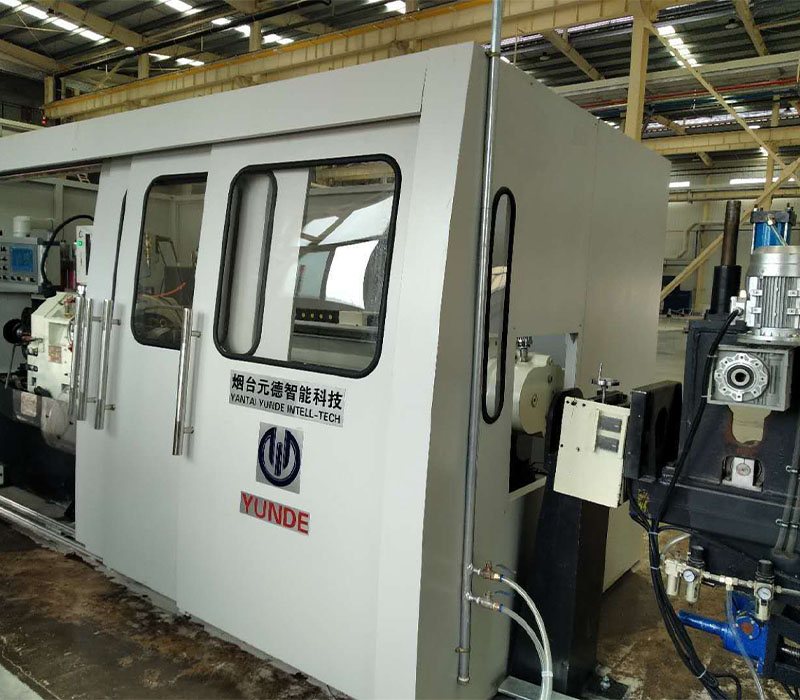
Material loss in bar peeling is often blamed on the cutting head, yet the costly waste usually begins earlier: an uncertain incoming diameter, an allowance set without sample checks, or a tool left in service after the cut has drifted. For a production manager, the useful goal is not the smallest possible cut. It is the smallest controlled removal that still delivers a clean, usable bar.
Where avoidable metal loss begins
Peeling removes a continuous outer layer, so every unnecessary fraction of a millimetre is carried through the entire bar length. That makes allowance discipline more valuable than a late attempt to recover chips. The process should remove scale, decarburized material, and surface defects without turning sound metal into a hidden cost.
Necessary removal versus a safety margin
A bar described as machine turned and peeled is expected to have a consistent finished surface, but consistency does not require a generous allowance on every batch. The planned cut should cover the worst verified condition in the lot, not an assumed defect depth. When raw stock varies widely, separating it into practical condition bands is safer than applying one heavy setting to all bars.
Incoming condition sets the real allowance
A stable waste-reduction plan starts with the bar before it enters the machine. Diameter spread, ovality, straightness, surface scale, defect depth, hardness, and end condition all affect whether the selected cut can remain both safe and economical. A nominal diameter alone cannot describe the material that the cutting tool will actually meet.
*Measure several bars from the lot, including the largest and most visibly affected pieces.
*Record the target finished diameter before setting single-side cutting depth.
*Separate bars with exceptional scale, bends, or local damage for a different setup.
*Check chamfering and end faces so entry and withdrawal stay stable.
*Keep the trial-bar record with the batch instead of relying on a previous setting.
Trial cuts reveal the useful process window
A short trial creates a defensible starting point for a 철근 박피기. Measure the trial diameter and surface roughness, then inspect whether the original defects are gone. If a result is acceptable at a lower removal setting, retain that setting and monitor it rather than automatically adding a buffer for the full run.

Machine range defines the practical waste floor
The selected model must cover the actual bar size, length, and required removal range. A machine operating within its intended window gives the operator room to tune the process rather than forcing an aggressive compromise. YUNDE’s PM series below offers fully automatic CNC or semi-automatic configurations, with the same stated diameter tolerance and surface roughness target across the range.
| 모델 | Diameter mm | Length m | Speed m/min | Cut depth mm/side | Tolerance | Surface roughness μm | Motor kW | Configuration |
| PM25 | Φ6–25 | ≥1.2 | 1–30 | 0.25–1 | ≤IT8 | Ra≤1.6 | 22 | 완전 자동 CNC / 반자동 |
| PM40 | Φ6–40 | ≥1.4 | 1~18세 | 0.25–1.5 | ≤IT8 | Ra≤1.6 | 45 | 완전 자동 CNC / 반자동 |
| PM60 | Φ12–65 | ≥2.2 | 1~15세 | 0.3–2.5 | ≤IT8 | Ra≤1.6 | 55 | 완전 자동 CNC / 반자동 |
| PM80 | Φ15–80 | ≥2.2 | 1~15세 | 0.5–2.5 | ≤IT8 | Ra≤1.6 | 75 | 완전 자동 CNC / 반자동 |
| PM100 | Φ20–100 | ≥2.5 | 1~12세 | 1~4 | ≤IT8 | Ra≤1.6 | 90 | 완전 자동 CNC / 반자동 |
| PM130 | Φ35–130 | ≥2.8 | 1~8 | 1~5 | ≤IT8 | Ra≤1.6 | 110 | 완전 자동 CNC / 반자동 |
| PM160 | Φ40–160 | ≥4 | 1–6 | 1~5 | ≤IT8 | Ra≤1.6 | 132 | 완전 자동 CNC / 반자동 |
| PM200 | Φ80–200 | ≥4 | 1~5 | 1~5 | ≤IT8 | Ra≤1.6 | 160 | 완전 자동 CNC / 반자동 |
| PM250 | Φ85–250 | ≥4 | 1~4 | 1~5 | ≤IT8 | Ra≤1.6 | 200 | 완전 자동 CNC / 반자동 |
| PM350 | Φ150–350 | ≥4.5 | 0.2–2 | 1–10 | ≤IT8 | Ra≤1.6 | 200 | 완전 자동 CNC / 반자동 |
A repeatable control loop protects yield
Once a lot is running, a 원형 막대 박피기 should be managed as a measured loop, not a set-and-forget operation. Confirm the first pieces, recheck at planned intervals, and compare diameter, surface roughness, tool condition, and chip form with the trial record. A small correction made early prevents a long run of over-cut bars.
Tool condition appears first in the output
Tool wear can quietly increase cutting load, disturb the finish, and tempt an operator to compensate with deeper removal. That is why checks should follow output signals, not only elapsed time. A 바 필링 머신 with online electric tool adjustment can make controlled corrections during production, while scheduled inspection keeps adjustment from becoming a substitute for timely tool service.
Tool life and handling complete the waste picture
Tool choice, support, and chip handling influence yield because an unstable cut can damage an otherwise usable bar. Match the cutting tool to the material and planned depth, keep guides and clamping surfaces clean, and remove abnormal pieces before they pass through the full process. Finished handling matters as well: dents after peeling can turn a conforming peeled steel bar into scrap.

Summary
Material waste falls when removal is treated as a verified allowance rather than a precautionary maximum. Inspect incoming stock, prove the setting on a trial bar, use a model that fits the diameter and cut range, and keep checks tied to the output. Those habits preserve sound metal while still delivering the clean surface and dimensional control that downstream machining needs.
If your batches show large variation in diameter or surface condition, talk with our technical team about a trial-based peeling setup for the target finished bar.
자주 묻는 질문
How does cutting depth affect material waste in bar peeling?
Cutting depth directly determines how much outer material is removed from every bar. Use the lowest verified single-side setting that removes the required defects and still reaches the target finished diameter.
Can one setting be used for every bar in a delivery?
One setting is suitable only when incoming dimensions and surface condition are genuinely consistent. Lots with clear variation should be sampled and, where useful, separated into practical process groups.
Why should a trial bar be measured before full production?
A trial bar confirms that the planned removal achieves the required diameter and surface roughness on the actual stock. It also exposes entry, clamping, or tool issues before they create a long run of loss.
Does faster processing always reduce waste?
Higher speed can improve throughput, but it does not automatically improve yield. The best production rate is the rate that holds a stable cut, controlled surface roughness, and reliable output checks.
Which production records help reduce repeat waste?
Keep the material condition, trial dimensions, cutting depth, speed, tool condition, and inspection results with each batch. Those records make the next setup more precise without copying assumptions from a different lot.
최근 게시물





관련 상품
베스트셀러 제품

코일에서 바 형태로 가공하는 박피 및 직선화 라인
스테인리스강 와이어 로드는 코일을 풀고 예비 교정 작업을 거친 후, 센터리스 선반을 사용하여 껍질을 벗기고 정확한 길이로 절단합니다. 마지막으로 2롤 교정기를 통해 정밀 교정 작업을 거치면 고정밀 스테인리스강 직선봉이 완성됩니다.

박피기(센터리스 선반)
박피기(무심 선반) 장치는 유사한 해외 제품의 장점을 비교 분석하고 국내 기업의 생산 특성을 고려하여 자체 개발한 제품으로, 간소화되고 최적화된 설계를 특징으로 합니다.

코일 투 코일 생산 라인
코일 생산 라인은 권취 및 교정기, 박피기, 클램핑 장치, 예비 벤딩 장치, 되감기 기계 등 일련의 기계로 구성됩니다. 이러한 기계들을 통해 검은색 코일 봉이 표면 품질이 우수한 밝은 색 코일 봉으로 가공됩니다.

교정기 BS 시리즈
교정기는 금속 프로파일, 봉, 튜브 및 전선을 곧게 펴는 데 사용되는 장치입니다. 교정기는 교정 롤러를 사용하여 재료를 압축함으로써 직선도를 변경합니다. 일반적으로 교정 롤러는 두 줄로 배열되며 롤러의 개수는 다양합니다. 또한 두 개의 롤러(오목한 쌍곡선 모양)의 각도 변화를 이용하여 직경이 다른 재료를 곧게 펴는 2롤러 교정기도 있습니다.

다롤 강관 교정기
강관의 곡률과 타원형 변형을 교정하는 데 사용되는 기계 장치입니다. 고합금강, 내식강, 내열강, 내열강 및 합금강, 철-니켈 합금, 니켈 및 티타늄 합금으로 만들어진 파이프의 종방향 비직선도와 단면 비원형도를 줄이는 데 사용됩니다.

수평 및 수직 교정기
다롤 수평 및 수직 교정기의 핸드휠을 풀어 와이어 코일이 교정 롤러를 통과하도록 합니다. 핸드휠을 실험적으로 결정한 위치로 조이고 공급 장치를 작동시킨 후, 교정 작업을 반복합니다. 그런 다음 수평 교정과 동일한 절차에 따라 와이어 코일을 수직 교정 롤러에 공급합니다. 마지막으로 와이어 코일을 박피기의 공급 장치에 공급합니다.


