
SOBRE NÓS
A Yantai Yunde Intelligent Technology Co., Ltd. possui apenas 30 anos de experiência em produção, atendeu mais de 300 clientes nacionais e estrangeiros e produziu mais de 2.000 máquinas.
SOLICITE UM ORÇAMENTO GRÁTIS
-
Lar

-
Blog
-
Blogs do setor
- How to Reduce Material Waste in Steel Bar Peeling
How to Reduce Material Waste in Steel Bar Peeling
-
 autor
autor - 10,Setembro
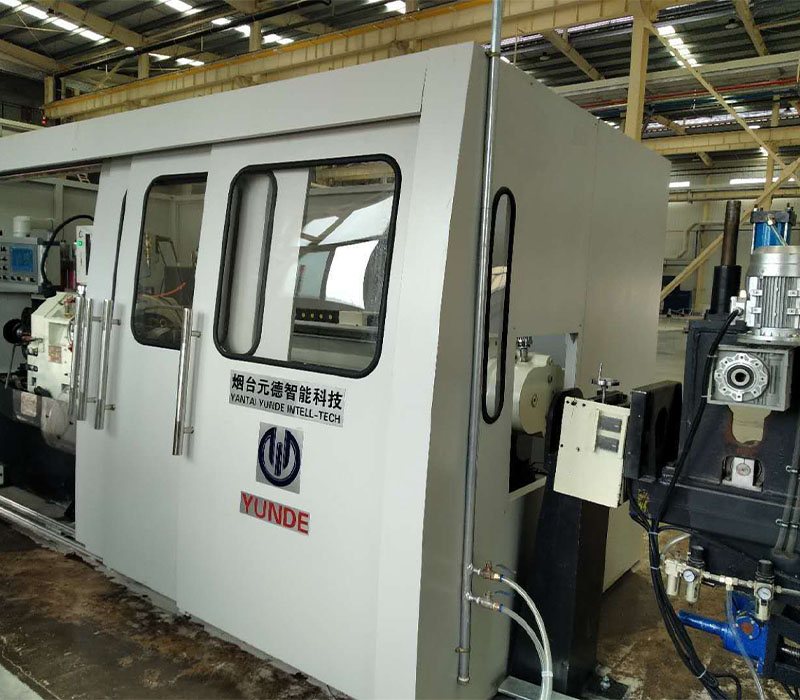
Material loss in bar peeling is often blamed on the cutting head, yet the costly waste usually begins earlier: an uncertain incoming diameter, an allowance set without sample checks, or a tool left in service after the cut has drifted. For a production manager, the useful goal is not the smallest possible cut. It is the smallest controlled removal that still delivers a clean, usable bar.
Where avoidable metal loss begins
Peeling removes a continuous outer layer, so every unnecessary fraction of a millimetre is carried through the entire bar length. That makes allowance discipline more valuable than a late attempt to recover chips. The process should remove scale, decarburized material, and surface defects without turning sound metal into a hidden cost.
Necessary removal versus a safety margin
A bar described as machine turned and peeled is expected to have a consistent finished surface, but consistency does not require a generous allowance on every batch. The planned cut should cover the worst verified condition in the lot, not an assumed defect depth. When raw stock varies widely, separating it into practical condition bands is safer than applying one heavy setting to all bars.
Incoming condition sets the real allowance
A stable waste-reduction plan starts with the bar before it enters the machine. Diameter spread, ovality, straightness, surface scale, defect depth, hardness, and end condition all affect whether the selected cut can remain both safe and economical. A nominal diameter alone cannot describe the material that the cutting tool will actually meet.
*Measure several bars from the lot, including the largest and most visibly affected pieces.
*Record the target finished diameter before setting single-side cutting depth.
*Separate bars with exceptional scale, bends, or local damage for a different setup.
*Check chamfering and end faces so entry and withdrawal stay stable.
*Keep the trial-bar record with the batch instead of relying on a previous setting.
Trial cuts reveal the useful process window
A short trial creates a defensible starting point for a máquina de descascar barras de aço. Measure the trial diameter and surface roughness, then inspect whether the original defects are gone. If a result is acceptable at a lower removal setting, retain that setting and monitor it rather than automatically adding a buffer for the full run.

Machine range defines the practical waste floor
The selected model must cover the actual bar size, length, and required removal range. A machine operating within its intended window gives the operator room to tune the process rather than forcing an aggressive compromise. YUNDE’s PM series below offers fully automatic CNC or semi-automatic configurations, with the same stated diameter tolerance and surface roughness target across the range.
| Modelo | Diameter mm | Length m | Speed m/min | Cut depth mm/side | Tolerance | Surface roughness μm | Motor kW | Configuration |
| PM25 | Φ6–25 | ≥1,2 | 1–30 | 0.25–1 | ≤IT8 | Ra≤1,6 | 22 | CNC totalmente automático / semiautomático |
| PM40 | Φ6–40 | ≥1,4 | 1–18 | 0.25–1.5 | ≤IT8 | Ra≤1,6 | 45 | CNC totalmente automático / semiautomático |
| PM60 | Φ12–65 | ≥2,2 | 1–15 | 0.3–2.5 | ≤IT8 | Ra≤1,6 | 55 | CNC totalmente automático / semiautomático |
| PM80 | Φ15–80 | ≥2,2 | 1–15 | 0.5–2.5 | ≤IT8 | Ra≤1,6 | 75 | CNC totalmente automático / semiautomático |
| PM100 | Φ20–100 | ≥2,5 | 1–12 | 1–4 | ≤IT8 | Ra≤1,6 | 90 | CNC totalmente automático / semiautomático |
| PM130 | Φ35–130 | ≥2,8 | 1–8 | 1–5 | ≤IT8 | Ra≤1,6 | 110 | CNC totalmente automático / semiautomático |
| PM160 | Φ40–160 | ≥4 | 1–6 | 1–5 | ≤IT8 | Ra≤1,6 | 132 | CNC totalmente automático / semiautomático |
| PM200 | Φ80–200 | ≥4 | 1–5 | 1–5 | ≤IT8 | Ra≤1,6 | 160 | CNC totalmente automático / semiautomático |
| PM250 | Φ85–250 | ≥4 | 1–4 | 1–5 | ≤IT8 | Ra≤1,6 | 200 | CNC totalmente automático / semiautomático |
| PM350 | Φ150–350 | ≥4,5 | 0,2–2 | 1–10 | ≤IT8 | Ra≤1,6 | 200 | CNC totalmente automático / semiautomático |
A repeatable control loop protects yield
Once a lot is running, a máquina de descascar barras redondas should be managed as a measured loop, not a set-and-forget operation. Confirm the first pieces, recheck at planned intervals, and compare diameter, surface roughness, tool condition, and chip form with the trial record. A small correction made early prevents a long run of over-cut bars.
Tool condition appears first in the output
Tool wear can quietly increase cutting load, disturb the finish, and tempt an operator to compensate with deeper removal. That is why checks should follow output signals, not only elapsed time. A máquina de descascar barras with online electric tool adjustment can make controlled corrections during production, while scheduled inspection keeps adjustment from becoming a substitute for timely tool service.
Tool life and handling complete the waste picture
Tool choice, support, and chip handling influence yield because an unstable cut can damage an otherwise usable bar. Match the cutting tool to the material and planned depth, keep guides and clamping surfaces clean, and remove abnormal pieces before they pass through the full process. Finished handling matters as well: dents after peeling can turn a conforming peeled steel bar into scrap.

Summary
Material waste falls when removal is treated as a verified allowance rather than a precautionary maximum. Inspect incoming stock, prove the setting on a trial bar, use a model that fits the diameter and cut range, and keep checks tied to the output. Those habits preserve sound metal while still delivering the clean surface and dimensional control that downstream machining needs.
If your batches show large variation in diameter or surface condition, talk with our technical team about a trial-based peeling setup for the target finished bar.
Perguntas frequentes
How does cutting depth affect material waste in bar peeling?
Cutting depth directly determines how much outer material is removed from every bar. Use the lowest verified single-side setting that removes the required defects and still reaches the target finished diameter.
Can one setting be used for every bar in a delivery?
One setting is suitable only when incoming dimensions and surface condition are genuinely consistent. Lots with clear variation should be sampled and, where useful, separated into practical process groups.
Why should a trial bar be measured before full production?
A trial bar confirms that the planned removal achieves the required diameter and surface roughness on the actual stock. It also exposes entry, clamping, or tool issues before they create a long run of loss.
Does faster processing always reduce waste?
Higher speed can improve throughput, but it does not automatically improve yield. The best production rate is the rate that holds a stable cut, controlled surface roughness, and reliable output checks.
Which production records help reduce repeat waste?
Keep the material condition, trial dimensions, cutting depth, speed, tool condition, and inspection results with each batch. Those records make the next setup more precise without copying assumptions from a different lot.
Postagem recente





Produtos relacionados
Produtos mais vendidos

Linha de alinhamento de descascamento da bobina à barra
O fio-máquina de aço inoxidável é desenrolado e pré-endireitado, depois desbastado em um torno sem centros e cortado em um comprimento preciso. Após uma passagem final de endireitamento de precisão em uma endireitadeira de dois rolos, o produto resultante é uma barra reta de aço inoxidável de alta precisão.

Máquina de descascar (torno sem centros)
A unidade de descascamento (torno sem centros) é um produto desenvolvido de forma independente após a comparação e o contraste das vantagens de produtos estrangeiros similares, combinando-as com as características de produção das empresas nacionais, resultando em um projeto simplificado e otimizado.

Linha de produção bobina a bobina
A linha de produção bobina a bobina é composta por uma série de máquinas, incluindo desenrolador e endireitador, descascador, mecanismo de fixação, dispositivo de pré-dobra, rebobinador, etc. Através dessas máquinas, a bobina preta é processada em bobina brilhante com boa qualidade de superfície.

Máquina de endireitar série BS
Uma máquina de endireitar é um dispositivo usado para endireitar perfis metálicos, barras, tubos e fios. A máquina de endireitar utiliza rolos de endireitamento para comprimir o material, alterando sua retidão. Geralmente, existem duas fileiras de rolos de endireitamento, com números variáveis de rolos. Existem também máquinas de endireitar com dois rolos, que dependem da mudança de ângulo de dois rolos (com formato côncavo hiperbólico) para endireitar materiais de diferentes diâmetros.

Máquina de endireitamento de tubos de aço com múltiplos rolos
É um dispositivo mecânico usado para corrigir a curvatura e a ovalização de tubos de aço. É utilizado para endireitar tubos feitos de aço e ligas de alta resistência, resistentes à corrosão e ao calor, bem como ligas de ferro-níquel, níquel e titânio, de modo a reduzir a não retilineidade longitudinal e a não circularidade da seção transversal.

Máquina de endireitamento horizontal e vertical
Solte o volante da máquina de endireitar horizontal e vertical de múltiplos rolos para permitir que a bobina de arame passe pelos rolos de endireitamento. Aperte o volante até a posição determinada empiricamente, ligue o dispositivo de alimentação e realize testes de endireitamento repetidos. Em seguida, alimente a bobina de arame nos rolos de endireitamento vertical, seguindo o mesmo procedimento do endireitamento horizontal. Finalmente, alimente a bobina de arame no dispositivo de alimentação da máquina de descascar.


