
SOBRE NÓS
A Yantai Yunde Intelligent Technology Co., Ltd. possui apenas 30 anos de experiência em produção, atendeu mais de 300 clientes nacionais e estrangeiros e produziu mais de 2.000 máquinas.
SOLICITE UM ORÇAMENTO GRÁTIS
-
Lar

-
Blog
-
Blogs do setor
- How to Fix Common Steel Bar Straightening Problems

How to Fix Common Steel Bar Straightening Problems
-
autor
- 3,Setembro
 autor
autor 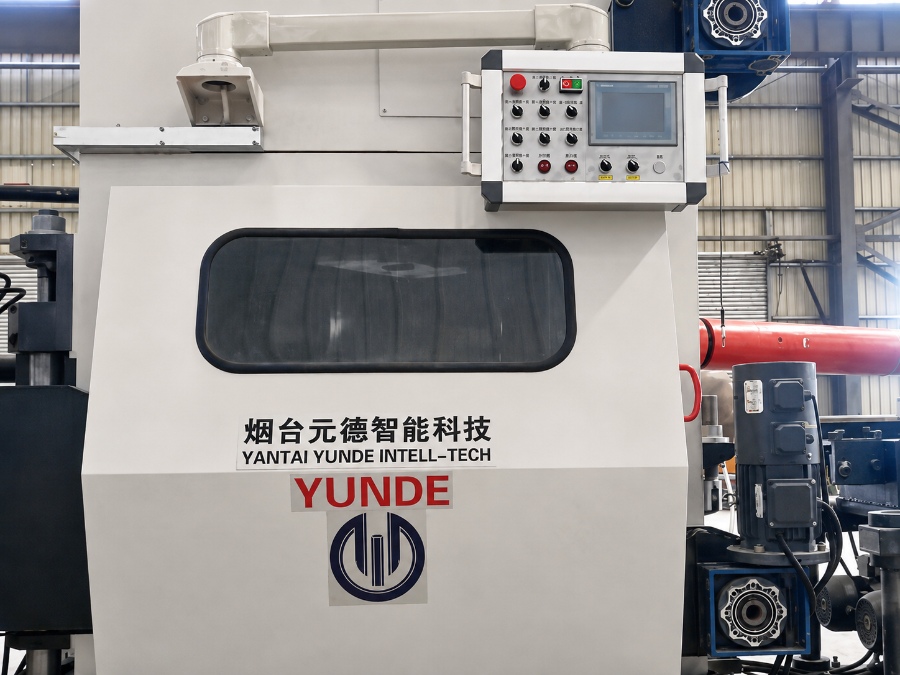
Steel bars can look straight yet fail inspection because of bow, diameter, or surface condition changes from end to end. A stable result comes from connecting the defect with roll pressure, guide alignment, entry material, and measurement. This guide keeps the focus on bar straightening so teams correct causes instead of repeatedly turning adjustment screws.
Why a straight bar can still fail inspection
A bar may look straight on a rack while its measured straightness varies along the length. Springback, end diameter change, or a contact mark can show that correction load was uneven. Inspect several positions and rotate the bar instead of relying on one sight line.
Entry diameter, length, alloy strength, and initial-bow direction set the correction window. When stock changes but the setting does not, a stable bar straightening process can produce alternating bends or end distortion.
Symptom patterns on finished bars
The defect pattern usually points to the first variable worth checking. Record the same locations after each change.
*One-sided bow: check guide centering and roll-gap symmetry.
*Residual curve: check springback compensation and material change.
*Waves or marks: check local reduction, roll cleanliness, and load stability.
*End shrinkage: check pressure release and end support.
A quick diagnosis before changing roll settings
Change one variable at a time and keep a reference bar. Measure the same positions before and after, then record feed speed and load. Use the table as a first diagnostic sequence, followed by a controlled trial.
| Observed Straightening Issue | Likely Cause | Recommended Inspection or Adjustment |
| One-sided bow | Guide or roll alignment | Measure gap and guide center at entry, middle, and exit |
| Wavy surface | Too much local reduction or unstable load | Inspect roll contact, load trend, and roll cleanliness |
| End diameter change | Pressure release or end support | Compare the first and last 200 mm with the middle section |
| Curve returns after release | Insufficient compensation for springback | Repeat the pass at a controlled load and speed |

Roll pressure and alignment control the correction
A two-row roller arrangement corrects the bar through repeated direction changes. Concave and convex rolls create linear contact along the length, distributing correction instead of concentrating it at one point. The resulting precision straightening roll system needs enough load to overcome the bend while keeping support and roll gap stable.
Constant pressure helps when material strength varies. A separate hydraulic system can hold and release load in sequence, while a rigid frame keeps the roll-gap position accurate and protects the machine during high-load correction.
Set correction around material behavior
High-strength bars often need gradual load increase because elastic recovery is greater. Start from the measured bend and stop when the result is stable; excess pressure can create end reduction, marks, or roll wear.
*Confirm diameter, length, and material grade.
*Center guides before fine roll adjustment.
*Verify straightness, diameter, and surface roughness together.
BS-series ranges that frame the adjustment decision
Model selection is part of defect prevention. A machine near the edge of its range leaves less room for stable support, so the BS model should cover the actual bar rather than only the nominal order size. The ranges below frame a round bar straightening machine trial.
| Modelo | Faixa de diâmetro (mm) | Comprimento (m) | Speed (m/min) | Tolerância de diâmetro | Rugosidade da superfície (μm) | Retilineidade (mm/m) | Main Motor Power(kW) | Estrutura |
| BS20 | Φ6–20 | ≥2 | 10–40 | ≤IT8 | Ra≤0,8 | 0.10 | 7.5×2 | Quadro |
| BS40 | Φ10–40 | ≥2 | 10–35 | ≤IT8 | Ra≤0,8 | 0.15 | 22×2 | Quadro |
| BS60 | Φ15–60 | ≥2 | 10–30 | ≤IT8 | Ra≤0,8 | 0.20 | 30×2 | Quadro |
| BS80 | Φ20–80 | ≥2 | 10–24 | ≤IT8 | Ra≤0,8 | 0.25 | 37×2 | Quadro |
| BS100 | Φ25–100 | ≥3 | 10–24 | ≤IT8 | Ra≤0,8 | 0.30 | 45×2 | Quadro |
| BS130 | Φ35–130 | ≥3 | 10–20 | ≤IT8 | Ra≤0,8 | 0.35 | 75×2 | Quadro |
| BS160 | Φ40–160 | ≥3 | 10–20 | ≤IT8 | Ra≤0,8 | 0.40 | 90×2 | Quadro |
Process checks that prevent repeat defects
Yunde BS-series supports repeatable bar correction. A máquina de endireitar barras de aço page can help a technical team compare the BS range with its own diameter, length, speed, and straightness targets.
Production data closes the loop
A useful production record contains the model, material, diameter, length, feed speed, load or pressure setting, measured straightness, and the operator defect description. Over time, these records show whether a problem follows one material batch, one size, one guide position, or one speed range. That evidence is more valuable than a general claim that the line is running fast.
The same discipline supports a metal straightening production line review: define the target, measurement point, and handling checks so the bar is not re-bent.
When to stop adjusting and inspect the incoming bar
Repeated adjustment is not always the answer. If the defect returns after guides, load, and speed are checked, inspect incoming diameter spread, initial bow, and surface condition. A straightening unit cannot remove every upstream variation without added risk.
Escalate when the defect is concentrated at one end, appears only on one batch, or changes after handling. A controlled sample and clear measurement points show whether the straightening unit, material, or handling path needs attention.

A repeatable correction routine
A repeatable routine verifies material and model range, checks guides, sets pressure gradually, and measures several positions. The BS20–BS160 range covers Φ6–Φ160 mm bars with stated straightness values from 0.10 to 0.40 mm/m. Yunde can discuss the target through its technical consultation page.
Perguntas frequentes
What causes a bar to leave a straightening machine with a one-sided bow?
A one-sided bow points to guide offset, unequal roll-gap alignment, or an off-center entry. Check the guide and gap before increasing load, then rotate a sample to separate runout from alignment.
How do I know whether roll pressure is too high?
Pressure is likely too high when end reduction, marks, rising load, or waviness appears without better straightness. Reduce the change and compare ends with the center.
What is the role of feed speed in bar straightening?
Feed speed changes contact time. A faster setting can reduce stability on strong or badly bent bars, so compare speed and load together.
Can a straightening machine handle high-strength bars?
Yes, when the model covers the bar and load, guides, speed, and verification are controlled. A straightening unit handling high-strength material needs gradual adjustment and closer springback monitoring.
Postagem recente





Produtos relacionados
Produtos mais vendidos

Linha de alinhamento de descascamento da bobina à barra
O fio-máquina de aço inoxidável é desenrolado e pré-endireitado, depois desbastado em um torno sem centros e cortado em um comprimento preciso. Após uma passagem final de endireitamento de precisão em uma endireitadeira de dois rolos, o produto resultante é uma barra reta de aço inoxidável de alta precisão.

Máquina de descascar (torno sem centros)
A unidade de descascamento (torno sem centros) é um produto desenvolvido de forma independente após a comparação e o contraste das vantagens de produtos estrangeiros similares, combinando-as com as características de produção das empresas nacionais, resultando em um projeto simplificado e otimizado.

Linha de produção bobina a bobina
A linha de produção bobina a bobina é composta por uma série de máquinas, incluindo desenrolador e endireitador, descascador, mecanismo de fixação, dispositivo de pré-dobra, rebobinador, etc. Através dessas máquinas, a bobina preta é processada em bobina brilhante com boa qualidade de superfície.

Máquina de endireitar série BS
Uma máquina de endireitar é um dispositivo usado para endireitar perfis metálicos, barras, tubos e fios. A máquina de endireitar utiliza rolos de endireitamento para comprimir o material, alterando sua retidão. Geralmente, existem duas fileiras de rolos de endireitamento, com números variáveis de rolos. Existem também máquinas de endireitar com dois rolos, que dependem da mudança de ângulo de dois rolos (com formato côncavo hiperbólico) para endireitar materiais de diferentes diâmetros.

Máquina de endireitamento de tubos de aço com múltiplos rolos
É um dispositivo mecânico usado para corrigir a curvatura e a ovalização de tubos de aço. É utilizado para endireitar tubos feitos de aço e ligas de alta resistência, resistentes à corrosão e ao calor, bem como ligas de ferro-níquel, níquel e titânio, de modo a reduzir a não retilineidade longitudinal e a não circularidade da seção transversal.

Máquina de endireitamento horizontal e vertical
Solte o volante da máquina de endireitar horizontal e vertical de múltiplos rolos para permitir que a bobina de arame passe pelos rolos de endireitamento. Aperte o volante até a posição determinada empiricamente, ligue o dispositivo de alimentação e realize testes de endireitamento repetidos. Em seguida, alimente a bobina de arame nos rolos de endireitamento vertical, seguindo o mesmo procedimento do endireitamento horizontal. Finalmente, alimente a bobina de arame no dispositivo de alimentação da máquina de descascar.


