
ABOUT US
Yantai Yunde Intelligent Technology Co., Ltd. has only 30 years of production experience, has served more than 300 domestic and foreign customers, and has produced more than 2,000 machines.
GET A FREE QUOTE
-
Home

-
Blog
-
Company Blogs
- A centerless lathe is a high-precision machining equipment, and its horizontal position directly affects machining accuracy, tool life, and equipment stability.
A centerless lathe is a high-precision machining equipment, and its horizontal position directly affects machining accuracy, tool life, and equipment stability.
-
 author
 - 28,January
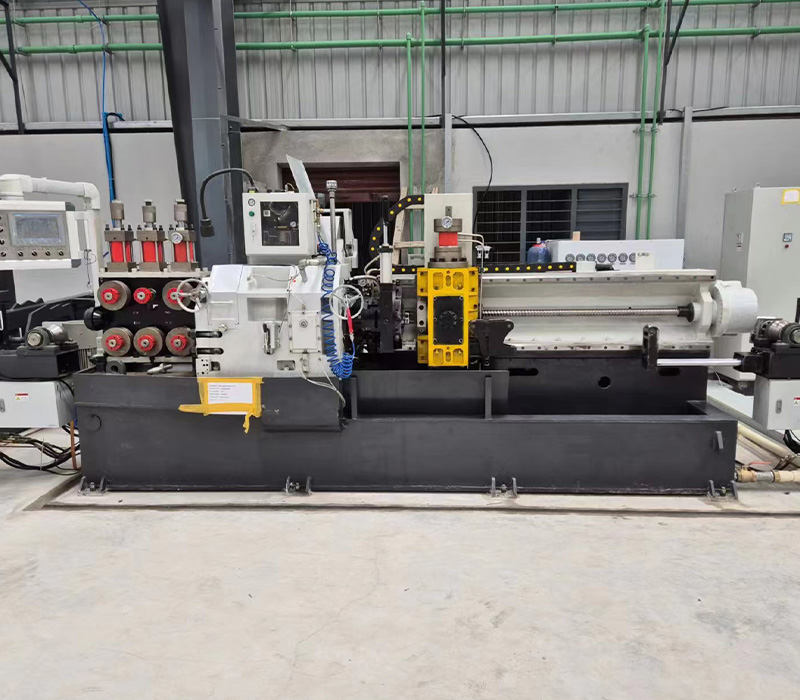
Centerless lathes (or peeling machines) are high-precision machining equipment, and their horizontal alignment directly affects machining accuracy, tool life, and equipment stability. After installation, scientific calibration is required to ensure the bed is in a horizontal position. The specific steps are as follows:
1.Prepare calibration tools
High-precision spirit levels (accuracy of at least 0.02 mm/m is recommended), shims (adjustable mechanical shims or rubber damping pads), wrenches, and adjusting screws are required. The spirit level must be calibrated to ensure reliable measurement data.
2.Determine the calibration reference plane
Using the guide surface of the centerless lathe bed as the reference, prioritize calibrating the horizontal alignment in both the longitudinal (along the machining direction) and transverse (perpendicular to the machining direction) directions. If the bed is a segmented structure, calibrate each segment separately and ensure overall consistency.
3.Longitudinal horizontal calibration
Place the spirit level on the longitudinal guide rail of the bed and move it along the machining direction, recording the readings at various positions.
Adjust the height of the centerless lathe’s leveling bolts or shims to ensure that the longitudinal horizontal deviation does not exceed 0.05 mm/m (refer to the equipment manual for specific standards).
When adjusting, tighten the bolts symmetrically to avoid bed distortion caused by uneven force on one side.
4.Transverse horizontal calibration
Rotate the spirit level 90° and place it on the transverse guide rail of the bed, repeating the measurement and adjustment steps.
Transverse horizontal alignment usually requires stricter tolerances (e.g., ≤0.03 mm/m), as tool vibration and workpiece feeding are more sensitive to transverse stability.
5.Re-inspection and securing
After the initial adjustment, multiple re-inspections and fine-tuning are required until the spirit level readings are stable at any position.
Tighten all leveling bolts and verify the horizontal alignment again to prevent deviations caused by loose bolts.
If the ambient temperature changes significantly, wait until the centerless lathe’s temperature stabilizes (usually 2-4 hours) before confirming the alignment.
6.Handling special circumstances
If the ground is uneven, adjustable shims or damping devices should be installed between the foundation and the centerless lathe, and secured with secondary grouting to ensure long-term stability.
Recent Post
Related Products
Best-selling Products
Peeling machine(centerless lathe)
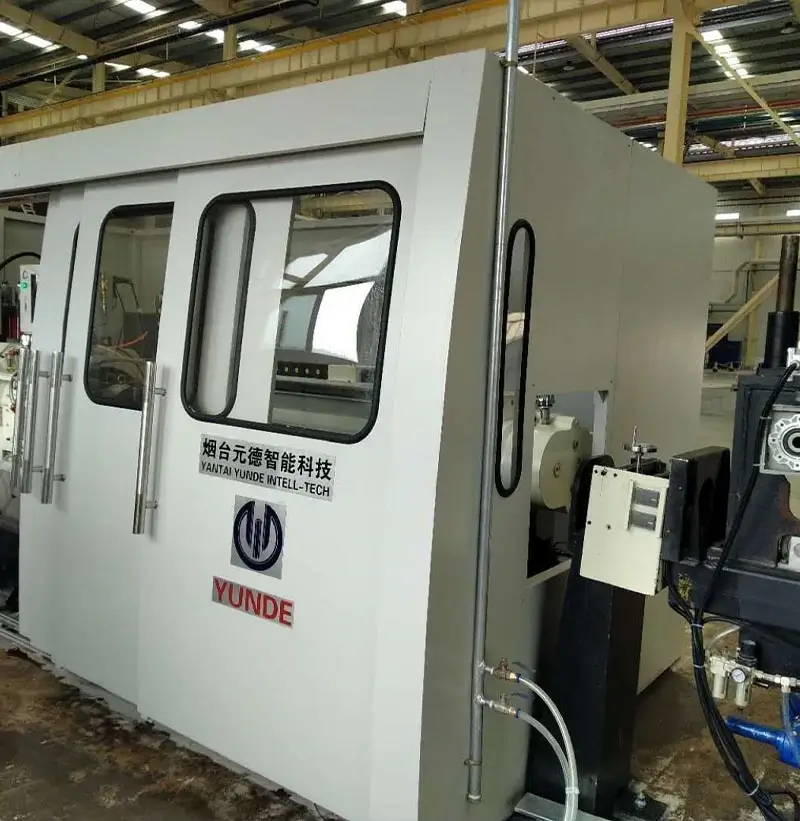
The peeling machine (centerless lathe) unit is a product independently developed after comparing and contrasting the advantages of similar foreign products and combining them with the production characteristics of domestic enterprises, resulting in a simplified and optimized design.
Coil to coil production line
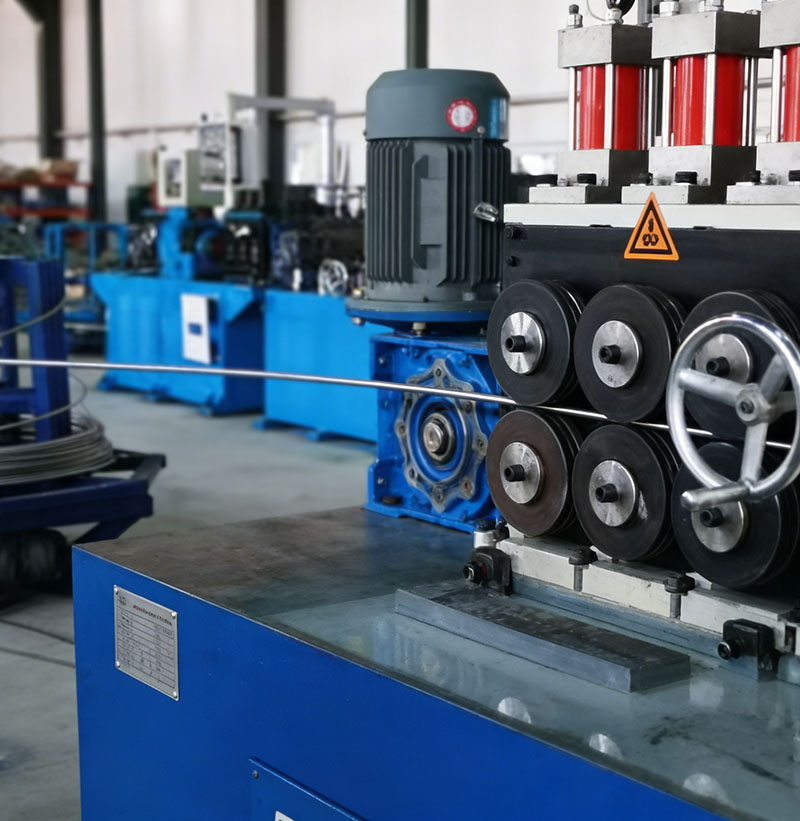
Coil to coil production line is a serial of the machines includes payoff & straightening machine, peeling machine, clamping mechanism, pre-bending device, recoiler machine etc. through above machines, the black coil rod will be processed to bright coil rod with good surface quality
Straightening machine BS Series
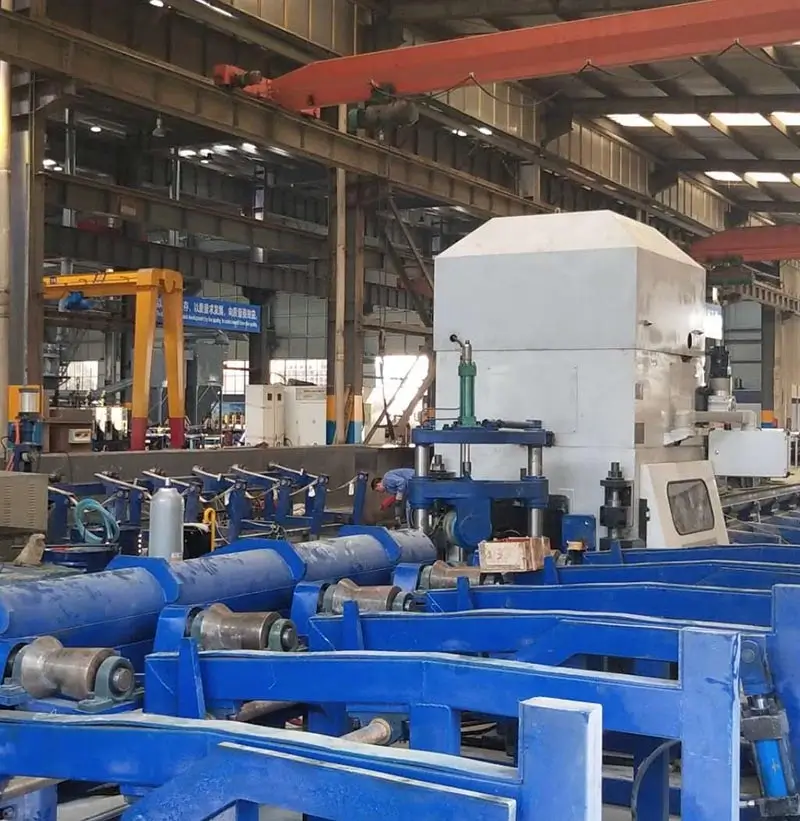
A straightening machine is a device used to straighten metal profiles, bars, tubes, and wires. The straightening machine uses straightening rollers to compress the material, altering its straightness. Generally, there are two rows of straightening rollers, with varying numbers of rollers. There are also two-roller straightening machines, which rely on the angle change of two rollers (with a concave, hyperbolic shape) to straighten materials of different diameters.
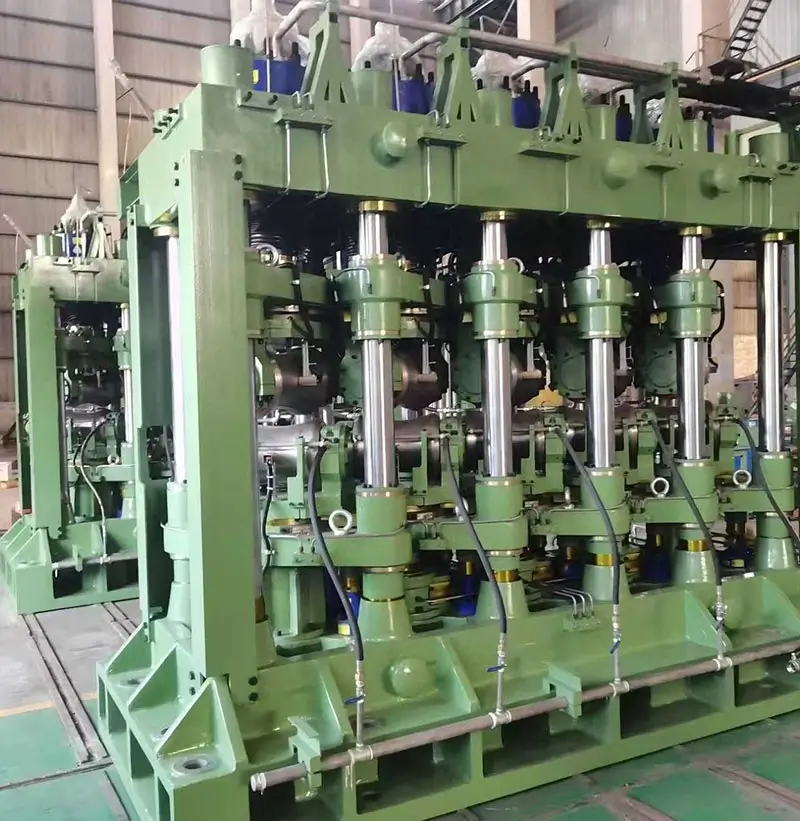
Multi-Roll Steel Pipe Straightening Machine
It is a mechanical device used to straighten the curvature and ovality of steel pipes. It is used to straighten pipes made of high alloy, corrosion-resistant, heat-resistant, heat-resistant steel and alloy, iron-nickel, nickel and titanium alloys , so as to reduce longitudinal non-straightness and cross-sectional non-roundness.
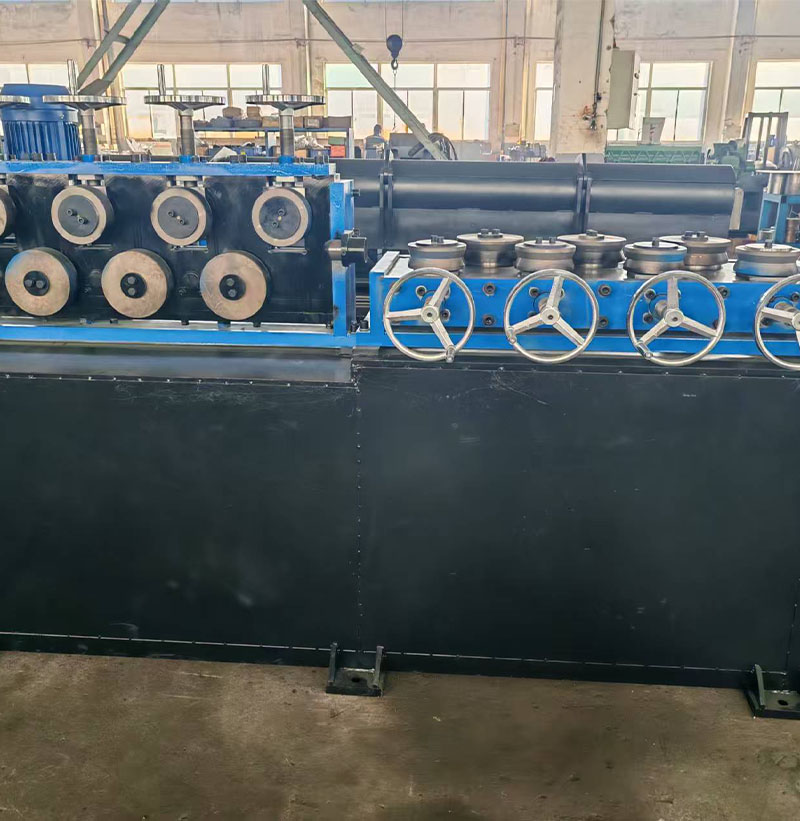
Horizontal and vertical straightening machine
Release the handwheel of the multi-roll horizontal and vertical straightening machine to allow the wire coil to pass through the straightening rollers. Tighten the handwheel to the empirically determined position, start the feeding device, and perform repeated straightening trials. Then feed the wire coil to the vertical straightening rollers, following the same procedure as for horizontal straightening. Finally, feed the wire coil to the peeling machine's feeding device.
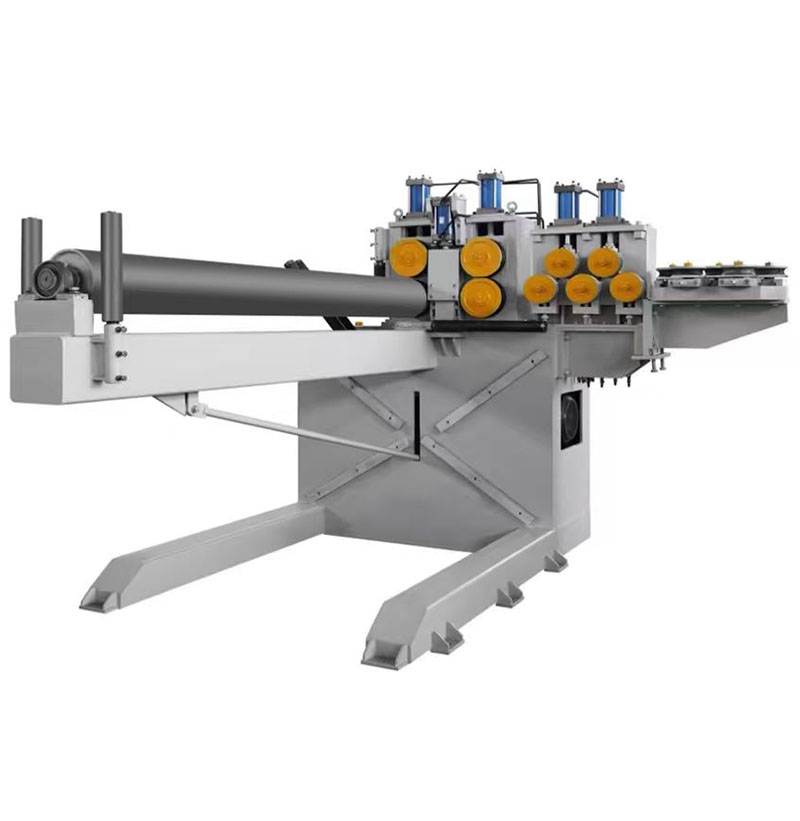
Uncoiler & pre-straightening integrated machine
Including: uncoiler, point straightening and horizontal and vertical straightening.
The coil is turned into the rotary drum arm of the uncoiler by a crane, and one end of the coil material is placed between the feeding rollers. Motor-worm gear reducer-double sprocket-gear box-drive roller, and then lock and delivery by the cylinder pressure wheel, all operations can be electrical automation control, no manual operation.