
ABOUT US
Yantai Yunde Intelligent Technology Co., Ltd. has only 30 years of production experience, has served more than 300 domestic and foreign customers, and has produced more than 2,000 machines.
GET A FREE QUOTE
-
Home

-
Blog
-
Industry Blogs
- How to Optimize Your Steel Bar Straightening Machine for Higher Precision and Efficiency?

How to Optimize Your Steel Bar Straightening Machine for Higher Precision and Efficiency?
-
author
- 1,May
 author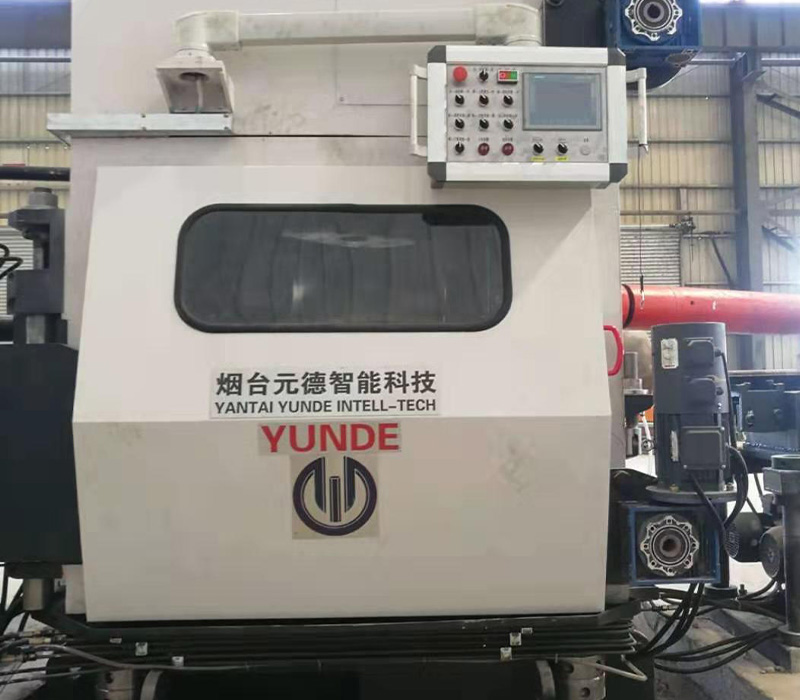
Achieving top results in professional bar processing requires a strategic blend of robust hardware and meticulous setup adjustments. For makers handling large amounts of work, the output of a straightening machine goes beyond just numbers. It plays a key role in staying ahead in the worldwide bright steel trade.
Evolution of the Modern Steel Bar Straightener
The shift from old-school hand tweaks to automated CNC handling has changed what steel bar straighteners can do. These newer setups tackle the built-in tensions in black bars. A steel wire straightening machine utilizes a set of well-made rollers to apply steady force to the item. This pushes it past its bend-back point for lasting straightness.
At YUNDE, the design approach focuses on reaching the level of top global standards. It also stresses low power use and fast output rates. Adding curved roller shapes keeps the material in even touch during the whole run. Such contact proves vital for accurate straightness over the full piece.
Technical Specifications of High-Performance Straightening Units
To figure out ways to improve your straightening machine, start by looking at the differences in tech details across models. These details shape the input pace, size allowance, and final surface smoothness.
How a “Professional Bar Processing” Setup Maximizes ROI
Putting money into a top-notch steel bar straightening machine marks the initial move. Yet, getting the best payback needs grasping why the exact setup counts so much.

- Diameter Tolerance Control:Hitting a size allowance of ≤IT8 via a high-precision straightening machinemakes sure the end rods fit well with the exact follow-up tasks, such as hydraulic parts or car axles.
- Surface Integrity Maintenance: Steady force management stops size reduction at rod tips. This issue often hits a basic gear.
- Efficiency Gains: Better models boost output by as much as 50% over older ones. This cuts long-term costs per ton of handled material.
- Material Versatility: A strong straightening machine needs to manage various metal types. These include stainless steel, titanium mixes like TC4 and TC16, plus fast-cutting tool steel.
How to Implement Advanced Alignment Procedures
Improving a steel bar straightener starts right at setup time. The best CNC gear will fall short if the base structure has issues.
- Longitudinal and Transverse Alignment: YUNDErely on accurate bubble levels with at least 0.02 mm/m precision to check the frame. This means sliding the level along the lengthwise and sideways. Then, YUNDE tweak the base screws in pairs to prevent frame warping.
- Environmental Stabilization: YUNDEwait for the gear to settle in temperature for 2 to 4 hours before locking in the setup. This holds true in plants with big swings in room heat.
- Roller Pressure Optimization: Tweaking the inward and outward roller touch points lets me get fine straightness along the wholebar That covers the start and end parts too.
- Frequency Converter Tuning: Fitting a stop unit and resistance part to the speed changer boosts the power setup’s life. It also lets me push higher input rates while keeping things safe.
What Role Automation Plays in Integrated Production Lines
For the best results, the steel bar straightening machine should link up with other steps. Fitting it into a steady flow line turns batch work into one smooth pass.

- Combined Drawing and Straightening: Linking unwind, early straighten, ongoing pull, and fine straighten into one setup handles rolled stock into exact rods in a single go.
- Post-Peeling Synergy: In several projects YUNDEhandled and paired a professional peeling machine, such as a no-center lathe, with a fine straightening machine. This lets us clear outer flaws, such as burned layers, first. After that comes exact straightening and shine work for a bright, metal-gleam look.
- Automated Material Handling: Using cart bases with fluid rams for grip makes bar output even and mark-free. Traditional feeders often leave dents.
Case Study: Breaking the Technical Monopoly
From my time at big metal plants, YUNDE saw how moving from overseas tech to home-grown high-level options makes a difference.And looked closely at rivals from the United States, Italy, and Japan. That led to building gear with full local high-end straightening know-how. So far, YUNDE made more than 1000 units running in thirty areas of China plus spots in Russia and India. Real use shows that quick spin and exact gear links beat old belt systems. They deliver 2 to 3 times more output.
Conclusion
Improving a steel bar straightening machine covers many areas. It goes from frame matching to linking automated lines in smart ways. By stressing steady force handling, fine roller tweaks, and strong parts, makers can hit better straight lines and smooth outsides. This drive for solid tech cuts waste and makes sure the end items meet top needs in car making, plane building, and machine work.
FAQ
Q: What is the average feeding speed of a YUNDE steel bar straightening machine?
A: Input speed changes with the model to keep things precise. Take the BS20 model. It hits 10 to 40 meters per minute. Bigger ones like the BS160 run at 10 to 20 meters per minute. This helps hold steady work.
Q: How does a straightening machine achieve such high straightness accuracy?
A: It gets fine results with curved rollers that make even touch points. A bendable frame adds a steady push. Together, they reach straightness down to 0.10 mm per meter.
Q: Can a steel bar straightener handle high-strength alloys like titanium?
A: Absolutely. The steel bar straightener handles many items well. That includes titanium blends, stainless steel, and different carbon steels. Just set the roller space and force right.
Q: Why should I choose an automated steel bar straightening machine over traditional manual methods?
A: Pick automated ones because they use CNC and PLC for multi-spot checks. This means real-time tool shifts and size handling. Output often runs ten times better than handwork.
Q: What after-sales support is available for YUNDE equipment?
A: Our help covers a lot. You get a free 12-month cover. Plus, ongoing tech aid. YUNDE can send experts abroad for setup, testing, and worker lessons.
Recent Post

Related Products
Best-selling Products
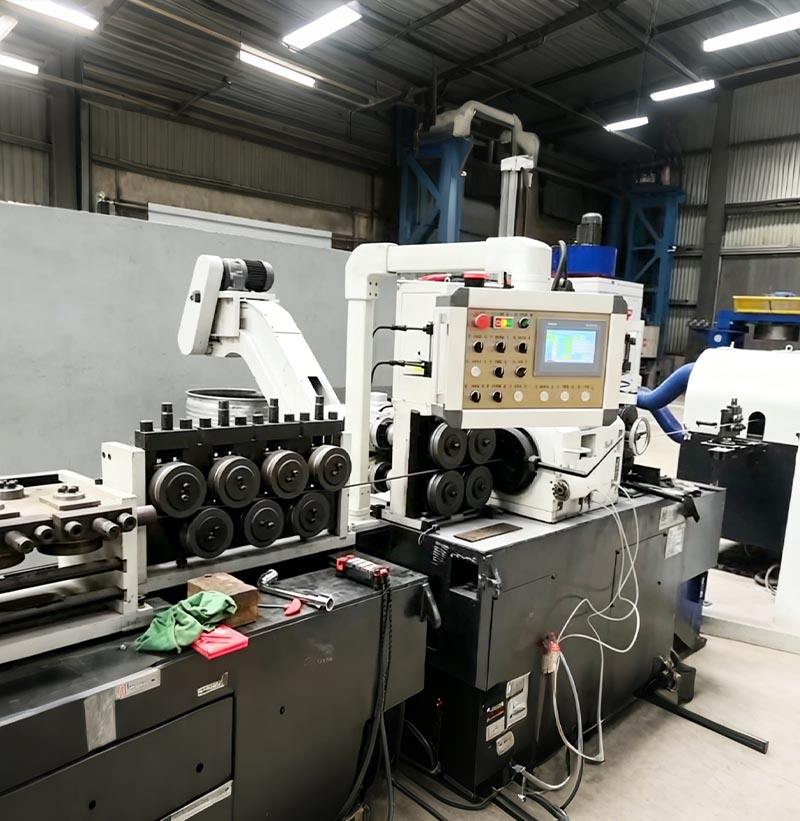
Coil To Bar Peeling&Straightening Line
Stainless steel wire rod is decoiled and pre-straightened, then peeled using a centerless lathe and cut to a precise length. Following a final precision straightening pass through a two-roll straightener, the resulting product is a high-precision stainless steel straight bar.
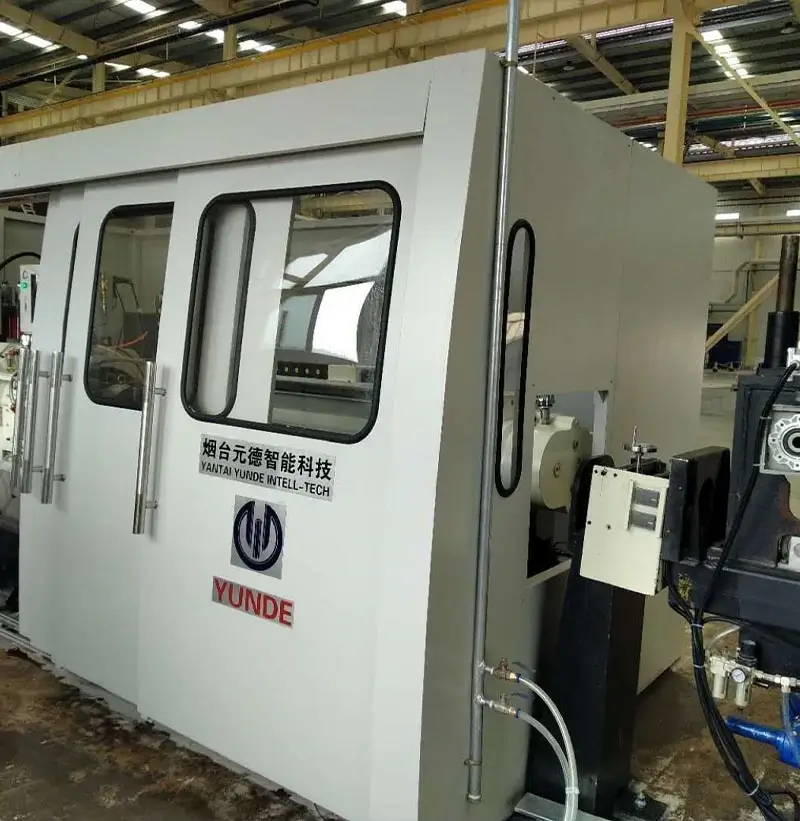
Peeling machine(centerless lathe)
The peeling machine (centerless lathe) unit is a product independently developed after comparing and contrasting the advantages of similar foreign products and combining them with the production characteristics of domestic enterprises, resulting in a simplified and optimized design.
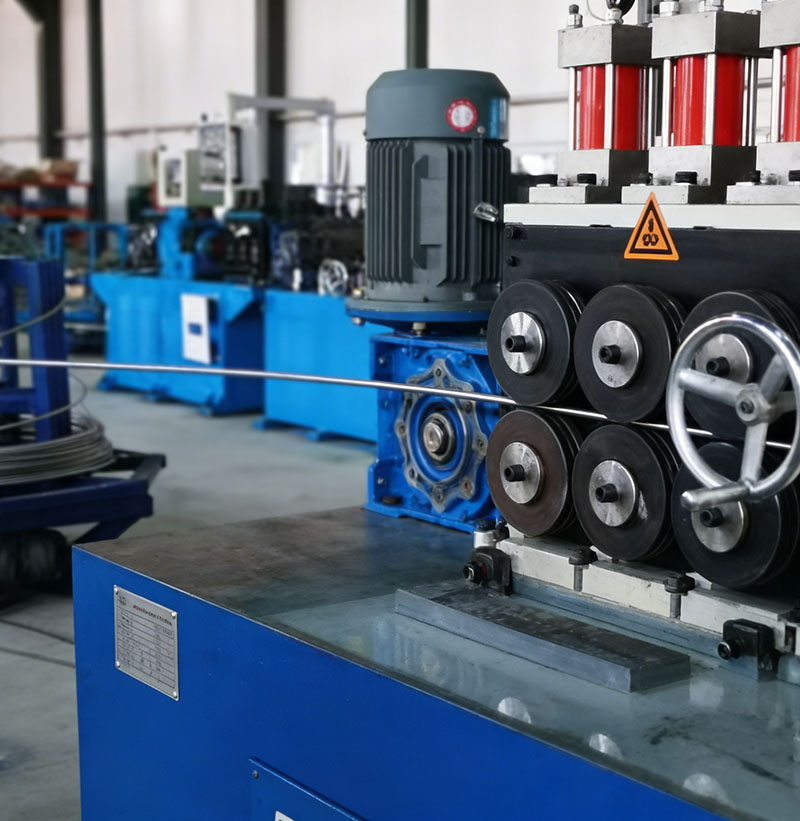
Coil to coil production line
Coil to coil production line is a serial of the machines includes payoff & straightening machine, peeling machine, clamping mechanism, pre-bending device, recoiler machine etc. through above machines, the black coil rod will be processed to bright coil rod with good surface quality
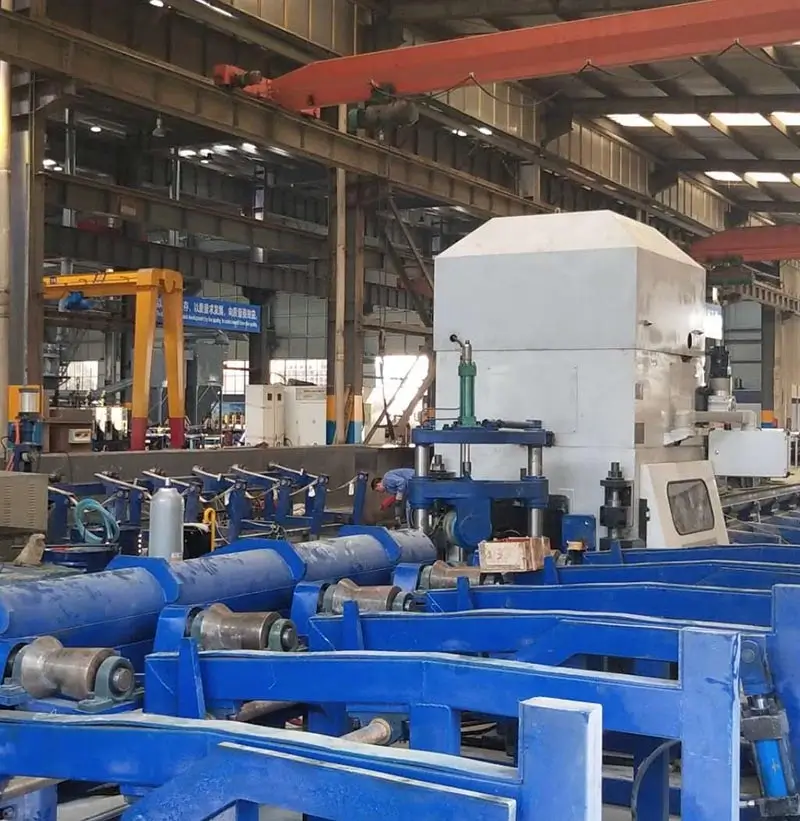
Straightening machine BS Series
A straightening machine is a device used to straighten metal profiles, bars, tubes, and wires. The straightening machine uses straightening rollers to compress the material, altering its straightness. Generally, there are two rows of straightening rollers, with varying numbers of rollers. There are also two-roller straightening machines, which rely on the angle change of two rollers (with a concave, hyperbolic shape) to straighten materials of different diameters.
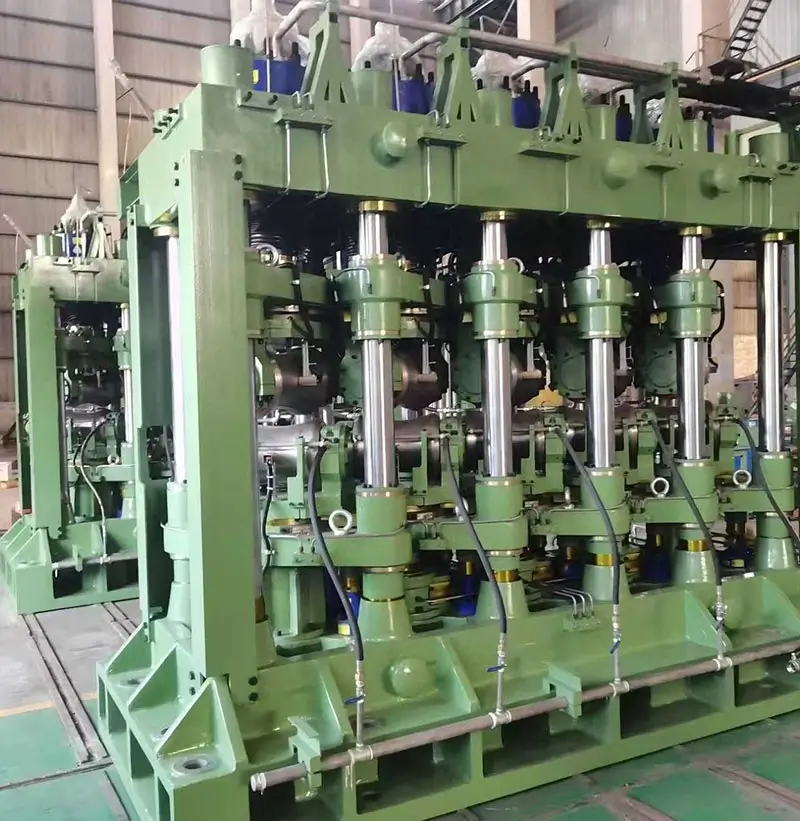
Multi-Roll Steel Pipe Straightening Machine
It is a mechanical device used to straighten the curvature and ovality of steel pipes. It is used to straighten pipes made of high alloy, corrosion-resistant, heat-resistant, heat-resistant steel and alloy, iron-nickel, nickel and titanium alloys , so as to reduce longitudinal non-straightness and cross-sectional non-roundness.
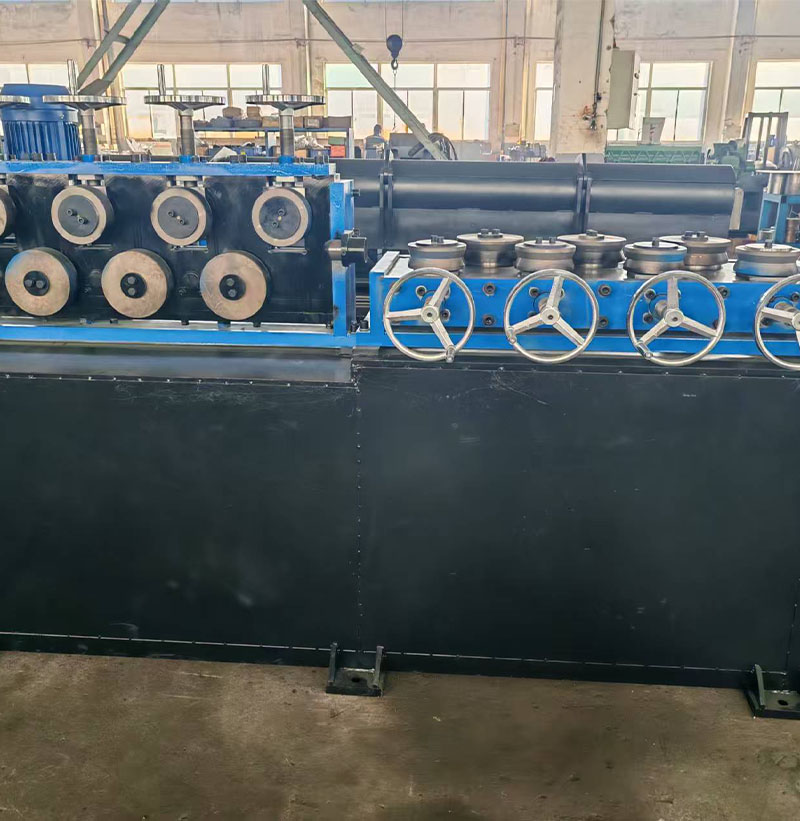
Horizontal and vertical straightening machine
Release the handwheel of the multi-roll horizontal and vertical straightening machine to allow the wire coil to pass through the straightening rollers. Tighten the handwheel to the empirically determined position, start the feeding device, and perform repeated straightening trials. Then feed the wire coil to the vertical straightening rollers, following the same procedure as for horizontal straightening. Finally, feed the wire coil to the peeling machine's feeding device.