
ABOUT US
Yantai Yunde Intelligent Technology Co., Ltd. has only 30 years of production experience, has served more than 300 domestic and foreign customers, and has produced more than 2,000 machines.
GET A FREE QUOTE
-
Home

-
Blog
-
Industry Blogs
- What Determines Steel Bar Peeling Machine Maintenance Cost
What Determines Steel Bar Peeling Machine Maintenance Cost
-
 author
 - 2,July
Introduction
The annual maintenance cost of a steel bar peeling machine is not a fixed number but a reflection of how the system interacts with material hardness, production intensity, and surface roughness requirements. In modern steel finishing lines, operators rarely evaluate cost only from spare parts or labor. Instead, they analyze the full lifecycle behavior of a round bar peeling machine, especially when processing high-strength alloy steel, stainless steel, and carbon steel.
In many production scenarios, a YUNDE machine turned and peeled workflow has replaced traditional rough machining and grinding systems because it delivers stable dimensional accuracy and controlled surface roughness (Ra ≤ 1.6 μm). However, this improvement in quality also shifts maintenance from occasional repair to structured preventive servicing.
What drives the annual maintenance cost of the steel peeling machine?
The cost structure of a steel peeling machine is mainly driven by mechanical load intensity, cutting depth, and production continuity. Unlike general machining equipment, a bar peeling machine continuously removes the outer surface layer of round steel, which includes oxide scale, decarburized layers, and micro-cracks.
The peeling process of a peeled steel bar requires constant cutting engagement. This means tool wear is inevitable, especially when processing high-strength materials like bearing steel or alloy tool steel. Hydraulic pressure stability, spindle bearing durability, and feeding system alignment directly influence annual maintenance frequency.
In real production environments, operators observe that the higher the requirement for surface accuracy and dimensional tolerance, the more frequently recalibration becomes necessary. The steel bar peeling machine is therefore not only a cutting system but also a precision control system that requires continuous tuning.
How round bar peeling machine parameters affect cost?
Different models of bar peeling machine significantly influence maintenance costs due to variations in power, diameter capacity, and cutting load. Larger models process thicker bars and require stronger hydraulic systems, which naturally increase servicing demands.
Below is a technical comparison based on production specifications of typical steel peeling machine models:
| Model | Diameter Range | Feeding Speed | Single-sided Cutting Depth | Main Motor Power | Diameter Tolerance | Surface Roughness |
| PM40 | Φ6–40 mm | 1–18 m/min | 0.25–1.5 mm | 45 kW | ≤ IT8 | Ra ≤ 1.6 μm |
| PM60 | Φ12–65 mm | 1–15 m/min | 0.3–2.5 mm | 55 kW | ≤ IT8 | Ra ≤ 1.6 μm |
| PM80 | Φ15–80 mm | 1–15 m/min | 0.5–2.5 mm | 75 kW | ≤ IT8 | Ra ≤ 1.6 μm |
| PM100 | Φ20–100 mm | 1–12 m/min | 1.0–4.0 mm | 90 kW | ≤ IT8 | Ra ≤ 1.6 μm |
| PM130 | Φ35–130 mm | 1–8 m/min | 1.0–5.0 mm | 110 kW | ≤ IT8 | Ra ≤ 1.6 μm |
| PM160 | Φ40–160 mm | 1–6 m/min | 1.0–5.0 mm | 132 kW | ≤ IT8 | Ra ≤ 1.6 μm |
| PM200 | Φ80–200 mm | 1–5 m/min | 1.0–5.0 mm | 160 kW | ≤ IT8 | Ra ≤ 1.6 μm |
| PM250 | Φ85–250 mm | 1–4 m/min | 1.0–5.0 mm | 200 kW | ≤ IT8 | Ra ≤ 1.6 μm |
| PM350 | Φ150–350 mm | 0.2–2 m/min | 1.0–10.0 mm | 200 kW | ≤ IT8 | Ra ≤ 1.6 μm |
These parameters directly influence the yearly cost of maintaining a round bar peeling machine, especially spindle wear and hydraulic system fatigue.

What real production data shows about maintenance cycles?
In practical industrial cases, the maintenance profile of a steel bar peeling machine is strongly tied to production volume and material type.
A Chinese steel plant operating a BS100 straightening system reported stable integration with peeling operations, where maintenance was primarily focused on synchronization between peeling and straightening units. In another case, a PM40S bar peeling machine installed in a large Indian bright steel facility demonstrated high stability after trial operation, with maintenance concentrated on cutting tool replacement cycles rather than structural repair.
A Shaanxi production line using a coil-to-bar machine turned and peeled system showed that automated feeding significantly reduced manual intervention, but required stricter monitoring of hydraulic pressure consistency.
These cases confirm that maintenance cost is not only about equipment quality but also about system integration and operating discipline.
How to reduce the maintenance cost of the bar peeling machine
Reducing cost in a steel peeling machine environment depends on stabilizing material preparation and controlling operational stress. Proper pre-straightening reduces uneven load distribution during peeling. Selecting the correct round bar peeling machine model for the diameter range also prevents overload conditions.
Preventive maintenance is more effective than corrective maintenance, especially for spindle systems and hydraulic clamping systems. When the peeled steel bar output requires high surface consistency, tool replacement schedules must follow production hours rather than visible wear.
Integrated production lines combining peeling and straightening reduce repeated handling, which indirectly lowers mechanical stress and maintenance frequency.

Conclusion
The annual maintenance cost of a steel bar peeling machine is ultimately shaped by how efficiently the system manages continuous surface removal and material variability. A well-optimized YUNDE bar peeling machine does not simply reduce cost through durability but through stable process control, consistent machine turned and peeled performance, and predictable wear patterns.
When properly configured, a round bar peeling machine can operate with high efficiency while maintaining stable surface roughness and dimensional accuracy, making it a critical asset in modern bright steel production.
FAQ
How often should a bar peeling machine be serviced?
A bar peeling machine should receive daily lubrication checks, monthly alignment calibration, and quarterly full-system inspection to maintain stable peeled steel bar quality.
What affects the round bar peeling machine the most?
Diameter capacity, cutting depth, spindle power, and production speed are the main factors influencing maintenance cost in a round bar peeling machine. Checking the straightness, hardness, and roundness of the black bar, and then setting the right speed and cutting depth. Do the necessary chamfering and facing to prevent material jamming or cutter impact.
Can the steel peeling machine reduce long-term operating costs?
Yes, when properly matched with material size and integrated with straightening systems, a steel peeling machine can significantly reduce rework, downtime, and maintenance frequency.
Recent Post

Related Products
Best-selling Products
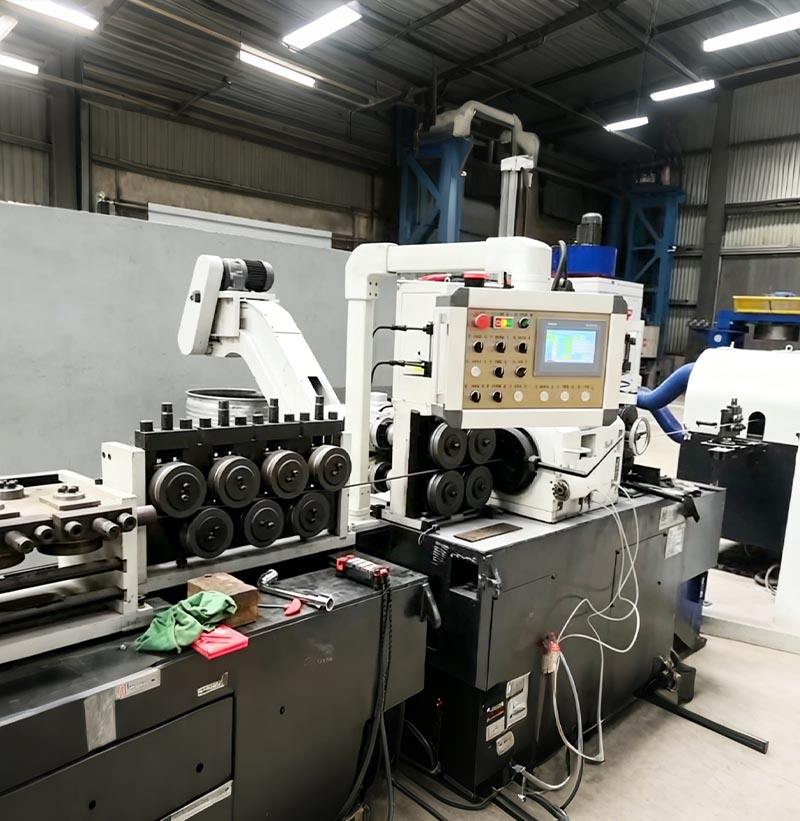
Coil To Bar Peeling&Straightening Line
Stainless steel wire rod is decoiled and pre-straightened, then peeled using a centerless lathe and cut to a precise length. Following a final precision straightening pass through a two-roll straightener, the resulting product is a high-precision stainless steel straight bar.
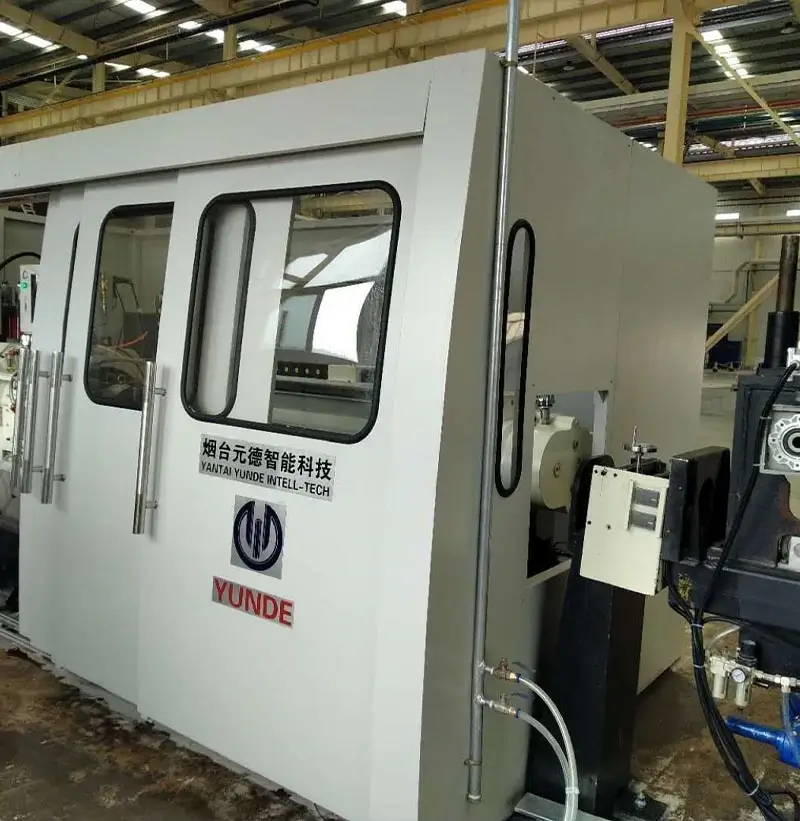
Peeling machine(centerless lathe)
The peeling machine (centerless lathe) unit is a product independently developed after comparing and contrasting the advantages of similar foreign products and combining them with the production characteristics of domestic enterprises, resulting in a simplified and optimized design.
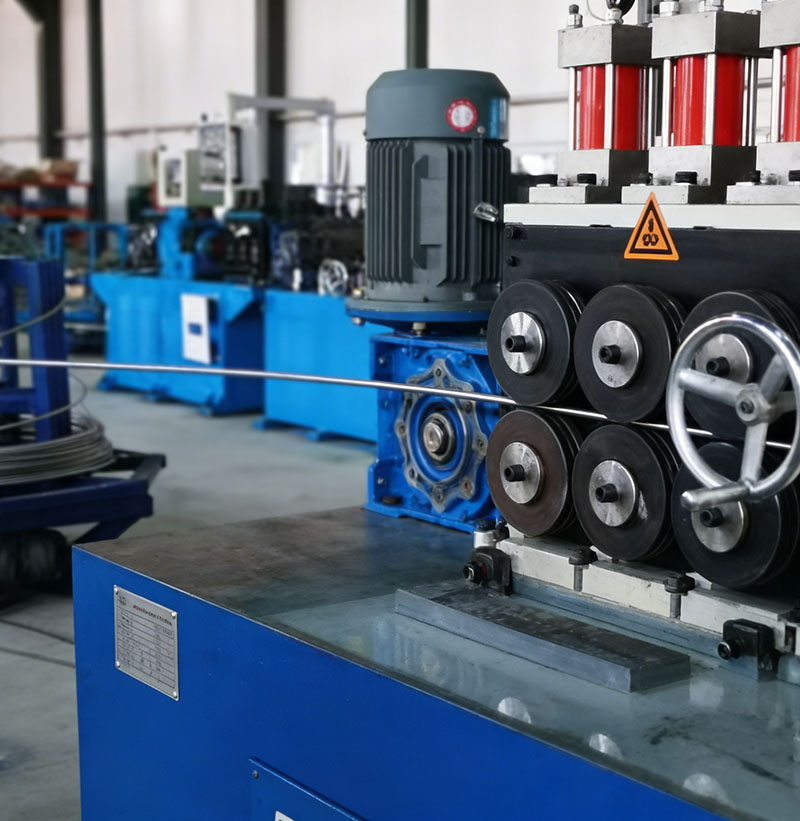
Coil to coil production line
Coil to coil production line is a serial of the machines includes payoff & straightening machine, peeling machine, clamping mechanism, pre-bending device, recoiler machine etc. through above machines, the black coil rod will be processed to bright coil rod with good surface quality
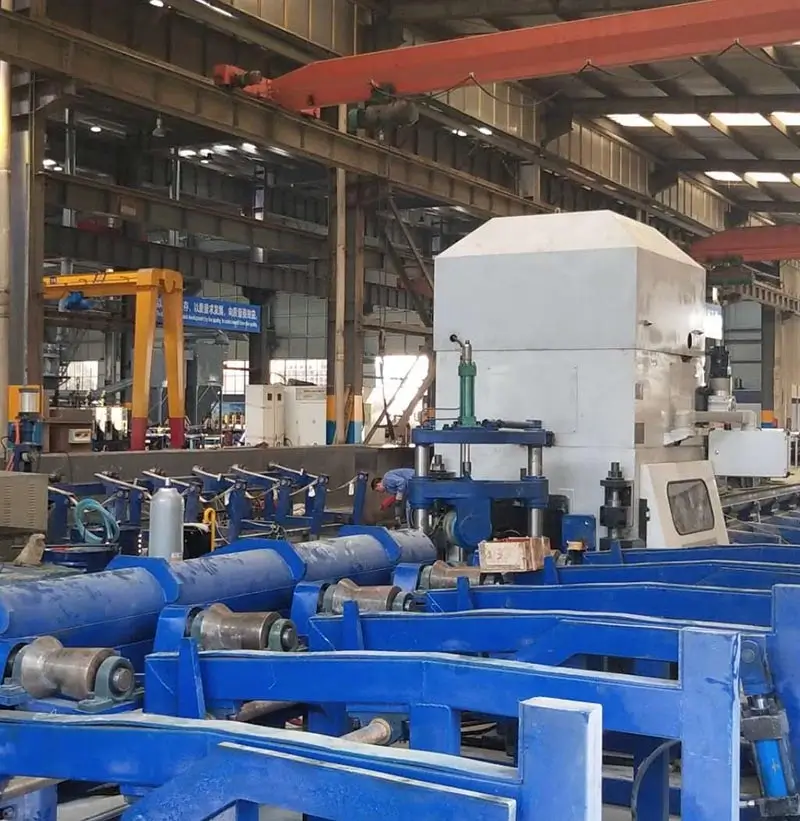
Straightening machine BS Series
A straightening machine is a device used to straighten metal profiles, bars, tubes, and wires. The straightening machine uses straightening rollers to compress the material, altering its straightness. Generally, there are two rows of straightening rollers, with varying numbers of rollers. There are also two-roller straightening machines, which rely on the angle change of two rollers (with a concave, hyperbolic shape) to straighten materials of different diameters.
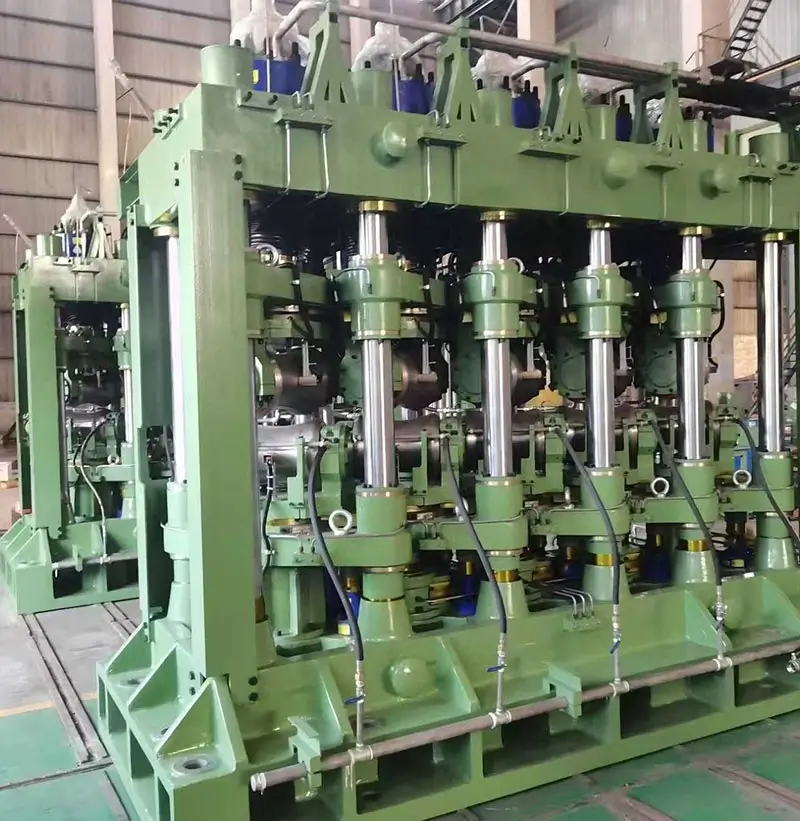
Multi-Roll Steel Pipe Straightening Machine
It is a mechanical device used to straighten the curvature and ovality of steel pipes. It is used to straighten pipes made of high alloy, corrosion-resistant, heat-resistant, heat-resistant steel and alloy, iron-nickel, nickel and titanium alloys , so as to reduce longitudinal non-straightness and cross-sectional non-roundness.
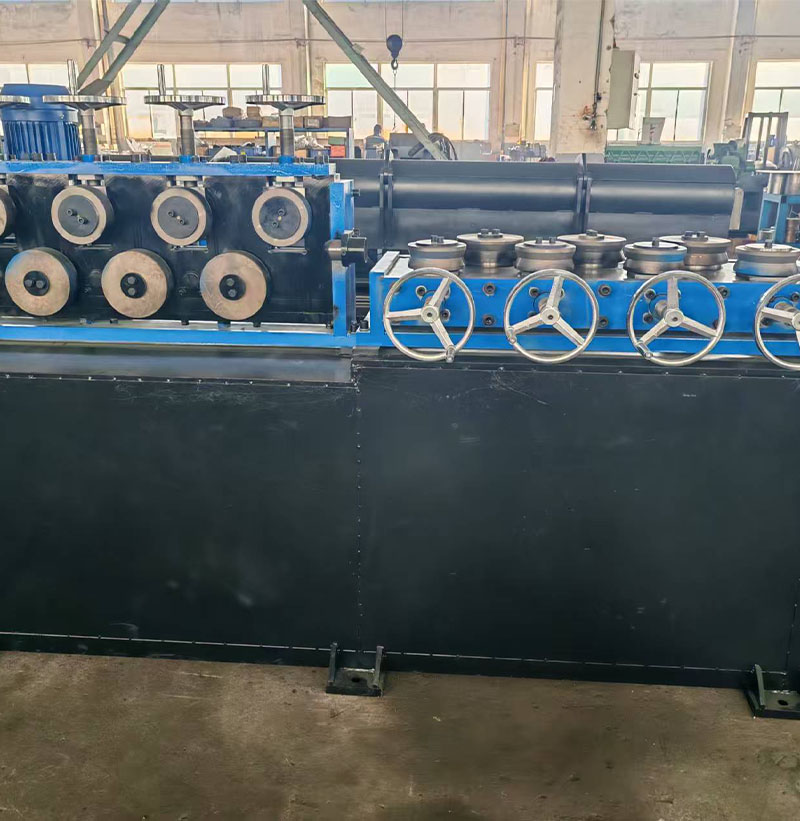
Horizontal and vertical straightening machine
Release the handwheel of the multi-roll horizontal and vertical straightening machine to allow the wire coil to pass through the straightening rollers. Tighten the handwheel to the empirically determined position, start the feeding device, and perform repeated straightening trials. Then feed the wire coil to the vertical straightening rollers, following the same procedure as for horizontal straightening. Finally, feed the wire coil to the peeling machine's feeding device.