
ABOUT US
Yantai Yunde Intelligent Technology Co., Ltd. has only 30 years of production experience, has served more than 300 domestic and foreign customers, and has produced more than 2,000 machines.
GET A FREE QUOTE
-
Home

-
Blog
-
Industry Blogs
- How Can a Bar Straightening Machine Improve Accuracy

How Can a Bar Straightening Machine Improve Accuracy
-
author
- 25,June
 author
Introduction
A bent bar causes trouble across the whole line. It disrupts feeding, peeling, and polishing. It also ruins cutting, testing, and final packing. Because of this, a solid bar straightening machine is not just an optional machine anymore. It actively backs up steady production and consistent finished-bar quality.
At YUNDE, we design precision finishing equipment for round steel, including peeling, straightening and polishing systems. Among them, our BS series straightening machines feature a robust integral cast frame structure. The straightening rollers adopt materials with far superior properties compared to conventional D2 alloy steel. This equipment delivers outstanding performance in feeding speed, straightness control and consistent stable processing capacity, while achieving optimal balance among all these core performances. Such advantages are particularly prominent when processing medium and large-sized steel bars.

How Do BS Series Models Compare in Technical Parameters?
The table below shows the complete BS Series specs. Customers often compare bar straightening machine price options. For them, these numbers matter a lot. Details like physical size, motor power, and feeding speed change the final cost. Likewise, the target straightness and diameter limits directly shape the quote.
BS Series Straightening Machine Technical Parameters
| Model | Diameter Range(mm) | Length (m) | Speed(m/min) | Diameter Tolerance | Surface Roughness (μm) | Straightness(mm/m) | Main Motor Power | Structure |
| BS20 | Φ6–20 | ≥2 | 10~40 | ≤IT8 | Ra≤0.8 | 0.10 | 7.5*2 | Frame |
| BS40 | Φ10–40 | ≥2 | 10~35 | ≤IT8 | Ra≤0.8 | 0.15 | 22*2 | Frame |
| BS60 | Φ15–60 | ≥2 | 10~30 | ≤IT8 | Ra≤0.8 | 0.20 | 30*2 | Frame |
| BS80 | Φ20-80 | ≥2 | 10~24 | ≤IT8 | Ra≤0.8 | 0.25 | 37*2 | Frame |
| BS100 | Φ25-100 | ≥3 | 10~24 | ≤IT8 | Ra≤0.8 | 0.30 | 45*2 | Frame |
| BS130 | Φ35-130 | ≥3 | 10~20 | ≤IT8 | Ra≤0.8 | 0.35 | 75*2 | Frame |
| BS160 | Φ40-160 | ≥3 | 10~20 | ≤IT8 | Ra≤0.8 | 0.40 | 90*2 | Frame |
Looking at the chart, the BS100 straightening machine fits right between the BS80 and BS130. It handles a broader size range than the BS80. Yet, it maintains a stable feeding speed range of 10 to 28 m/min. For production lines processing Φ25–Φ100 mm bar materials, this model is suitable for automated straightening line integration in medium to large diameter bar processing.
How Should Operators Prepare Before Bar Straightening?
Successful bar straightening begins before the metal even enters the machine. Operators need to check the bar diameter, length, and material condition. They must also know the final straightness goal before they adjust the rollers. When using the BS100 straightening machine, the bar diameter should stay between Φ25 and Φ100 mm. Also, the piece must measure at least 3 meters long.
The condition of the bar affects how operators set the machine. Raw black pieces, peeled items, and finished bright parts need totally different adjustments. A raw piece might carry thick rust, random curves, or rough flaws. A peeled piece looks much cleaner. However, it still requires precise tuning to hit the required straightness control accuracy. When reviewing peeled items, operators should always measure surface quality using roughness values.
Operators must match the roll gap to the actual bar diameter. They should increase the pressure slowly when starting the system. A smart habit is to test a single piece first. After checking its straightness, the operator can adjust the pressure, feeding speed, and roller positions. Only then should they start full production.
What Affects the Bar Straightening Machine Price?
The cost of a straightening machine depends on technical configuration beyond model selection. Buyers need to check the diameter range and minimum length requirements. They must also check the target straightness, feeding speed, and automation features. The hydraulic setup and software controls matter too. Finally, buyers should check whether the machine can connect with peeling, cutting, or packaging equipment.
A workshop dealing with tiny parts does not require a massive frame or huge motors. A heavy-duty plant running Φ100 mm parts needs much more power. Similarly, a customer who wants automatic bar straightening tied to other line equipment will get a specific quote. This quote will look very different from one for a single, basic unit.
Support services change the true cost of owning the machine. Buyers must think about export packing, setup help, and initial testing. Worker training, spare parts, and future repairs are just as crucial. A cheap starting price can easily turn into a huge expense. This happens when the setup takes too long or operators lack help during a breakdown.

Conclusion
A straightening machine acts as a key quality control unit in modern bar finishing production. It shields later machines from damage and keeps the feeding smooth. It also cuts down on wasted effort and boosts final test scores. The BS100 straightening machine fits perfectly for Φ25 to Φ100 mm parts. It blends a useful size range with a tough frame. It also delivers a feeding speed of 10 to 28 m/min and achieves a straightness level of 0.30 mm/m. When shoppers compare automatic bar straightening options, the model name is just the start. The equipment has to match the exact material size and factory workflow. It must also meet strict roughness goals, straightness rules, and service demands. If your workshop needs a dependable finishing line, reach out to YUNDE. We can talk about your material sizes, your required straightness control accuracy, and the best machine setup.
FAQ
What is the working range of the BS100 straightening machine?
The BS100 straightening machine handles metal between Φ25 and Φ100 mm. The parts must be at least 3 meters long. It serves perfectly for medium and large bar straightening inside modern finishing shops.
How accurate is bar straightening with the BS100 straightening machine?
The official straightness rating stands at 0.30 mm/m. However, real straightness control accuracy relies on several factors. These include metal hardness, initial curves, roller positions, pressure settings, and worker skills. Pre-straightening raw materials with a pre-straightener prior to peeling and precision straightening can optimize both the straightening effect and the service life of the entire production line. A pre-straightening machine will be necessary when the raw material is in a bad straightness situation.
Can an automatic bar straightening machine work after a peeling machine?
Yes. A peeling unit strips away surface flaws first. Right after that, an automatic bar straightening machine fixes any bends. This happens before the metal moves on to cutting, polishing, or tying.
What factors influence the bar straightening machine price?
The bar straightening machine price shifts based on size limits and motor power. Feed speeds, straightness goals, and automation levels also change the cost. Furthermore, line connections, packing, setup help, and future repairs play a big role.
What after-sales support is needed for a bar straightening machine?
Customers generally require clear setup guides and testing help. They also need worker training, fast tech support, and long-term repair advice. These services cut down on idle time and keep the factory running smoothly.
Recent Post

Related Products
Best-selling Products
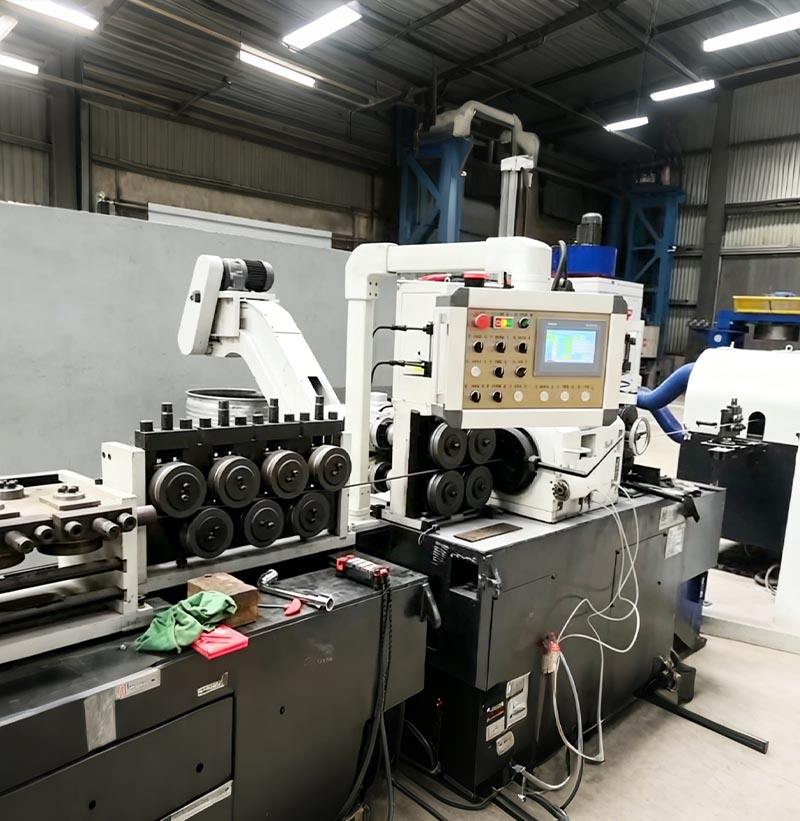
Coil To Bar Peeling&Straightening Line
Stainless steel wire rod is decoiled and pre-straightened, then peeled using a centerless lathe and cut to a precise length. Following a final precision straightening pass through a two-roll straightener, the resulting product is a high-precision stainless steel straight bar.
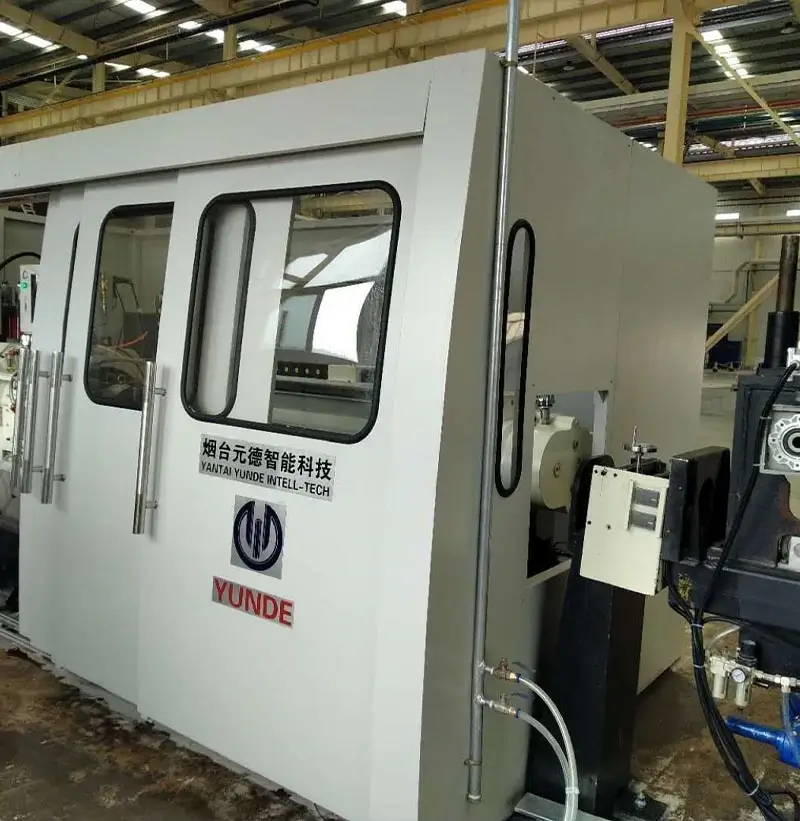
Peeling machine(centerless lathe)
The peeling machine (centerless lathe) unit is a product independently developed after comparing and contrasting the advantages of similar foreign products and combining them with the production characteristics of domestic enterprises, resulting in a simplified and optimized design.
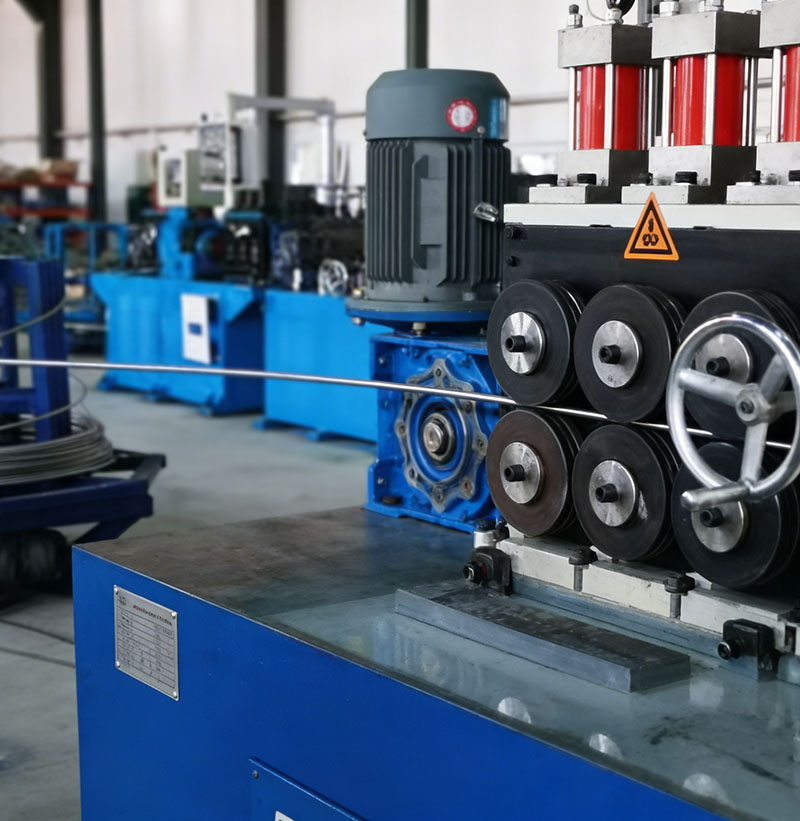
Coil to coil production line
Coil to coil production line is a serial of the machines includes payoff & straightening machine, peeling machine, clamping mechanism, pre-bending device, recoiler machine etc. through above machines, the black coil rod will be processed to bright coil rod with good surface quality
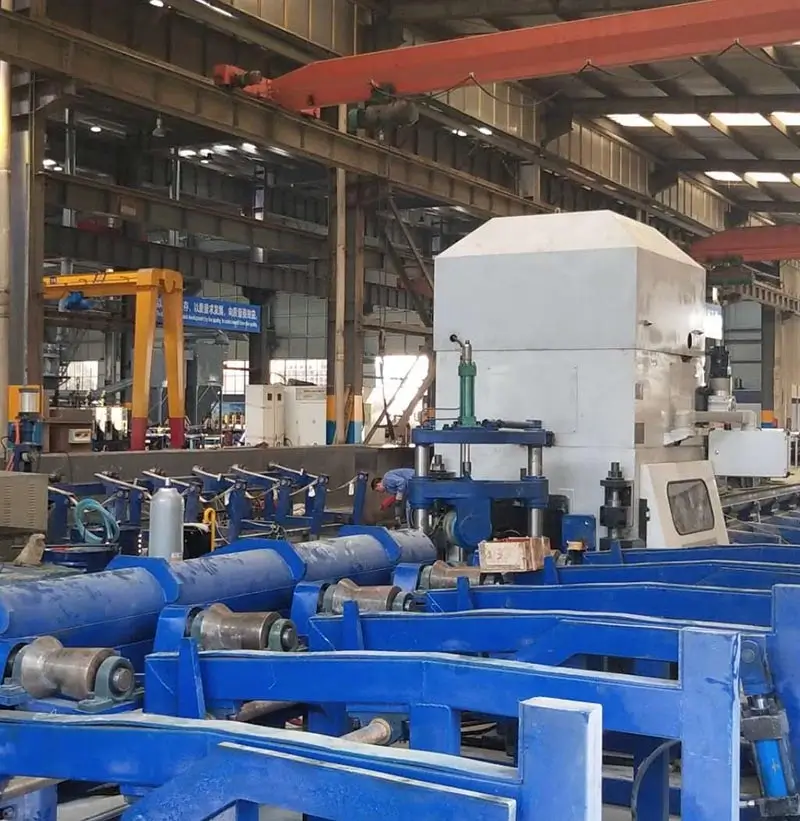
Straightening machine BS Series
A straightening machine is a device used to straighten metal profiles, bars, tubes, and wires. The straightening machine uses straightening rollers to compress the material, altering its straightness. Generally, there are two rows of straightening rollers, with varying numbers of rollers. There are also two-roller straightening machines, which rely on the angle change of two rollers (with a concave, hyperbolic shape) to straighten materials of different diameters.
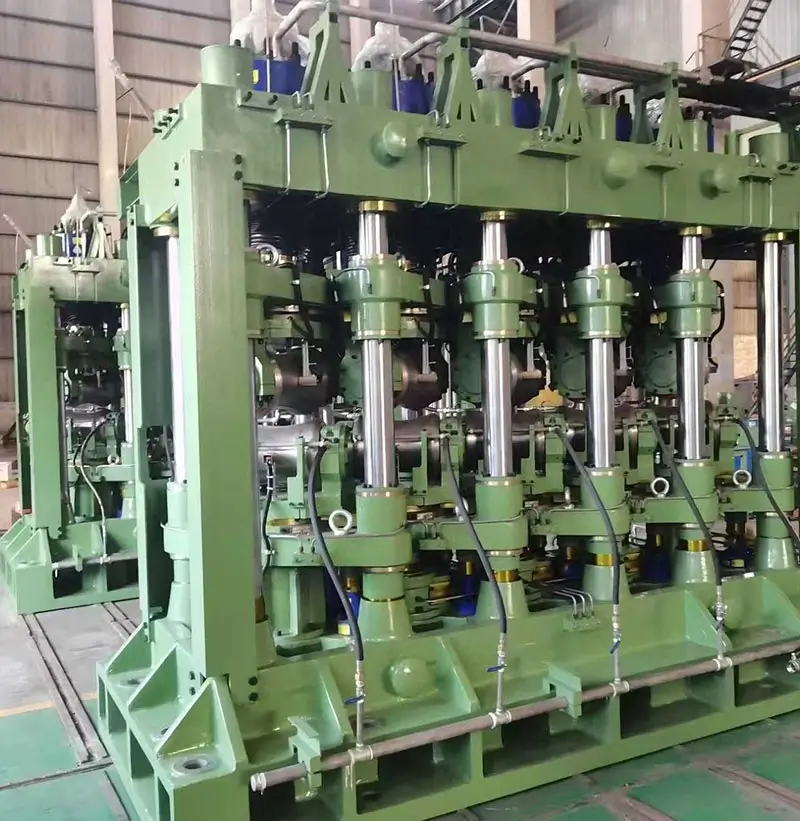
Multi-Roll Steel Pipe Straightening Machine
It is a mechanical device used to straighten the curvature and ovality of steel pipes. It is used to straighten pipes made of high alloy, corrosion-resistant, heat-resistant, heat-resistant steel and alloy, iron-nickel, nickel and titanium alloys , so as to reduce longitudinal non-straightness and cross-sectional non-roundness.
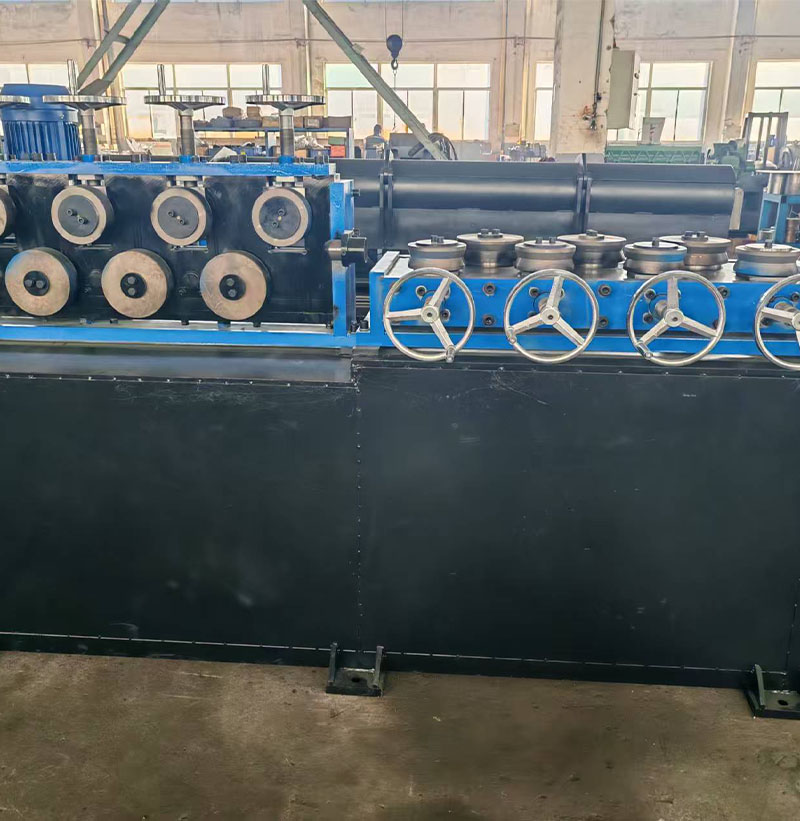
Horizontal and vertical straightening machine
Release the handwheel of the multi-roll horizontal and vertical straightening machine to allow the wire coil to pass through the straightening rollers. Tighten the handwheel to the empirically determined position, start the feeding device, and perform repeated straightening trials. Then feed the wire coil to the vertical straightening rollers, following the same procedure as for horizontal straightening. Finally, feed the wire coil to the peeling machine's feeding device.